Characteristic town "life and death": without the support of "characteristic industry", it will be eliminated sooner or later.
Recently, a "Death List of Characteristic Towns in China in 2018" has aroused widespread concern.
The list shows that some characteristic towns flooded into 130 thousand tourists in the first three days of opening, but the bustling scene was only a flash in the pan, most shops closed down, and the once-beautiful awning boat came to the dry land from the water;
Some towns have invested billions of yuan, claiming to build a modern eco-tourism town integrating industry, housing and living services, and finally only built a core area and then called it a day;
Some leaders at all levels are very concerned about the construction of small towns, and the construction site has been visited again and again, but it will come to an abrupt end before the three-year construction acceptance.
These towns, either copying other people’s models, are not creative, have lost their own characteristics and their positioning is unclear. Either the supporting facilities are not perfect and there is no industrial support. Either the government’s promise has not been fulfilled and the funds are broken … …
In a word, there are thousands of reasons for the failure of a characteristic town. But also, there are thousands of reasons for the success of characteristic towns.
Open the knife to the characteristic town of "disappointing"
On August 17th, the Spring City Evening News in Kunming, Yunnan Province reported that due to the lack of public services and heavy industry, the Office of the Leading Group for the Development of Characteristic Towns in Yunnan Province gave yellow cards to three characteristic towns, namely Wengding Hulu Town in Lincang, Guanglong Tourism Town in Chengjiang, Yuxi and Shaxi Ancient Town in Jianchuan, Dali.
The Office of the Leading Group for the Development of Characteristic Towns in Yunnan Province decided to give these three characteristic towns a yellow card warning and make rectification within a time limit of three months. If the rectification is not in place, the award funds will be recovered and the list will be withdrawn.
There are still many places that "cut the knife" for those characteristic towns that "fail to live up to expectations". According to the First Financial Reporter, since April this year, the National Development and Reform Commission announced that 419 "problem towns" were eliminated and rectified by relevant departments in various regions, China has set up a dynamic adjustment mechanism. Liu Chunyu, director of the Urban-Rural Integration Development Division of the Planning Department of the National Development and Reform Commission, said that there were many problems in the construction of characteristic towns and characteristic towns.
He analyzed that, first, there are widespread conceptual errors. In particular, it confuses the concepts of characteristic towns and characteristic towns, mistakenly thinks that characteristic towns are administrative towns and small towns, and then introduces enterprises and funds to remote small towns that have no room for development at this stage, which violates economic laws; Second, there are some local government debt risks. A few city and county governments, which have a high debt ratio and rely on financial transfer payments from higher levels to maintain their operations, do not pay attention to attracting investment to develop characteristic towns, but rely on financing platform companies under the government to build debts, which may amplify financial risks; Third, there are some signs of real estate. The proportion of residential land in some characteristic towns is too high, and the industrial land is obviously insufficient.
The Research Report on China Characteristic Towns (2019) recently released by Sun Yat-sen University and other institutions holds that at present, the development of characteristic towns in China faces eight problems to be solved urgently.
These eight aspects are: there are many lead institutions for policy documents, and some standards are not uniform; No special policy system for characteristic towns has been formed; Lack of understanding of the creation of characteristic towns; The organization of characteristic towns is not perfect; Lack of scientific and reasonable planning; Blindly following the trend divorced from local reality; The motive of local government construction is impure and improper; Traditional culture and heritage protection are not enough.

Research institutions found that some places proposed to cultivate about 30 national characteristic towns, build about 100 provincial characteristic towns and build about 200 municipal characteristic towns in about three years. Enthusiastic about making a fuss about comparing the number of characteristic towns, pursuing various policy dividends and creating a sensation effect in a short time, a few places even evolved into a "face project" in the new era.
Some local governments failed to adjust measures to local conditions based on local conditions, and adopted the idea of "building a good town first and then developing the industry" without fully investigating the resources of the town and making clear the development direction of the town. In particular, some real estate developers promoted real estate development in the name of "building a nest", which not only failed to ensure successful "attracting phoenix", but also easily led to the phenomenon of "fake real estate in the town".
In a conference room at the foot of the Western Hills, pangbo, Secretary General of the Forum for the Development of China, also studied the problem of characteristic towns for a long time. In the past two years, the Development China Forum has also worked with the State Forestry and Grassland Bureau to jointly study and promote small towns with forest characteristics.
Pangbo told the First Financial Reporter that forest towns, as an important type and special form of the construction of characteristic towns in China, emerged in the process of the development of small rural towns and the urbanization of farmers nearby. Relying on forest resources, guided by ecological development, and paying attention to the coordination between man and nature, forest towns have become and will further become an important choice for people to escape from "urban diseases" characterized by smog and traffic congestion.
However, in the field investigation, pangbo and other experts also noticed that at present, the construction of forest towns mainly focuses on the development of the tertiary industry, focusing on eco-tourism projects, with a single business model and little development around the main landscape. The operation of forest towns is very seasonal, with strong peak season and weak off-season.
"Characteristic industry" supports "characteristic town"
According to the first financial reporter, many places are keen on building characteristic towns, and their "templates" are mostly those small towns and ancient towns that have been successfully operated for many years, such as Zhouzhuang in Jiangsu and Wuzhen in Zhejiang.
Statistics show that the ancient town of xitang, Tongli Ancient Town, Wuzhen, Gubei Water Town, Zhouzhuang, nanxun town, Dali Ancient Town, Old Town of Lijiang and Pingyao Ancient Town are all popular ancient towns during the May Day holiday this year.
Wuzhen is one of the six ancient towns in the south of the Yangtze River, with a history of over 1300 years. Although Wuzhen was developed 10 years later than Zhouzhuang and Xitang, it is the 5A-class ancient town in China, with an annual income of over 1.6 billion yuan.
Characteristic towns should not only have distinctive industrial characteristics, but also be suitable for industry, living and traveling. Suzhou embroidery town in Jiangsu Province takes the development of Suzhou embroidery industry as the core, and creates a pleasant living environment and a sustainable ecological environment while realizing the high-end gathering and integrated development of Suzhou embroidery industry. At present, there are about 120 enterprises in the town, with an investment of 700 million yuan in characteristic industries and employment of nearly 10,000 people.
When the reporter of CBN interviewed in Xizang, he was also impressed by the characteristic town of Lulang. Lulang Town is located in the middle and lower reaches of Yarlung Zangbo River, about 80 kilometers east of Bayi Town, Linzhi, on Sichuan-Tibet Road. In 2018, Lulang Town received 1,115,400 tourists, with a total tourism income of 69.368 million yuan. Among them, the total income of local farmers and herdsmen involved in tourism-related industries was about 8 million yuan, and the per capita net income was 21,000 yuan, making it a well-off town worthy of the name.
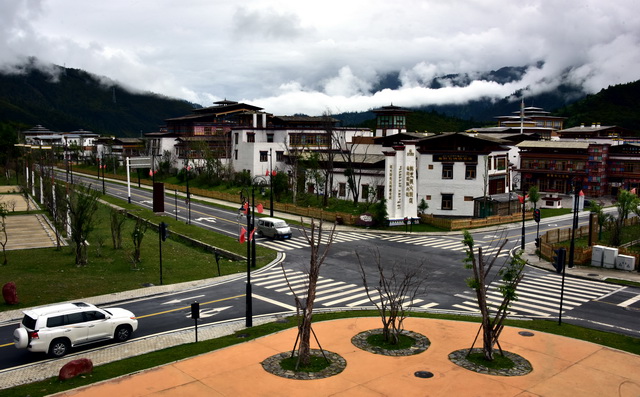
Xie Binhui, deputy director of the Management Committee of Lulang Scenic Area, told the reporter that in Lulang Town, more than 1,300 herdsmen’s families have opened more than 100 homestays, and the average household income alone is more than 200,000 yuan each year.
Xie Binhui introduced that there are several incomes of the original residents’ families in Lulang Town: animal husbandry income, a yak is worth 18,000 yuan to 20,000 yuan, and some herder families have dozens of yaks, and the annual income of yak meat and milk is about 500,000 yuan; Grassland ecological award funds. At present, the national subsidy standard is 7.5 yuan per mu per year for grazing-forbidden grassland and 2.5 yuan per mu per year for grassland with balanced grass and livestock. The income from homestays, business and work is also several hundred thousand yuan every year.
The construction experience of Fujian Ningde Lithium-ion New Energy Town has recently been publicly recommended by the National Development and Reform Commission. This small town has tourist attractions such as Miantao Mountain, Beishi Mountain and Gaoding Mountain, as well as supporting projects in Chijian Lake and the sea area, and more importantly, it is based on the new energy industry.
At present, there are about 40 enterprises in Ningde Lithium-ion New Energy Town, Fujian Province, which has a built-up regional land area of 3,500 mu, attracting 40,000 people, completing the investment in characteristic industries of 21 billion yuan, paying taxes of 2.7 billion yuan annually, and owning 217 invention patents.
Focusing on the lithium battery culture, Fujian Ningde Lithium Battery New Energy Town plans to build a new energy 4DVR experience hall, a double-creation center, an experience avenue, a driverless experience lane, a new energy cruise ship, a yacht, etc., build a green electric town, and superimpose the natural beauty of Chijian Lake to create a unique cultural town with lithium battery new energy characteristics.
Zeng Guojun, a professor and doctoral supervisor at the School of Tourism, Sun Yat-sen University, believes that the creation of characteristic towns has many contents and covers a wide range. In addition to regularly issuing guidance opinions on the construction of characteristic towns and publishing the list of characteristic towns, government departments at all levels should gradually formulate special policies, supporting implementation plans or implementation rules, and form a complete policy system to ensure that characteristic towns have documents to guide, policies to support and laws to withdraw from a series of links such as selection, operation, implementation, guarantee, reward and punishment.
At the same time, formulate special financial policies for the development of characteristic towns, so as to improve the investment, financing and financing mechanisms, provide support for local governments, banks, enterprises, individuals and other characteristic towns to create the main body, especially through innovative financial policy systems such as risk compensation policies, credit guarantee policies and PPP financing policies, and facilitate the financing of enterprises.