Shenzhen: Severely investigate and deal with the behavior that the listing price of second-hand houses of intermediaries exceeds the transaction reference price.

  Shenzhen will severely investigate and deal with the behavior that the listing price of second-hand housing of real estate agencies exceeds the transaction reference price.

  Official website, a real estate agency association in Shenzhen, showed that the Shenzhen Housing and Construction Bureau issued the Notice on Carrying out Special Inspection on the Application of Reference Price of Second-hand Housing Transactions by Real Estate Brokers on February 23rd (hereinafter referred to as the Notice), demanding that the listed price of second-hand housing transactions by real estate brokers exceed the reference price, so as to guide rational transactions and stabilize market expectations.

  At the same time, in order to implement the deployment of the Shenzhen Municipal Government’s real estate regulation and control work, implement the requirements of the Notice of Shenzhen Housing and Construction Bureau on Establishing the Release Mechanism of Second-hand Housing Transaction Reference Price (Shenjian Real Estate [2021] No.2), do a good job in the management of the listed price of second-hand housing in real estate brokerage institutions, and further standardize the professional behavior of relevant personnel, we have formulated the Work Plan for Special Inspection of the Application of Second-hand Housing Transaction Reference Price in real estate brokerage institutions (hereinafter referred to as the Work Plan).

  The "Work Plan" mentioned that through special inspection actions, we will severely investigate and deal with the behavior that the listed price of second-hand housing of real estate agencies exceeds the transaction reference price, guide rational transactions, stabilize market expectations, and promote the stable and healthy development of Shenzhen real estate market.

  The contents of this special inspection mainly include: whether the listed price of second-hand housing released by real estate brokers in stores, websites and related online platforms exceeds the reference price of second-hand housing transactions; At the same time, whether the price of second-hand housing released by real estate brokers through online platforms such as WeChat and QQ exceeds the reference price of second-hand housing transactions.

  According to the division of labor, Shenzhen Housing and Construction Bureau is mainly responsible for formulating the special inspection work plan; Guide, supervise and inspect the housing construction bureaus in all districts to carry out the special inspection of the reference price of second-hand housing transactions.

  The housing construction bureaus of all districts in Shenzhen specifically organize the implementation of special inspections within their respective jurisdictions; Joint intermediary association to carry out inspections; If violations of laws and regulations are found in the inspection process or through other means, the investigation and evidence collection and identification audit work shall be done in a timely manner; Punish real estate brokerage institutions and brokers suspected of violating laws and regulations according to relevant regulations; Establish a regular reporting system, and timely summarize and report the progress of special work.

  The Shenzhen Real Estate Agency Association carries out education and training and theme publicity activities, requiring real estate agencies and their employees to carry out self-examination and self-correction and remove illegal price information in time; Conduct preliminary investigation and evidence collection on the illegal acts found, and timely hand them over to the housing construction bureaus of all districts for handling; Cooperate with district housing construction bureaus to carry out daily inspections.

  The Action Plan shows that from February 23 to February 26, 2021, all real estate agencies and brokers are required to carry out comprehensive self-examination and self-correction, while real estate agency associations carry out training, requiring all real estate agencies and brokers to strictly implement the reference price of second-hand housing transactions. From February 27 to March 26, 2021, widely collect complaints and reports from the masses that the listed price of second-hand housing of real estate agencies exceeded the transaction reference price; Sorting out complaints and reports; It is necessary to immediately investigate, deal with and give timely feedback on violations of laws and regulations.

  Prior to this, the Shenzhen Housing and Construction Bureau issued three announcements in succession on February 8, announcing the establishment of a release mechanism for the reference price of second-hand housing transactions, and released the reference price of second-hand housing transactions in 3,595 residential quarters in the city for the first time. However, the reference price is generally low, almost equivalent to 30% off the market price.

  According to public media reports, up to now, many branches in Shenzhen, such as China Everbright Bank, China Construction Bank, Bank of Communications and Bank of Beijing, have expressed their views, and loans have been issued according to the official reference price of second-hand housing transactions in Shenzhen.

Salary ranking of senior executives in central enterprises: the highest is 6.373 million yuan, and the lowest is 60,000 yuan.

  The "Reform Plan for the Salary System of the Heads of Central Management Enterprises" was implemented in 72 key central enterprises this year. According to statistics, among the 48 central enterprises that have published annual reports recently, there are 18 listed companies with general managers and presidents as samples, and their salaries have decreased year-on-year, and 4 have increased by over 100% year-on-year. The average salary of general managers of 48 listed companies rose from 970,000 yuan in 2014 to 1.07 million yuan in 2015.

  It has been controversial for leaders of central enterprises to get super-high salaries like executives of foreign companies and private enterprises. Recently, listed companies have released annual reports one after another, and the salary of senior executives of central enterprises has become a hot spot in the market. Since January 1, 2015, the Reform Plan of the Salary System for the Heads of Central Management Enterprises has been implemented in 72 key central enterprises. At the beginning of the reform, the vice minister of the Ministry of Human Resources and Social Security said that after the reform, the salary level of the heads of most central management enterprises will decline, and some will fall by a larger margin. Then, judging from the published financial report, has the salary reform of central enterprises achieved the expected results over the past year or so? What problems are reflected in the change of executive compensation in central enterprises?

  The average annual salary of general managers of 48 central enterprises exceeds one million.

  According to media statistics, among the 48 central enterprises that have published annual reports under the supervision of the State Council State-owned Assets Supervision and Administration Commission, with the general manager and president as samples, there are 18 listed companies whose salaries have decreased year-on-year, and 4 have increased by over 100% year-on-year. The average salary of general managers of 48 listed companies rose from 970,000 yuan in 2014 to 1.07 million yuan in 2015.

  Judging from the ups and downs, the biggest decline is Guodian Nanzi. In 2014, the annual salary of Huang Yuanhong, general manager of Guodian Nanzi, was 518,000 yuan. In June 2015, Huang Yuanhong, general manager of Guodian Nanzi, resigned. Since then, Guodian Nanzi has welcomed a new general manager, Ying Guangwei. According to the annual report, its annual salary in 2015 was 164,000 yuan, which was 68.34% lower than that of its predecessor. The biggest increase is Zhenhua Heavy Industry. In 2015, the annual salary of Huang Qingfeng, president of Zhenhua Heavy Industry, was 894,000 yuan, while in 2014, the salary of former president Lu Jianzhong was only 205,300 yuan.

  In terms of absolute salary, the highest salary is CIMC. In 2015, the salary of Mai Boliang, president of CIMC, was as high as 6.373 million yuan, ranking first among the top executives of major central enterprises. Compared with the salary of 9.98 million yuan in 2012, it has declined, but it has been the top three in the A-share salary list in the past three years. Whether it is the former general manager or the current general manager, the annual salary of the senior executives of Yunnan Copper, a subsidiary of Chinalco, is extremely low among listed companies. The current general manager Gao Guichao’s annual salary in 2015 is 60,000 yuan, and his predecessor Shen Nanshan’s annual salary in 2014 is 157,500 yuan. Some netizens even ridiculed that this income is not as good as a courier.

  The salary of petrochemical executives is "halved"

  According to the salary reform plan implemented in early 2015, the salary of the heads of central enterprises will be composed of two parts: past basic annual salary and performance annual salary, and adjusted to three parts: basic annual salary, performance annual salary and term incentive income. The salary of central enterprises is differentiated and officially bid farewell to the "big pot rice". Then, judging from the published annual report, does the change of executive compensation of central enterprises conform to the spirit of reform?

  Taking Sinopec Shuangxiong as an example, according to the 2015 annual report, the salary of Sinopec President Li Chunguang decreased from 972,900 yuan in 2014 to 525,000 yuan in 2015, a decrease of 46%; The salary of Wang Dongjin, president of PetroChina, decreased from 1.137 million yuan to 734,000 yuan, a decrease of 35.44%. In 2015, when international oil prices fell precipitously, Sinopec’s net profit decreased by 11.4% year-on-year to 43.3 billion yuan. The net profit of PetroChina fell by nearly 70% year-on-year, only 35.6 billion yuan, which was lower than the 100 billion yuan mark for the first time in ten years.

  Presidents of five major banks bid farewell to millions of salaries.

  Another obvious change in executive compensation is banks. Recently, the annual reports of five state-owned banks that have established diplomatic relations between workers, peasants and China have been disclosed one after another, and the rise and fall of bank employees’ compensation has also surfaced. Different from the substantial increase in the salary of commercial executives, the overall salary of bank executives declined in 2015, and it has completely bid farewell to the million-dollar salary.

  The Beijing Youth Daily reporter noted that in the disclosure of the annual reports of the five major state-owned banks, it was all stated that "according to the relevant regulations of the state, from January 1, 2015, the remuneration of the chairman, president, supervisor and other deputy heads of the Bank was implemented in accordance with the Interim Measures for the Administration of Remuneration of Heads of Central Financial Enterprises, and the Bank has paid salaries accordingly".

  According to the 2015 annual report, the net profit attributable to the parent company of the five major banks exceeded 920 billion yuan, equivalent to earning 2.5 billion yuan every day. Although the profit scale was "the legendary swordsman", the net profit fell into a "turtle speed" growth. According to the annual report of the five state-owned commercial banks that established diplomatic relations between workers, peasants and China, their net profit increased by 0.5%, 0.7%, 0.74%, 0.28% and 1.5% respectively in 2015. After years of double-digit high-speed growth, the growth rate is the slowest in the last decade, and banks have bid farewell to the era of "lying down to make money".

  The annual salary of the presidents of the five major state-owned banks in 2015 can almost be called "waist cutting". Among them, Yi Huiman, President of Industrial and Commercial Bank of China, paid 546,800 yuan in 2015, compared with 1,089,000 yuan in the previous year, a decrease of 49.79%; Chen Siqing, President of China Bank, paid 613,300 yuan in 2015, down 43.38% from 1,083,200 yuan in the previous year; Wang Zuji, President of China Construction Bank, paid RMB364,600 in 2015, a significant decrease of 67.79% compared with the previous year (President Zhang Jianguo paid RMB1,132,000 in the previous year); Peng Chun, President of Bank of Communications, paid 525,700 yuan in 2015, down 47.83% from 1,007,600 yuan in the previous year. Zhang Yun, the president of the Agricultural Bank of China, was punished for violating discipline, but no statistics were made. The pre-tax salary of Cai Hua Xiang and Lou Wenlong, the vice presidents of the Agricultural Bank of China, was 977,400 yuan in 2014, and it was 522,100 yuan in 2015, a decrease of 46.58%.

  Text/reporter Zhu Kaiyun

  related news

  The income of employees of listed banks remains unchanged as a whole.

  At present, 10 listed banks have published their 2015 annual reports. According to the data of the annual report, in the past year, due to the salary limit of central enterprises and the decline in profits, the salaries of senior executives such as chairmen and presidents of banks have shrunk significantly, and some have even been cut by half, but the per capita income of employees is basically the same as that of the previous year, with little increase and decrease, and the performance is stable.

  According to the calculation results of professional institutions, except for China Merchants Bank, China CITIC Bank and Bank of Communications, the per capita salary of other banks is within 4% year-on-year, which is basically the same. The per capita salary of joint-stock banks is mostly between 300,000 and 400,000 yuan, while that of the top five state-owned banks is between 200,000 and 300,000 yuan, and the joint-stock banks beat the state-owned banks completely.

  Specifically, Ping An Bank has the highest per capita salary of 418,100 yuan, an increase of 3.31% over 2014; The second place is Minsheng Bank, with 404,000 yuan, an increase of 3.22% over 2014; Everbright Bank ranked third with 359,700 yuan, a decrease of 2.34% over the previous year.

  The per capita salary of the five major state-owned banks is still significantly lower than that of the joint-stock banks, among which the highest bank of communications is 274,700 yuan, up by 7.73% year-on-year, which is 183,400 yuan less than that of China Merchants Bank, which is the least among the joint-stock banks. Followed by China Bank, 259,800 yuan, an increase of 2.36% over the previous year; The third place is CCB, with 247,000 yuan, a year-on-year decrease of 0.56%; ICBC ranked fourth with 245,900 yuan, a year-on-year decrease of 0.77%; The last one was Agricultural Bank of China, which was 221,500 yuan, a year-on-year decrease of 3.40%.

  It is worth noting that the total wages and benefits of China Merchants Bank and CITIC Co., Ltd. have fallen sharply, with a decrease of 15.32% and 19.96% respectively. However, according to industry analysts, the main reason for the sharp decline is the delayed payment of performance pay, which does not mean that China Merchants Bank and China CITIC Bank are significantly reducing their salaries.

  China Merchants Bank issued a document in April last year, which will implement a deferred payment risk premium system in domestic branches, that is, a certain proportion of the performance pay of employees in risk-related positions will be withdrawn, and the amount will be paid year by year according to the risk release of the project, with a withdrawal ratio of 10%, covering ordinary employees in markets, compliance and operations. The direct consequence of this mechanism is that the income of bank employees decreased in that year.

  Of the 16 A-share listed banks, 10 have published their annual reports, including five state-owned banks that have established diplomatic relations between workers and peasants, and five joint-stock commercial banks, namely China Merchants Bank, Minsheng Bank, CITIC Bank, China Everbright Bank and Ping An Bank.

  Text/Beijing Youth Daily reporter Cheng Wei

Reform of the examination and approval system for drugs and medical devices: people’s health needs to be reviewed and reformed without stopping.

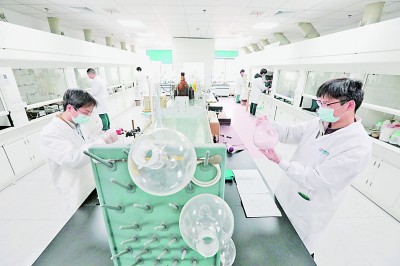
  Medical technicians in Cihu High-tech Zone, Ma ‘anshan City, Anhui Province are developing COVID-19 pharmaceutical core intermediates. Wang Wensheng photo/bright picture

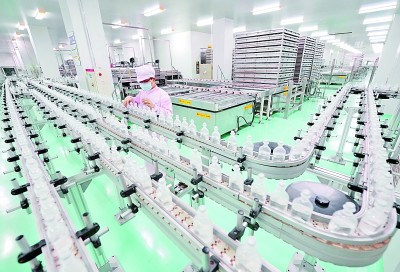
  Workers of a pharmaceutical company in Shijiazhuang, Hebei Province work in the pharmaceutical production workshop. Xinhua news agency

    [Endeavour, New Journey, New Era, Great Change]

    Since the reform of evaluation in 2015, National Medical Products Administration has approved 95 innovative drugs and approved 155 innovative medical devices to be listed.

    Five Covid-19 vaccines were approved for conditional marketing, two Covid-19 vaccines were approved for emergency use, and 34 vaccine varieties with five technical routes entered clinical trials.

    106 novel coronavirus detection reagents were approved, including 38 nucleic acid detection reagents, 37 antibody detection reagents and 31 antigen detection reagents.

    "The quality of registration application materials is not high, and it needs to be supplemented and improved many times during the review process, which seriously affects the efficiency of review and approval; Repeated construction and application of generic drugs, vicious competition in the market, and the quality of some generic drugs is far from the international advanced level; The listing approval time of new drugs urgently needed in clinic is too long, and drug research and development institutions and researchers cannot apply for drug registration, which affects the enthusiasm of drug innovation. "

    This is a frank and incisive analysis of drugs and medical devices related to people’s lives and health in a the State Council document seven years ago. This analysis resonates with the confusion of the people: Why are some drugs "slower" to market in China than in foreign countries? Why do some people go overseas to purchase medicines?

    The full name of the the State Council document is Opinions on Reforming the Examination and Approval System of Medicines and Medical Devices, which was issued in August 2015, thus kicking off the reform of the examination and approval system of medicines and medical devices in China (hereinafter referred to as the examination and approval reform). Especially since its establishment in 2018, National Medical Products Administration has continuously deepened the reform of evaluation, encouraged the innovation of drugs and medical devices, improved the quality of drugs and medical devices, increased effective supply, and effectively guaranteed people’s health and life safety.

1. The backlog of registration applications has been solved.

    The quality of drugs and medical devices is related to everyone’s health and safety, which is the original intention of implementing the review and approval system. However, if the evaluation efficiency is too low, it will lead to the lag of product listing time, which will also affect people’s health and safety. After all, disease waits for no one.

    Take drugs as an example. In the past, the backlog of drug registration applications in China was serious, with a maximum of 22,000 applications. Many drugs have to wait several years for approval after they apply for registration. Pharmaceutical companies are helpless and patients are miserable.

    How to speed up the review? This is the first problem to be solved in the reform. The drug regulatory authorities, seeing the move, launched a series of powerful measures — —

    Full implementation of the implied license system for 60-day expiration of drug clinical trials, which is one-third shorter than the 90-day review time limit before the reform.

    We will establish and improve the procedures for accelerating the listing and registration of drugs, optimize the review and approval process, and give priority to the clinical shortage of drugs, anticancer drugs, drugs for children, drugs for rare diseases, drugs for major infectious diseases, vaccines urgently needed for disease prevention and control, and innovative high-end medical devices, thus greatly shortening the review time limit.

    Drugs that show efficacy in early clinical trials can be conditionally approved for marketing and used in urgent need patients who can’t wait any longer.

    … … … …

    As a drug technical evaluation institution, National Medical Products Administration Drug Evaluation Center has also strengthened the management of evaluation items, refined the evaluation sequence, strengthened the management of time limit, set up special groups, increased reviewers, revised the evaluation points, standardized technical requirements, etc., and the evaluation standards, quality and efficiency of drugs have been greatly improved.

    "From the peak in 2015, there was a backlog of more than 20,000 applications. By 2018, more than 90% of them were reviewed within the time limit, and China’s drug review and approval entered the fast lane." The relevant person in charge of the Department of Drug Registration of National Medical Products Administration told the reporter that, for example, in terms of new drugs urgently needed overseas, by the end of 2021, 51 new drugs urgently needed overseas were approved for listing, among which the review of rare diseases drugs was completed within 3 months, and the review of other drugs urgently needed clinically was completed within 6 months, which greatly shortened the time for listing new drugs urgently needed overseas in China.

2. The innovation enthusiasm of the pharmaceutical industry has been stimulated.

    The backlog of applications has been solved, and the speed of drug listing has been accelerated. However, in order to meet the people’s drug demand, new drugs need to be put on the market continuously. Encouraging drug innovation is the core of evaluation reform.

    In 2015, the Opinions on Reforming the Examination and Approval System of Drugs and Medical Devices raised the standards for drug approval, and changed the new drugs from "drugs that were not marketed in China" to "drugs that were not marketed in China or abroad", that is, "global new". Two years later, the General Offices of the General Office of the Central Committee of the CPC and the State Council issued the Opinions on Deepening the Reform of Review and Approval System and Encouraging the Innovation of Pharmaceutical and Medical Devices, and made special arrangements for the innovation of pharmaceutical and medical devices.

    The reporter learned that in order to encourage the research and development of innovative drugs and medical devices, National Medical Products Administration not only gave support in priority evaluation, but also formulated a series of technical guiding principles, such as "Technical Requirements for Application for Pharmaceutical Common Problems in Phase I Clinical Trials of Innovative Chemicals", to guide the application for research and development of innovative products. Reviewers will also take the initiative to communicate with R&D producers in key review links such as pre-clinical, clinical and pre-listing, so as to avoid detours.

    "The review reform encourages clinical value-oriented drug innovation, optimizes the review and approval procedures for innovative drugs, and accelerates the review of innovative drugs that are urgently needed in clinic, which greatly stimulates the research and development vitality of pharmaceutical companies." The relevant person in charge of Renfu Pharmaceutical Group Co., Ltd. told reporters that in recent years, a number of new drugs have been approved for listing in this enterprise, and new breakthroughs have been achieved in innovation capability.

    Among many reform measures, the system of drug marketing license holders deserves attention. Previously, only pharmaceutical manufacturers could apply for drug registration. In order to register drugs, researchers and research institutions must first invest and build factories themselves. This management system of product registration and production license is not conducive to drug innovation. In 2015, China launched a pilot system of drug marketing license holders in 10 provinces and cities, and drug research and development institutions and researchers can apply for registered drugs. Expert analysis pointed out that this move reduced the capital investment and time cost of drug developers, and new drugs could be listed three to five years in advance. In 2019, the drug marketing license holder system was written into the newly revised drug administration law and was fully implemented nationwide.

    According to National Medical Products Administration, in recent years, China has made great progress in the development of innovative drugs. From 2018 to 2021, the number of innovative drugs approved for marketing increased year by year, with 11, 12, 20 and 45, respectively, including Covid-19 vaccines and clinically urgent therapeutic drugs in the fields of tumors, immune system diseases and rare diseases. The pace of medical device innovation is also accelerating. In 2021, 35 innovative medical devices were approved for listing, which is the largest number of innovative products approved in recent years.

3. Consistency evaluation improves the efficacy of generic drugs.

    In recent years, many drugs that were originally expensive began to reduce their prices. Careful observation shows that there is a "hero" behind the decline in drug prices — — Generic drugs.

    Innovative drugs provide new options for treating diseases and saving lives, but for the vast majority of patients, generic drugs are their life. According to National Medical Products Administration, China’s modern pharmaceutical industry started late, and the production of drugs is mainly imitation. More than 95% of the chemicals that have been approved for marketing are generic drugs.

    Generic drugs are imitations of the original drug after the patent protection period expires, and the price is much lower than that of the original drug. In the past, China’s generic drug evaluation and approval standards were not high, and there was a lack of high-quality generic drugs, and the curative effect was very different from that of the original drug.

    Improving the quality and efficacy of generic drugs is an important goal of evaluation reform, and the solution is the consistency evaluation of generic drug quality and efficacy — — For generic drugs that have been approved for marketing, the evaluation should be carried out according to the principle of consistency with the quality and efficacy of the original drug. The core is that generic drugs should reach the level consistent with the original drug in quality and efficacy, and can replace the original drug in clinic.

    "There are several key issues in carrying out consistency evaluation, one is the selection and determination of reference preparations, the other is the determination of technical standards, and the third is to strictly follow the procedures." According to the person in charge of National Medical Products Administration, the Bureau ensured the smooth development of generic drug conformity evaluation by improving the evaluation system, strictly evaluating standards, strengthening service guidance and optimizing the workflow. At present, 4677 specifications of generic reference preparations have been published, and 2044 specifications and 437 varieties have been applied for through consistency evaluation.

    Consistency evaluation puts generic drugs on the right track, and ultimately benefits the people. Since the pilot of centralized drug procurement and use organized by the state was launched nationwide in 2019, a number of domestic generic drugs won the bid. Medical insurance, health insurance and other departments have organized medical institutions to carry out research on 14 representative generic drugs that won the bid, and confirmed that these 14 generic drugs that passed the consistency evaluation are clinically equivalent to the original drugs. Generic drugs with the same efficacy as the original drug are not only cheaper, but also further reduce the price of the original drug under competitive pressure, greatly reducing the burden of patients.

4, emergency review and approval for epidemic prevention and control to provide a strong guarantee.

    4 days, which is the time for China to complete the review and approval of the first Covid-19 nucleic acid detection reagent and sequencing reagent in the world.

    On January 20, 2020, National Medical Products Administration Instrument Center started the emergency work overnight, and the reviewers stayed up all night to connect with the enterprises one by one, and the review and research and development were carried out simultaneously. On January 26th, the first batch of four in vitro diagnostic reagent products were approved for marketing, which provided an effective detection method for the first line of anti-epidemic.

    The outbreak of epidemic situation in COVID-19 challenges the evaluation reform. Xu Jinghe, deputy director of National Medical Products Administration, said at the Boao Forum for Asia in 2021 that the role of drug supervision departments in epidemic prevention and control has changed, from reviewers to instructors, working with enterprises to speed up product listing.

    It is understood that National Medical Products Administration made every effort to carry out emergency review and approval during the epidemic. Five Covid-19 vaccines have been approved for conditional marketing, two Covid-19 vaccines have been approved for emergency use, and 34 vaccine varieties from five technical routes have entered clinical trials. Organized the formulation of three technical guidelines for research and development of therapeutic drugs in Covid-19, approved 58 applications for clinical trials of therapeutic drugs in Covid-19, and approved the registration and listing of Qingfei Detoxification Granules, Huashi Detoxification Granules and Xuanfei Detoxification Granules. 106 novel coronavirus detection reagents were approved to effectively meet the needs of epidemic prevention and control.

    The epidemic is not over yet, and the emergency review and approval is still going on. As long as people’s health needs it, the evaluation reform will not stop. The drug supervision departments and reviewers have been speeding up on the road of realizing healthy China, so as to run out of acceleration for people’s health.

    (Reporter Chen Haibo)

Proposal for Emergency Relief Action of Hope Project of "9.5" Luding Earthquake in Sichuan Province was released.

Zhongxin. com, Chengdu, September 6 (Reporter He Yuqing) The reporter learned from the Sichuan Provincial Committee of the Communist Youth League on the 6 th that the Sichuan Youth Development Foundation, the Sichuan Youth Federation and the Sichuan Young Entrepreneurs Association jointly issued the "Proposal for Emergency Relief Action of the" 9.5 "Luding Earthquake Hope Project in Sichuan Province" on the same day, urging caring enterprises and individuals from all walks of life to donate generously and actively support the earthquake-stricken areas. The proposal also announced the donation method and contact information of material donation.

  The original text of the proposal is as follows:

  Proposal for Emergency Relief Action of Hope Project of "9.5" Luding Earthquake in Sichuan Province

  At 12: 52 on September 5, 2022, an earthquake of magnitude 6.8 occurred in Luding County, Sichuan Province, with a focal depth of 16 kilometers. The disasters in Luding County of Ganzi Prefecture and Shimian County of Ya ‘an City in our province were serious. Sichuan people once again face the pain of the earthquake. At this moment, the disaster area needs our help!

  In order to help teenagers and families with special difficulties in disaster areas get out of the shadow of the earthquake as soon as possible, return to school, resume production and rebuild their hopes, Sichuan Youth Development Foundation, Sichuan Youth Federation and Sichuan Young Entrepreneurs Association jointly launched "Sichuan Province ‘ 9·5’ Luding Earthquake Hope Project Emergency Relief Action ",mobilizing caring enterprises and individuals from all walks of life to support the earthquake-stricken areas. According to the current situation, the three contents of this emergency relief operation are drawn up: first, to raise much-needed living security materials for the disaster-stricken areas; The second is to raise funds to carry out humanistic and mental health care for the people in the disaster areas; The third is to raise grants and relief funds for young students in disaster areas (donate 1000 yuan to fund a primary school or junior high school student in disaster areas; Donate 3000 yuan to support a high school or vocational school student in the disaster area; Donate 5000 yuan to help a college freshman in the disaster area; Donate 10000 yuan to help a student and family with special difficulties in the disaster area.

People’s Republic of China (PRC) Qinghai-Tibet Plateau Ecological Protection Law

  Xinhua News Agency, Beijing, April 26th

People’s Republic of China (PRC) Qinghai-Tibet Plateau Ecological Protection Law

(Adopted at the Second Session of the 14th the NPC Standing Committee on April 26th, 2023)

  catalogue

  Chapter I General Provisions

  Chapter II Ecological Security Layout

  Chapter III Ecological Protection and Restoration

  Chapter IV Prevention and Control of Ecological Risks

  Chapter V Guarantee and Supervision

  Chapter VI Legal Liability

  Chapter VII Supplementary Provisions

  Chapter I General Provisions

  Article 1 This Law is formulated in order to strengthen the ecological protection of the Qinghai-Tibet Plateau, prevent and control ecological risks, ensure ecological security, build a highland of national ecological civilization, promote the sustainable development of economy and society, and realize the harmonious coexistence between man and nature.

  Article 2 This Law shall apply to activities related to the ecological protection of the Qinghai-Tibet Plateau. Where there are no provisions in this law, the provisions of other relevant laws shall apply.

  The Qinghai-Tibet Plateau as mentioned in this Law refers to all administrative regions of Xizang Autonomous Region and Qinghai provinces and relevant county-level administrative regions of Xinjiang Uygur Autonomous Region, Sichuan Province, Gansu Province and Yunnan Province.

  Article 3 The ecological protection of the Qinghai-Tibet Plateau shall respect, conform to and protect nature. Adhere to ecological protection first, natural restoration first, and keep the natural ecological security boundary; Adhere to overall coordination, classified policies, scientific prevention and control, and systematic governance.

  Article 4 The State shall establish a coordination mechanism for ecological protection of the Qinghai-Tibet Plateau, make overall guidance and comprehensive coordination for ecological protection of the Qinghai-Tibet Plateau, review major policies, major plans and major projects for ecological protection of the Qinghai-Tibet Plateau, coordinate major issues across regions and departments, and supervise and inspect the implementation of relevant important work.

  The relevant departments of the State Council are responsible for the ecological protection of the Qinghai-Tibet Plateau in accordance with the division of responsibilities.

  Article 5 The local people’s governments at all levels on the Qinghai-Tibet Plateau shall implement the responsibilities of ecological protection and restoration, prevention and control of ecological risks, optimization of industrial structure and layout, and maintenance of ecological security on the Qinghai-Tibet Plateau.

  Relevant places on the Qinghai-Tibet Plateau should strengthen cooperation in the formulation of local regulations and local government rules, planning, supervision and law enforcement as needed, and jointly promote ecological protection on the Qinghai-Tibet Plateau.

  Article 6 The local people’s governments at or above the county level in the State Council and the Qinghai-Tibet Plateau shall incorporate the ecological protection of the Qinghai-Tibet Plateau into the national economic and social development plan.

  According to the division of responsibilities, the relevant departments of the State Council organize the preparation of special plans for ecological protection and restoration of the Qinghai-Tibet Plateau, organize the implementation of major ecological restoration projects, and promote the ecological protection and restoration of the Qinghai-Tibet Plateau as a whole. The local people’s governments at or above the county level on the Qinghai-Tibet Plateau shall, in accordance with the relevant provisions of the state, organize the implementation of relevant special plans for ecological protection and restoration of the Qinghai-Tibet Plateau in their respective administrative areas. The preparation of special plans for ecological protection and restoration of the Qinghai-Tibet Plateau should be scientifically demonstrated and evaluated.

  Article 7 The State shall strengthen the investigation on the natural resources and ecological environment of the land, forests, grasslands, rivers, lakes, wetlands, glaciers, deserts, wild animals and plants on the Qinghai-Tibet Plateau, carry out the evaluation on the carrying capacity of regional resources and environment and the suitability of national space development, improve the monitoring network system of ecological environment, natural resources, biodiversity, hydrology, meteorology, geology, soil and water conservation and natural disasters on the Qinghai-Tibet Plateau, and promote comprehensive monitoring, collaborative monitoring and normalization monitoring. Investigation, evaluation and monitoring information shall be shared in accordance with relevant state regulations.

  Article 8 The State encourages and supports scientific investigation and research on the Qinghai-Tibet Plateau, strengthens research on major scientific and technological issues and major scientific and technological infrastructure construction in the fields of climate change, biodiversity, ecological protection and restoration, hydrology and water resources, snow mountain glacier frozen soil, soil and water conservation, desertification control, river and lake evolution, geological environment, natural disaster monitoring, early warning and prevention, development, utilization and protection of energy and climate resources, carbon sequestration of ecosystems, etc., and promotes long-term research work to master the ecological background and changes of the Qinghai-Tibet Plateau.

  The state makes overall arrangements for the scientific and technological innovation platform for ecological protection in the Qinghai-Tibet Plateau, increases the training of scientific and technological professionals, makes full use of the scientific investigation and research achievements in the Qinghai-Tibet Plateau, popularizes and applies advanced and applicable technologies, promotes the transformation of scientific and technological achievements, and gives full play to the supporting role of science and technology in ecological protection in the Qinghai-Tibet Plateau.

  Article 9 Relevant departments of the State Council and local people’s governments at all levels shall take effective measures to protect the traditional ecological and cultural heritage of the Qinghai-Tibet Plateau and promote the excellent ecological culture of the Qinghai-Tibet Plateau.

  The relevant departments of the State Council and local people’s governments at all levels should strengthen the publicity and education of ecological protection on the Qinghai-Tibet Plateau, spread the concept of ecological civilization, advocate a green and low-carbon lifestyle, improve the quality of ecological civilization of the whole people, and encourage and support units and individuals to participate in activities related to ecological protection on the Qinghai-Tibet Plateau.

  The news media should take various forms to carry out propaganda and reports on ecological protection of the Qinghai-Tibet Plateau, and supervise the illegal activities by public opinion according to law.

  Tenth units and individuals that have made outstanding contributions to the ecological protection of the Qinghai-Tibet Plateau shall be commended and rewarded in accordance with the relevant provisions of the state.

  Chapter II Ecological Security Layout

  Article 11 The state shall make overall plans for the ecological security layout of the Qinghai-Tibet Plateau, promote the comprehensive management, systematic management and source management of grass, sand and ice in mountains, rivers, forests, fields and lakes, implement major projects for the protection and restoration of important ecosystems, optimize the ecological security barrier system of the Qinghai-Tibet Plateau with water conservation, biodiversity protection, soil and water conservation, windbreak and sand fixation, and carbon sequestration of ecosystems as its main ecological functions, improve the quality, diversity, stability and sustainability of ecosystems, enhance the supply capacity of ecological products and the service function of ecosystems, and build a national ecological security barrier strategy.

  Article 12 The local people’s governments at or above the county level on the Qinghai-Tibet Plateau shall organize the compilation of the territorial space planning of their respective administrative areas, and shall implement the relevant requirements of the state for the development and protection of the territorial space on the Qinghai-Tibet Plateau, make detailed arrangements for the functional spaces such as agriculture, ecology and towns, and make overall plans to delimit cultivated land and permanent basic farmland, the red line of ecological protection and the development boundary of cities and towns. The special planning involving the use of land and space in the Qinghai-Tibet Plateau should be linked with the land and space planning.

  Thirteenth Qinghai-Tibet Plateau land space development and utilization activities should meet the requirements of land space use control. The conversion of uses in the ecological space of the Qinghai-Tibet Plateau should be conducive to enhancing the ecological functions of forests, grasslands, rivers, lakes, wetlands, glaciers, deserts and other ecosystems.

  The people’s governments at the provincial level on the Qinghai-Tibet Plateau should strengthen the supervision and management of human activities within the red line of ecological protection and regularly evaluate the effectiveness of ecological protection.

  Article 14 The people’s government at the provincial level on the Qinghai-Tibet Plateau shall, according to the ecological environment and the utilization of resources in their respective administrative areas, and in accordance with the requirements of the red line of ecological protection, the bottom line of environmental quality and the on-line utilization of resources, strictly formulate the ecological environment zoning control plan and the ecological environment access list, and report them to the competent department of ecological environment of the State Council for the record before implementation. Eco-environmental zoning control scheme and eco-environmental access list should be connected with national land spatial planning.

  Article 15 The state strengthens the protection of forests, alpine meadows, grasslands, rivers, lakes, wetlands, snow-capped mountains and glaciers, plateau permafrost, deserts, spring areas and other ecosystems on the Qinghai-Tibet Plateau. Consolidate and upgrade the ecological function areas of grassland meadow wetland in Sanjiangyuan (the birthplace of Yangtze River, Yellow River and Lancang River), Zoige grassland wetland ecological function area, Gannan Yellow River important water supply ecological function area, Qilian Mountain glacier and water conservation ecological function area, Altun grassland desertification control ecological function area, Sichuan-Yunnan forest and biodiversity ecological function area, forest ecological function area on the edge of southeast Tibet Plateau, Qiangtang Plateau desert ecological function area in northwest Tibet, Ecological functions of national key ecological function area, such as water conservation, biodiversity conservation, soil and water conservation, windbreak and sand fixation, etc.

  Article 16 The State supports the construction of a nature reserve system on the Qinghai-Tibet Plateau. People’s governments at the provincial level in the State Council and Qinghai-Tibet Plateau have set up national parks, nature reserves, natural parks and other nature reserves in the complete distribution areas of important typical ecosystems on the Qinghai-Tibet Plateau, sensitive areas of ecological environment, natural concentrated distribution areas of rare, endangered or endemic wild animals and plants, important habitats, important natural relics and important natural landscapes, and promoted the construction of nature reserves such as Sanjiangyuan, Qilian Mountain, Qiangtang, Mount Everest, Gaoligongshan and Gongga Mountain to maintain important natural ecosystems.

  Article 17 The industrial structure and layout of the Qinghai-Tibet Plateau shall be compatible with the carrying capacity of the ecosystem, resources and environment of the Qinghai-Tibet Plateau. The relevant departments of the State Council and the local people’s governments at or above the county level on the Qinghai-Tibet Plateau shall, in accordance with the requirements of national spatial planning, adjust the industrial structure, optimize the layout of productive forces, give priority to the development of resource-saving and environment-friendly industries, moderately develop eco-tourism, characteristic culture, characteristic agriculture and animal husbandry, ethnic handicrafts and other regional characteristic eco-industries, and establish and improve a green, low-carbon and circular economy system.

  The construction and expansion of industrial projects on the Qinghai-Tibet Plateau shall conform to the functional orientation of the regional main body and the requirements of the national industrial policy, and strictly implement the provisions on natural resource development, industrial access and exit.

  Chapter III Ecological Protection and Restoration

  Article 18 The state strengthens the ecological protection and restoration of the Qinghai-Tibet Plateau, adheres to the integrated protection and restoration of mountains, rivers, forests, fields, lakes, grass, sand and ice, and implements the systematic management of giving priority to natural restoration and combining natural restoration with artificial restoration.

  Article 19 The relevant departments and local people’s governments in the State Council shall strengthen the ecological protection and restoration work in the Three Rivers source area, systematically protect and classify the national parks established according to law, scientifically adopt measures such as grazing prohibition and enclosure, intensify the control of degraded grasslands, degraded wetlands, desertified land and soil erosion, and comprehensively rectify severely degraded land; All kinds of resource development and utilization activities that destroy ecological functions or do not meet the requirements of differentiated management and control are strictly prohibited.

  Article 20 The relevant departments of the State Council and the local people’s governments at or above the county level on the Qinghai-Tibet Plateau shall establish and improve the protection system of snow-capped glaciers and frozen soil on the Qinghai-Tibet Plateau, and strengthen the monitoring, early warning and systematic protection of snow-capped glaciers and frozen soil.

  The people’s governments at the provincial level on the Qinghai-Tibet Plateau should include large-scale ice cap glaciers and small-scale glaciers in the red line of ecological protection, implement closed protection for important snow-capped glaciers, and take effective measures to strictly control human disturbance.

  The people’s governments at the provincial level on the Qinghai-Tibet Plateau shall delimit the scope of protection of permafrost regions, strengthen the protection of permafrost regions and mid-deep seasonal permafrost regions, strictly control the development of resources in permafrost regions, and strictly examine and approve major engineering projects such as town planning, transportation, pipelines and power transmission and transformation in permafrost regions.

  The people’s governments at the provincial level on the Qinghai-Tibet Plateau should carry out the coordinated protection of the snow-capped mountains, glaciers and frozen soil and the surrounding ecosystems, and maintain the natural ecological environment conducive to the protection of the snow-capped mountains, glaciers and frozen soil.

  Article 21 The relevant departments of the State Council and the local people’s governments at all levels on the Qinghai-Tibet Plateau shall establish and improve the management and protection system for rivers and lakes on the Qinghai-Tibet Plateau, improve the system of long rivers and lakes, and increase the protection of key rivers such as the Yangtze River, the Yellow River, the Lancang River, the Yarlung Zangbo River and the Nujiang River, and key lakes such as Qinghai Lake, Zhaling Lake, Ering Lake, Selinchuo, Namco, Yangzhuo Yongcuo and Mapang Yongcuo.

  The management scope of rivers and lakes in the Qinghai-Tibet Plateau shall be scientifically delineated and promulgated by the relevant local people’s governments at or above the county level according to law. It is forbidden to illegally use or occupy rivers, lakes and coastlines on the Qinghai-Tibet Plateau.

  Article 22 The development and utilization of water resources in the Qinghai-Tibet Plateau shall conform to the comprehensive planning of river basins, adhere to scientific development and rational utilization, coordinate all kinds of water demand, give consideration to the interests of upstream and downstream, main tributaries and left and right banks, give full play to the comprehensive benefits of water resources, and ensure water safety and ecological safety.

  Article 23 The state strictly protects natural grasslands in important ecological locations such as the source of great rivers on the Qinghai-Tibet Plateau, and classifies grasslands that play the most basic and important role in safeguarding national ecological security and ensuring the healthy development of grassland animal husbandry as basic grasslands according to law. The local people’s governments at or above the county level on the Qinghai-Tibet Plateau should strengthen the protection of grasslands on the Qinghai-Tibet Plateau, implement stricter protection and management of basic grasslands, and ensure that the area is not reduced, the quality is not degraded, and the use is not changed.

  The state strengthens the ecological protection and restoration of alpine meadows and grasslands on the Qinghai-Tibet Plateau. The local people’s governments at or above the county level on the Qinghai-Tibet Plateau should optimize the construction of grassland fences, take effective measures to protect the original vegetation of grasslands, scientifically promote the ecological restoration of degraded grasslands, and implement comprehensive management of degraded grasslands such as black soil beaches.

  Article 24 The local people’s governments at or above the county level on the Qinghai-Tibet Plateau and their relevant departments shall coordinate the grassland ecological protection and the development of animal husbandry in an overall way, and, in light of the local actual conditions, regularly check the carrying capacity of grasslands, implement the balance between grass and livestock, scientifically delimit grazing prohibition areas, and prevent overloading and overgrazing. Grassland severely degraded, desertified, salinized and rocky desertification and grassland in ecologically fragile areas shall be prohibited from grazing and closed for grazing.

  Grassland contractors shall make rational use of grasslands and shall not exceed the approved livestock carrying capacity of grasslands; Measures such as planting and storing forage, increasing forage supply, adjusting livestock and optimizing herd structure are taken to keep the balance between forage and livestock.

  Article 25 The state comprehensively strengthens the protection of natural forests on the Qinghai-Tibet Plateau, strictly restricts the cutting of natural forests, strengthens the protection of native zonal vegetation, optimizes the structure of forest ecosystem, and improves the shelter forest system in important river basins. The people’s governments at the provincial level in the State Council and the Qinghai-Tibet Plateau shall demarcate public welfare forests in important ecological areas and ecologically fragile areas of the Qinghai-Tibet Plateau according to law and implement strict management.

  The local people’s governments at or above the county level in the Qinghai-Tibet Plateau and their relevant departments should scientifically implement land greening, adjust measures to local conditions, rationally allocate arbor, shrub and grass vegetation, give priority to the use of native tree species and grass seeds, improve the quality of greening, and strengthen pest control and forest and grassland fire prevention.

  Article 26 The State strengthens the protection and restoration of wetlands on the Qinghai-Tibet Plateau, enhances the ecological functions of wetlands such as water conservation, climate regulation and biodiversity protection, and enhances the carbon sequestration capacity of wetlands.

  The local people’s governments at or above the county level on the Qinghai-Tibet Plateau should strengthen the coordination of wetland protection, take effective measures, implement the requirements of the total wetland area control target, optimize the spatial layout of wetland protection, strengthen the overall protection of river sources, upper and middle reaches and peat swamp wetlands, and comprehensively rectify and restore wetlands with serious ecological degradation.

  It is forbidden to exploit peat in peat swamp wetlands such as Xingsuhai, Zhaling Lake, Eling Lake and Zoige. It is forbidden to open (enclose) reclamation, drain natural wetlands and other acts that destroy wetlands and their ecological functions.

  Article 27 The local people’s governments at all levels on the Qinghai-Tibet Plateau and their relevant departments shall implement the strictest farmland protection system, take effective measures to improve the basic fertility of cultivated land, enhance the ecological function of cultivated land, and protect and improve the ecological environment of cultivated land; Encourage and support agricultural producers and operators to adopt the methods of combination of cultivation and utilization, saline-alkali land improvement, ecological cycle and comprehensive utilization of wastes, scientifically utilize cultivated land, popularize the use of green and efficient agricultural production technologies, strictly control the application of chemical fertilizers and pesticides, and scientifically dispose of agricultural wastes such as agricultural films and crop straws.

  Article 28 The competent departments of forestry, grassland, agriculture and rural areas of the State Council, together with the relevant departments of the State Council and the provincial people’s government of Qinghai-Tibet Plateau, shall, in accordance with the division of responsibilities, conduct a survey of wildlife species, put forward opinions on implementing protection measures according to the survey, improve the relevant directory system, and strengthen the protection of important habitats of wildlife, migration routes and original habitats of wild plants. Key protection will be given to wild yak, Tibetan antelope, Przewalski’s gazelle, snow leopard, giant panda, Gaoligong white-browed gibbon, black-necked crane, Hucho taiwanensis, yellow river fish with bony lips, black-spotted pheasant, flat-nosed fish, naked carp and Rhodiola crenulata, Cyperaceae in Tibet, snow rabbit and other rare and endangered or endemic wild animal and plant species on the Qinghai-Tibet Plateau.

  The state supports the development of wild animal rescue and breeding bases and the construction of botanical gardens and plateau biological germplasm resources banks, and strengthens the rescue and ex-situ protection of rare, endangered or endemic wild animal and plant species on the Qinghai-Tibet Plateau.

  The local people’s governments at or above the county level on the Qinghai-Tibet Plateau shall organize relevant units and individuals to actively carry out comprehensive prevention and control of wildlife damage. If wildlife causes casualties or losses to livestock, crops or other property, compensation shall be given according to law.

  Article 29 The State strengthens the protection of biodiversity on the Qinghai-Tibet Plateau, implements major projects for biodiversity protection, and prevents the destruction of biodiversity.

  Relevant departments in the State Council and local people’s governments at all levels on the Qinghai-Tibet Plateau should take effective measures to establish and improve ecological corridors and enhance the integrity and connectivity of ecosystems.

  Article 30 The local people’s governments at or above the county level on the Qinghai-Tibet Plateau and their departments in charge of forestry and grassland shall take measures such as the closure and protection of desertified land, the protection and restoration of vegetation, and strengthen the ecological protection of desert and the comprehensive management of desertified land.

  Article 31 The people’s governments at the provincial level on the Qinghai-Tibet Plateau shall take measures such as closed cultivation, rotational grazing, and resettlement, and implement key control projects such as plateau mountains, farmland sand belt, river bank belt, and ecological protection belt to enhance the function of soil and water conservation.

  Article 32 The water administrative department of the State Council and the people’s government at the provincial level on the Qinghai-Tibet Plateau shall take effective measures to strengthen the prevention and control of soil erosion in the headwaters of the three rivers, the Heihe River Basin of Qilian Mountain, the upper reaches of Jinsha River and Minjiang River, the Yarlung Zangbo River, and the areas where the Jinsha River, Lancang River and Nujiang River are in parallel, as well as the key prevention areas and control areas of soil erosion, and the valley areas with relatively dense population.

  It is forbidden to carry out production and construction activities that may cause soil erosion in areas with serious soil erosion and fragile ecology on the Qinghai-Tibet Plateau. If it is really necessary to build because of the national development strategy and the national economy and people’s livelihood, it should be scientifically demonstrated, and the examination and approval procedures should be handled according to law, and the disturbance scope should be strictly controlled.

  Article 33 The establishment of exploration rights and mining rights on the Qinghai-Tibet Plateau shall conform to the requirements of national spatial planning and mineral resources planning. It is prohibited by law to engage in sand mining and mining activities that do not meet the requirements of ecological protection and control in the nature reserves at the source of rivers such as the Yangtze River, the Yellow River, the Lancang River, the Yarlung Zangbo River and the Nujiang River.

  Engaged in mineral resources exploration and mining activities in the Qinghai-Tibet Plateau, the prospecting and mining rights holders shall adopt advanced and applicable technologies, equipment and products, and choose environmentally friendly and safe exploration and mining technologies and methods to avoid or reduce the damage to mineral resources and ecological environment; It is forbidden to use technologies, equipment and products that have been explicitly eliminated by the state. Engaged in mineral resources exploration and mining activities in eco-environment sensitive areas shall comply with relevant control requirements and take protective measures such as avoidance, mitigation and timely restoration and reconstruction to prevent environmental pollution and ecological damage.

  Article 34 The local people’s governments at or above the county level on the Qinghai-Tibet Plateau should take measures such as eliminating hidden dangers of geological disasters, land reclamation, vegetation restoration and pollution prevention and control according to local conditions, speed up the ecological restoration of mines left over from history, strengthen the supervision and management of mines under construction and operation, and urge mining rights holders to fulfill their responsibilities of mine pollution prevention and ecological restoration according to law.

  Mining mineral resources in the Qinghai-Tibet Plateau should scientifically compile the mining plan of mineral resources and the ecological restoration plan of mining areas. New mines shall be planned, designed, constructed and operated in strict accordance with the standards for green mine construction. Production mines should implement green upgrading, strengthen the operation and management of tailings ponds, and prevent and resolve environmental and safety risks.

  Chapter IV Prevention and Control of Ecological Risks

  Article 35 The State shall establish and improve the ecological risk prevention and control system of the Qinghai-Tibet Plateau, take effective measures to improve the ability and level of ecological risk prevention and control such as natural disaster prevention and climate change response, and ensure the ecological security of the Qinghai-Tibet Plateau.

  Article 36 The State shall strengthen the investigation, evaluation, monitoring and early warning of natural disasters on the Qinghai-Tibet Plateau.

  The relevant departments of the State Council and the local people’s governments at or above the county level on the Qinghai-Tibet Plateau and their relevant departments shall strengthen the investigation, evaluation, monitoring and early warning of natural disasters such as earthquakes, avalanches, ice collapses, mountain collapses, landslides, mudslides, glacial lake bursts, frozen soil melting, forest and grassland fires, heavy rains (snows), droughts, etc.

  When engineering construction is carried out in areas prone to geological disasters, the risk assessment of geological disasters shall be carried out in accordance with relevant regulations, and measures such as project management or relocation and avoidance shall be taken in time.

  Article 37 The relevant departments of the State Council and the local people’s governments at or above the county level on the Qinghai-Tibet Plateau shall strengthen the comprehensive management of natural disasters, raise the standards of natural disaster prevention projects such as earthquakes, mountain torrents, glacial lake bursts and geological disasters, and establish natural disaster prevention projects and non-engineering systems that are compatible with the ecological protection of the Qinghai-Tibet Plateau.

  Construction and operation units of infrastructure projects such as transportation, water conservancy, electric power, municipal administration and border crossings shall undertake the obligation of prevention and control of natural disasters according to law, take comprehensive control measures, strengthen the prevention and control of natural disasters during project construction and operation, and ensure the safety of people’s lives and property.

  Article 38 If major engineering construction may cause ecological and geological environmental impacts, the construction unit shall, according to the conditions of sensitive and fragile areas along the engineering line, formulate ecological and geological environmental monitoring programs along the line and carry out full-life cycle monitoring of ecological and geological environmental impacts, including background monitoring before the project starts, ecological and geological environmental impact monitoring during the engineering construction, and follow-up monitoring of ecological and geological environmental changes and protection and restoration during the engineering operation period.

  Major projects should avoid important habitats of wild animals, migration routes and natural concentrated distribution areas of national key protected wild plants; If it is impossible to avoid it, measures such as building wildlife passages and ex situ conservation should be taken to avoid or reduce the impact on natural ecosystems and wildlife.

  Thirty-ninth local people’s governments at or above the county level in the Qinghai-Tibet Plateau shall strengthen the protection and management of the germplasm resources in the Qinghai-Tibet Plateau, organize the investigation and collection of the germplasm resources, and improve the relevant resources protection facilities and databases.

  It is forbidden to collect or cut natural germplasm resources under special state protection on the Qinghai-Tibet Plateau. If it is necessary to collect or cut for scientific research, pest control, natural disaster prevention, etc., approval shall be obtained according to law.

  Article 40 The relevant departments of the State Council and the provincial people’s government of Qinghai-Tibet Plateau shall, in accordance with the division of responsibilities, make overall plans to promote the prevention and control of alien invasive species in the region, implement the management of examination and approval of alien species introduction, strengthen the prevention and control of alien invasive species at ports, and strengthen the investigation, monitoring, early warning, control, evaluation, removal and ecological restoration of alien invasive species.

  No unit or individual may introduce, release or discard alien species without approval.

  Article 41 The State shall strengthen the monitoring of climate change and its comprehensive impact, establish a forecasting system for the impact of climate change on the Qinghai-Tibet Plateau ecosystem, climate system, water resources, rare and endangered or endemic wildlife, snow-capped mountains, glaciers and frozen soil and natural disasters, improve the ecological risk reporting and early warning mechanism, and strengthen the assessment of the impact of climate change on the Qinghai-Tibet Plateau and the evolution of plateau ecosystem.

  The people’s governments at the provincial level on the Qinghai-Tibet Plateau should carry out monitoring and risk assessment of the impact of melting and degradation of frozen soil in snow-capped mountains on regional ecosystems.

  Chapter V Guarantee and Supervision

  Article 42 The State shall increase financial investment in ecological protection and restoration of the Qinghai-Tibet Plateau, and the central government shall allocate special funds for ecological protection and restoration of the Qinghai-Tibet Plateau, prevention and control of ecological risks, etc. The investment in the central budget will tilt the infrastructure and basic public service facilities in the Qinghai-Tibet Plateau.

  The local people’s governments at or above the county level on the Qinghai-Tibet Plateau should increase capital investment and focus on supporting the construction of ecological protection and restoration projects on the Qinghai-Tibet Plateau.

  Article 43 The State shall increase the financial transfer payment, and compensate the areas with important ecological functions on the Qinghai-Tibet Plateau by increasing the transfer payment coefficient and adding ecological and environmental protection expenditure. The people’s government at the provincial level on the Qinghai-Tibet Plateau should fully incorporate the areas with important ecological functions into the scope of compensation transfer payment for ecological protection at the provincial level, and promote the combination of ecological protection and improvement of people’s livelihood.

  By carrying out the unified registration of natural resources, the state explores and determines the ownership of ecological products in the Qinghai-Tibet Plateau, improves the management and development mechanism of ecological products, encourages the creation of regional public brands of ecological products with characteristics in the Qinghai-Tibet Plateau, and forms a diversified path to realize the value of ecological products.

  Article 44 The state provides support for the ecological protection of the Qinghai-Tibet Plateau, implements financial and tax policies conducive to water conservation, energy conservation, soil and water conservation, environmental protection and comprehensive utilization of resources, and encourages the development of financial products such as green credit, green bonds and green insurance.

  The state encourages and supports non-profit organizations and social capital to participate in the ecological protection and restoration of the Qinghai-Tibet Plateau, and to carry out activities such as ecological product development, industrial development, scientific and technological innovation and technical services.

  Article 45 The state supports the construction of an energy system based on wind power, photovoltaic power generation, hydropower, water and wind complementary power generation, light and heat, geothermal and other clean energy sources in the Qinghai-Tibet Plateau according to local conditions, strengthens the construction of clean energy transmission channels, and promotes the green and low-carbon transformation of energy sources.

  In addition to ensuring residents’ electricity consumption and consolidating border defense needs, it is forbidden to build new small hydropower projects on the Qinghai-Tibet Plateau.

  Article 46 The development of eco-tourism on the Qinghai-Tibet Plateau should meet the requirements of resource and ecological protection, respect and maintain local traditional culture and customs, and protect and rationally utilize tourism resources.

  Local people’s governments at all levels and their relevant departments shall, in accordance with the relevant provisions of the state, scientifically develop eco-tourism products on the Qinghai-Tibet Plateau, design tourist routes, and reasonably control the number of tourists and the scale of related infrastructure construction.

  Organizing or participating in Qinghai-Tibet Plateau tourism, mountain outdoor sports and other activities shall abide by safety regulations and civilized behavior norms, and meet the requirements of regional eco-tourism and mountain outdoor sports control and norms; It is forbidden to destroy the natural landscape and grassland vegetation, hunt and collect wild animals and plants.

  Organize or participate in activities such as tourism on the Qinghai-Tibet Plateau and outdoor sports in mountainous areas, and should take away the garbage generated by themselves or put it in designated places; It is forbidden to dump or scatter domestic garbage at will.

  Article 47 The local people’s governments at or above the county level on the Qinghai-Tibet Plateau shall, according to the carrying capacity of regional resources and environment, make overall plans to promote the construction of major infrastructure such as transportation, water conservancy and energy, and environmental infrastructure such as the collection and treatment of domestic sewage and garbage, strengthen the ecological protection and restoration in cities and neighboring areas, make overall plans for the construction of comprehensive service facilities in urban and rural communities, and accelerate the equalization of basic public services.

  The local people’s governments at all levels on the Qinghai-Tibet Plateau should take effective measures to promote the treatment of rural domestic sewage and garbage, promote the renovation of rural sanitary toilets and rural greening, continuously improve the rural living environment, shape the rural landscape, and build an ecologically livable beautiful countryside.

  Article 48 The relevant departments of the State Council and the local people’s governments at or above the county level on the Qinghai-Tibet Plateau shall, in accordance with the division of responsibilities, supervise and inspect various activities of ecological protection on the Qinghai-Tibet Plateau, investigate and deal with illegal acts, disclose relevant information on ecological protection on the Qinghai-Tibet Plateau according to law, and improve the procedures for public participation.

  Units and individuals have the right to report and accuse illegal acts that pollute the environment and destroy the ecology of the Qinghai-Tibet Plateau according to law.

  Article 49 The relevant departments of the State Council and the local people’s governments at or above the county level on the Qinghai-Tibet Plateau and their relevant departments shall strengthen the capacity building of ecological protection supervision and management on the Qinghai-Tibet Plateau, improve the level of science and technology and informatization, establish a law enforcement coordination mechanism, and carry out joint law enforcement for major illegal cases and illegal cases across administrative regions and ecologically sensitive areas according to law.

  Article 50 The state implements the performance evaluation system of ecological protection on the Qinghai-Tibet Plateau, and includes the improvement of environmental quality, the effectiveness of ecological protection and the supply capacity of ecological products in the index system.

  Article 51 The State strengthens the construction of judicial guarantee for the ecological protection of the Qinghai-Tibet Plateau and encourages relevant units to provide legal services for the ecological protection of the Qinghai-Tibet Plateau.

  Administrative law enforcement organs, people’s courts and people’s procuratorates at all levels in the Qinghai-Tibet Plateau, in the process of investigating and handling illegal acts of ecological protection in the Qinghai-Tibet Plateau according to law, or handling compensation litigation and public interest litigation for damage to natural resources and ecological environment, shall transfer criminal clues to organs with investigation and investigation powers.

  Article 52 The local people’s governments at or above the county level on the Qinghai-Tibet Plateau shall regularly report to the people’s congresses at the corresponding levels or their standing committees on the ecological protection of the Qinghai-Tibet Plateau by the people’s governments at the corresponding levels.

  Chapter VI Legal Liability

  Article 53 If the relevant departments of the State Council and local people’s governments at all levels and their relevant departments violate the provisions of this Law and commit dereliction of duty, abuse of power and malpractice in performing relevant duties, the directly responsible person in charge and other directly responsible personnel shall be given a warning, demerit, gross demerit or demotion according to law; If serious consequences are caused, he shall be dismissed or expelled, and the principal responsible person shall take the blame and resign.

  Article 54 Whoever, in violation of the provisions of this Law, commits any of the following acts on the Qinghai-Tibet Plateau shall be given a heavier punishment in accordance with the provisions of relevant laws and regulations:

  (a) engaged in resource development and utilization activities in national parks, causing ecological damage;

  (2) Exploitation of peat or reclamation and drainage of natural wetlands in peat swamp wetlands such as Xingsuhai, Zhaling Lake, Eling Lake and Zoige;

  (three) to carry out production and construction activities that may cause soil erosion in areas with serious soil erosion and fragile ecology;

  (4) Collecting or cutting natural germplasm resources under special state protection;

  (5) Introducing, releasing or discarding alien species without authorization;

  (six) the destruction of natural landscape or grassland vegetation;

  (7) Hunting and collecting wildlife under special state or local protection.

  Article 55 Whoever, in violation of the provisions of this Law, uses or occupies rivers, lake waters and coastlines of the Qinghai-Tibet Plateau shall be ordered by the water administrative department of the people’s government at or above the county level to stop the illegal act, dismantle it within a time limit and restore it to its original state, and be fined between 50,000 yuan and 500,000 yuan; If it is not removed or restored to its original state within the time limit, it will be forcibly removed or restored to its original state on its behalf, and the expenses required will be borne by the offender.

  Article 56 Whoever, in violation of the provisions of this Law, engages in mining activities that do not meet the requirements of ecological protection and control in nature reserves at the source of rivers such as the Yangtze River, the Yellow River, the Lancang River, the Yarlung Zangbo River and the Nujiang River, shall be ordered by the competent department of natural resources and ecological environment to make corrections according to the division of responsibilities, and the illegal income and equipment and tools directly used for illegal mining shall be confiscated; Illegal income of more than one hundred thousand yuan, and impose a fine of ten times more than twenty times the illegal income; If the illegal income is less than 100,000 yuan, a fine of not less than 100,000 yuan but not more than 1 million yuan shall be imposed.

  Article 57 Where a construction unit builds a small hydropower project in violation of the provisions of this Law, it shall be ordered by the local people’s government at or above the county level to stop the construction, and shall be ordered to restore the original state according to the illegal circumstances and harmful consequences, and a fine of not less than 1% but not more than 5% shall be imposed on the construction of total investment of the project.

  Article 58 Whoever, in violation of the provisions of this Law, dumps or scatters domestic garbage at will during tourism and outdoor sports in mountainous areas shall be ordered by the competent department of environmental sanitation or the department designated by the local people’s government at or above the county level to make corrections, and the individual shall be fined from 100 yuan to 500 yuan, and if the circumstances are serious, a fine of from 500 yuan to 10,000 yuan shall be imposed; A fine of not less than 50,000 yuan but not more than 500,000 yuan shall be imposed on the unit.

  Article 59 If anyone pollutes the environment of the Qinghai-Tibet Plateau or destroys the ecology of the Qinghai-Tibet Plateau and causes damage to others, the infringer shall bear the tort liability.

  In case of damage to the ecological environment of the Qinghai-Tibet Plateau caused by violation of state regulations, the organ prescribed by the state or the organization prescribed by law shall have the right to request the infringer to bear the responsibility for repair, compensate the losses and related expenses.

  Article 60 Whoever violates the provisions of this Law and constitutes a violation of public security administration shall be given administrative penalties for public security according to law; If a crime is constituted, criminal responsibility shall be investigated according to law.

  Chapter VII Supplementary Provisions

  Article 61 The relevant county-level administrative regions stipulated in the second paragraph of Article 2 of this Law shall be determined by the departments authorized by the State Council.

  Article 62 Provinces, autonomous regions, cities divided into districts and autonomous prefectures on the Qinghai-Tibet Plateau may formulate specific measures for ecological protection on the Qinghai-Tibet Plateau in light of local conditions.

  Article 63 This Law shall come into force as of September 1, 2023.

On-the-spot report of "8.15-8.17" rainstorm and flood in Leshan, Sichuan Province

From August 15th to 17th, Leshan City, Sichuan Province ushered in a new round of heavy rainfall. Coupled with the water from the upper reaches of the Three Rivers, rivers in Leshan City generally flooded. The water levels of Qingyi River and Minjiang River rose sharply, and suffered two rounds of flood peak crossing. The flood peak water level at Xiaogongzui where the three rivers meet was 363.15m, and the flow rate was 23,900m3/s, which was the biggest flood since 1995, causing the dike in Xiaogongzui section of Leshan to overflow by 0.2m to 0.6m..

Compared with the previous round of rainstorm and flood, this round of rainstorm has a wide coverage, large rainfall level and strong hourly rainfall. The flood involves a large number of rivers and the increase is large, making flood control and disaster relief more arduous. In the face of severe tests, Leshan City moved up and down at the news of the flood season, made careful arrangements, made full efforts to meet the challenges, and implemented various flood control and disaster reduction measures in detail to ensure the safety of people’s lives and property.

Rapid mobilization and deployment

"Adhere to the people first, life first, always maintain a wartime state, always be ready, resolutely win the hard battle of flood control and disaster relief, and ensure that the people of the city spend the flood season safely and smoothly." "We must not be afraid of fatigue, continue to fight, and go all out to ensure the safety of people’s lives and property and ensure the safety of the flood season." Leshan Municipal Party Committee and Municipal Government attached great importance to flood control and disaster reduction. Facing this round of heavy rainfall, the main leaders of Leshan Municipal Party Committee and Municipal Government presided over the video dispatching meeting of flood control and disaster reduction in the whole city, deployed the response work, and went to the front line to supervise the flood control and disaster reduction work.

"All levels and departments should make use of the only 30-hour golden gap between the two rounds of heavy rainfall, pay close attention to verification and investigation, pay close attention to danger removal and reinforcement, pay close attention to the Tengku to meet the flood, and pay close attention to the replenishment of flood control materials." According to the trend and forecast of water and rain conditions, Leshan Flood Control and Drought Relief Headquarters timely issued the Emergency Notice on Doing a Good Job in Post-disaster Recovery and Active Response to Storm and Flood in the Later Period, the Emergency Notice on Doing a Good Job in Flood Prevention for Ships on Water, the Emergency Notice on Doing a Good Job in the Prevention of Heavy Rainfall in this Round and the Emergency Notice on Doing a Good Job in Flood Prevention in Leshan Section of Qingyi River, and the current flood of Qingyi River was controlled at 15,000 cubic meters per second (once in 20 years).

Leshan City Flood Control and Drought Relief Headquarters held a video dispatch meeting in time to dynamically judge the trend of rain and water conditions 24 hours a day. On August 15th, it started the city’s level IV flood control emergency response, and on August 16th, it was upgraded to the city’s level III flood control emergency response. Targeted arrangements were made for the deployment of response preparations, and all flood control responsible persons at all levels and those responsible for monitoring, inspection, early warning, transfer, rescue and resettlement at the "last mile" grassroots level arrived at their posts in time.

Prepare in advance

In the face of this round of heavy rainfall, all parts of Leshan maintained a wartime state, mobilized and deployed early, and implemented various flood control and disaster reduction measures in detail to ensure safe flood control.

All parts of Leshan made overall plans to do a good job in the last round of after-rain verification and the new round of before-rain investigation of heavy rainfall, and carried out full coverage investigation on the coastal areas of major rivers, hidden points of ground disasters, reservoirs and dams, construction sites, etc., and timely organized rescue teams to carry out danger removal and danger removal for existing safety hazards. If the rectification cannot be completed in a short period of time, all the people will be responsible for monitoring and duty, and an emergency plan will be formulated. Comb and anchor all ships, and resolutely put an end to ships out of control.

All parts of Leshan once again increased the propaganda of people’s risk-avoidance transfer in key areas such as hidden danger points of ground disasters and dams in the river center, once again organized the masses to be familiar with the transfer route, and actively educated and guided the masses to enhance their awareness of active risk-avoidance. Strictly implement the requirements of "Three Avoidances" and "Three Emergency Evacuations", make every effort to organize people to avoid danger and transfer, and resolutely "turn around and turn around". As of 23: 00 on August 17th, Leshan has transferred 18,341 people. Among them, 5093 people were transferred from the dam in the middle of the river, 3545 people were transferred from the ground disaster, and 9703 people were transferred from the mountain torrents and low-lying areas of rivers. Actively coordinate the municipal traffic police departments to carry out temporary parking in heavy rainfall, and effectively meet the needs of residents’ vehicles to avoid risks.

The flood control safety of industrial and mining enterprises has been strengthened in Leshan, and 29 hazardous chemicals enterprises in the city have implemented flood control measures and temporarily stopped production. There are 35 coal mines in the city, and 13 are in normal production. All of them were temporarily suspended before this round of heavy rainfall. There are 125 non-coal mines and tailings ponds, all of which were temporarily suspended before this round of heavy rainfall.

Hidden dangers of A-level scenic spots and farmhouses were inspected in all parts of Leshan. As of 14: 00 on the 17th, ticket sales in six scenic spots in the city were suspended. Giant buddha suspended the sale of mountain tickets from August 17th, while the daytime tour of the Yangtze River, the "night tour of Sanjiang" and the "night tour of Lingyun Mountain" continued to be suspended. Emei Mountain Scenic Area temporarily stopped selling tickets and sightseeing tickets at 14: 00 on the 16th, and the scenic area will adjust relevant measures according to the rainfall.

All-out emergency rescue

Affected by the heavy rainfall in the upper reaches, the water level of Minjiang River keeps rising, and the water level exceeds the warning level many times from August 16th to 17th. At 22: 00 on August 16th, the flood peak flow of Wuyou Temple water level station in Minjiang River was 23,900 cubic meters per second, which caused the foundation and slope protection of Laojiangba River embankment in Jindeng Village of Leshan High-tech Zone to be destroyed by 400 meters, seriously endangering the safety of the river embankment, and threatening the safety of 523 households and 1,756 people behind the embankment. The flood control headquarters of Leshan High-tech Zone started the Class III emergency response to flood control in time, and the villages and towns organized villagers to transfer to avoid danger in time, and all 1748 people were transferred except the rescue personnel. More than 500 rescue workers, including armed police, firefighters and militia, immediately entered the actual combat state and started construction 24 hours a day. By 23: 00 on August 17th, a total of 15 rescue machines were put into use, more than 300 tetrahedrons were thrown, more than 1,000 tons of bags were transported and 25,000 woven bags were used for slope protection, and the collapsed dike was robbed and protected, which quickly controlled the danger. Many communities and underground garages in downtown Leshan are flooded, and relevant departments have piled up more than 5,000 sandbags for flood control in many dikes, strengthened defensive duty, set up warning lines and warning signs, and implemented special personnel control to prevent the river from gathering. Dispatch emergency patrol and rescue teams, dispatch large-scale pumping and drainage facilities, power generation facilities and emergency patrol vehicles. For the 27 property communities affected by the disaster, we will fully organize rescue and disaster relief. At the same time, organize personnel to conduct 24-hour on-site duty and inspection on important infrastructure such as bridges, water supply and dikes along the river.

In order to ensure the safety of transportation, Leshan City has strengthened the safety supervision of "two passengers and one danger" enterprises, buses connecting every village and ferries crossing the ferry, and strengthened the investigation of accident-prone sections, dangerous sections, sections facing the water and cliffs, and sections facing the ridge. During this round of rainstorm and flood, the city’s roads collapsed by 3,000 cubic meters, and the broken road at K1802+650 on the G348 line of Qiqigou, San ‘e Village, Shawan District, National Highway 348 is being repaired. Seven broken roads in rural areas have been rushed through, 27 lines have been suspended, 2 vehicles have been stopped, 142 rural passenger vehicles have been stopped, and 314 ships of various types have been fixed.

As of 23: 00 on August 17th, nine counties (cities, districts) in Leshan City were affected to varying degrees in this round of heavy rainfall weather, with 30,242 people affected, and no one was reported missing due to the disaster, and the affected area of crops was 1,268.53 hectares. The city has dispatched more than 9,000 rescue forces and 1,385 rescue vehicles, rescued 28 trapped people, eliminated 115 geological hazards, eliminated 9 urban waterlogging, restored 484 roads and restored 99 power lines.

According to the forecast of the meteorological department, there will still be heavy rainfall in Leshan City from the evening of August 17th to August 18th, with the rainfall of 60-90 mm in the whole city, in which the local area in Shizhong District, Shawan District, wutongqiao district, Jiajiang County, Emei Mountain City, Qianwei County and Muchuan County can reach more than 100 mm, with the maximum rainfall of 130-160 mm and the maximum hourly rainfall of 40-60. At the same time, Ya ‘an, Meishan and Chengdu in the upper reaches issued blue rainstorm warnings. Leshan city, the city’s emergency response thinking is not relaxed, so that measures are not reduced, the intensity is not reduced, to ensure the safety of the people in the city.

Notes on the Compilation of Department Final Accounts of Sichuan Writers Association in 2016


  I. Basic functions and main work

  (1) Main functions

  Sichuan Writers Association is a people’s organization headed by the provincial party committee and entrusted by the propaganda department of the provincial party committee. It is a bridge and link between the provincial party committee and the provincial government and writers and literary workers. It is also an important social force to prosper the socialist literary and artistic undertakings and strengthen the construction of socialist spiritual civilization.

  (II) Completion of key tasks in 2016

  1. Literary activities are rich and colorful. First, key literary activities have high specifications and great influence, and successfully held major literary activities such as the 2016 Xichang Qionghai "Silk Road" International Poetry Week; Second, there are many forms and wide participation in activities such as literary collection and creation of works, and more than 40 times of various theme collection activities such as "commemorating the 95 th anniversary of the founding of the Party and the 80 th anniversary of the victory of the Long March" and "taking the Long March Road again" were organized; Third, the literary exchange activities have a wide coverage and a wide field of vision. We have held discussions and interactions with writers from Hubei, Zhejiang, Shanxi, Xizang and other provinces, held the 2016 writing camp for young writers across the Taiwan Strait, and organized many writers from our province to go to South Korea, Taiwan Province, the United States, Russian and other countries for literary exchanges.

  2. The effectiveness of training has been enhanced. First, hold six classes of business training in a solid manner; The second is to improve the training methods and take the political theory counseling report as the required content; Third, more than 20 people were actively sent to participate in various business trainings, and their business ability was comprehensively improved.

  3. Carefully organize and hold the eighth provincial representative meeting. Orderly organized more than 400 representatives to hold 20 consecutive meetings, deliberated and adopted work reports and amendments to the articles of association, elected a new leadership of the Writers’ Association, and formulated work plans for the next five years. The meeting was a complete success and was widely praised by all sectors of society. 

  4. Literary creation is fruitful. First, the "Deep-rooted" activity gave birth to excellent works, invited grass-roots writers to participate in collecting ideas, revising manuscripts and holding symposiums, organized 13 writers’ teams to go to 20 poverty-stricken counties to carry out activities of "Deep-rooted" collecting ideas, literary lectures, donations and other activities to benefit the people, opened a column of "Deep-rooted" works in the newspaper "Three Journals and One Newspaper", and published more than 1,000 outstanding works of "Deep-rooted" in literary newspapers and periodicals at all levels throughout the year. Second, literary awards are frequently reported. According to incomplete statistics, writers in our province won more than 50 national literary awards throughout the year. Third, the number of important domestic journals publishing and highlighting Sichuan writers’ works has increased significantly. In the whole year, the members of writers’ associations at all levels in the province published a total of 485 literary works, with an annual increase of 11.7%; National key literary journals published 65 literary works (first), with an annual increase of 13.2%; The number of reprinted works in selected periodicals of national key literature increased by 23.5% annually. Fourth, the momentum of online literature creation has not diminished. Two online writers were on the list of online writers in the first half of 2016. The number of film and television transformations of online writers’ works in our province increased, and the comprehensive strength of online literature jumped to the third place in the country.

  5. Literary positions and the construction of literary industrialization have been vigorously promoted. The position of literature continued to be consolidated, Sichuan Literature, Star Poetry, Contemporary Literary World and Sichuan Writers completed the publishing task according to quality and quantity, and the revision of Sichuan Writers’ Network was completed. The film and television transformation of literary works was accelerated. Three major theme scripts of Alai Studio were created simultaneously.

  6. Literary criticism and literary combing are more pragmatic. Strengthen the research and discussion on the works of local key writers, publish three series of Studies on Contemporary Writers in Sichuan, and organize more than 30 seminars and revision meetings on Sichuan prose, novels and poems. Comprehensively sort out the general situation of the annual literature, complete the compilation of the 2015 Sichuan Literature Annual Report, and publish the "2015 Sichuan Literature Influence Ranking".

  7. The goal of "precise poverty alleviation" is clear. Around the goal of "getting rid of poverty in 2017", more than 100 leading cadres and workers visited the help points in depth to express their condolences to poor farmers and form a "pair" with 63 poor households. More than 200,000 yuan of funds and materials were raised to renovate the village weir and pond, repair the office buildings of the village committee, build the drinking water project, build the village cultural room and present a batch of books.

  Second, the department profile

  Sichuan Writers Association has six secondary budget units, including one administrative unit and five other institutions.

  Third, the overall situation of revenue and expenditure accounts

  In 2016, the annual income of the Provincial Writers Association totaled 27.611 million yuan, of which: the financial allocation income was 24.4704 million yuan, accounting for 88.62%; Business income was 2,461,400 yuan, accounting for 8.91%; Other income was 679,900 yuan, accounting for 2.46%. In 2016, the total revenue of this year decreased by 1,802,600 yuan compared with that of 2015, down by 6.13%. The main reason for the change was the decrease of one-time project funds in the financial allocation revenue in 2016, and the decrease of business and other income was due to the decrease of business publications and sponsorship income.


  In 2016, the total expenditure of the Provincial Writers Association this year was 28.2218 million yuan, of which: the basic expenditure was 16.8919 million yuan, accounting for 59.85%; The project expenditure is 11,329,900 yuan, accounting for 40.45%. In 2016, the total expenditure of this year decreased by 2.444 million yuan compared with that of 2015, down by 7.38%. The main reason for the change was that the one-time project activities were reduced in 2016, and the expenditure was also reduced accordingly.


  Iv. final accounts of financial appropriations

  The total final accounts of the provincial writers association’s 2016 financial appropriation income and expenditure were 24.5095 million yuan. Compared with 2015, the total revenue and expenditure of financial allocation decreased by 2.89 million yuan, down by 11.79%.


  Five, the general public budget expenditure accounts

  (a) the overall situation of the general public budget expenditure accounts

  In 2016, the provincial writers association allocated 24,509,500 yuan in general public budget, accounting for 86.85% of the total expenditure this year. Compared with 2015, the financial allocation of the general public budget decreased by 2.89 million yuan, down by 11.79%.

  (two) the structure of the final accounts of the general public budget.

  In 2016, the provincial writers’ association allocated 24,509,500 yuan from the general public budget, which was mainly used in the following aspects: education expenditure was 493,300 yuan, accounting for 2.01%; Expenditure on culture, sports and media was 18.2922 million yuan, accounting for 74.63%; Expenditure on social security and employment was 3,055,100 yuan, accounting for 12.46%; Medical and health expenditure was 597,900 yuan, accounting for 2.44%; Expenditure on housing security was 2,071,000 yuan, accounting for 8.45%.


  (three) the specific situation of the general public budget expenditure accounts


  1. Expenditure (item) on education (category) further education and training (paragraph) training: The final account in 2016 was 493,300 yuan, accounting for 92.87% of the budget. The main reason why the final account was less than the budget was to practise economy, strictly control the cost and pay attention to the efficiency in the use of project funds during training, so we saved money while successfully completing this year’s training plan.

  2. Administrative operation of culture, sports and media (category) culture (item): In 2016, the final accounts were 4,648,800 yuan, accounting for 99.20% of the budget. The main reason why the final accounts were less than the budget was that the daily public expenditure was slightly reduced.

  3. General administrative affairs (items) of culture, sports and media (category) culture: In 2016, the final accounts were 845,000 yuan, accounting for 89.82% of the budget. The main reason why the final accounts were less than the budget was the reduction of the operation and maintenance fees and official reception fees for official vehicles.

  4. Other cultural expenditures (items) for culture, sports and media (category) culture: In 2016, the final accounts were 6,924,400 yuan, accounting for 90.94% of the budget. The main reason why the final accounts were less than the budget was that the literary activities of some projects were reduced and the expenditures were reduced accordingly.

  5. Expenditure on culture, sports and media (category) Other culture, sports and media (item) Special expenditure on publicity and cultural development (item): In 2016, the final accounts were 5,334,900 yuan, accounting for 88.26% of the budget. The main reason why the final accounts were less than the budget was that some special activities were not carried out as originally planned in the implementation process.

  6. Expenditure on culture, sports and media (category) Other expenditures on culture, sports and media (item) Special expenditures for cultural industry development (item): In 2016, the final accounts were 539,100 yuan, accounting for 21.23% of the budget. The main reason why the final accounts were less than the budget was that the project activities were not carried out as originally planned.

  7. Social security and employment (category) Retirement from administrative institutions (item) Retirement from public institutions (item): The final accounts in 2016 were 85.72 yuan, and the budget was 98.68%. The main reason why the final accounts were less than the budget was that the retirement fees were not adjusted accurately after the retirees’ wages were uniformly paid by social security.

  8. Retirement of social security and employment (category) administrative institutions (funds) Retirement of administrative units that are not under centralized management (items): The final accounts for 2016 were 60.25 yuan, 100% of the budget at the beginning of the year was completed.

  9. Social security and employment (category) Retirement (section) Expenditure of basic old-age insurance for institutions and institutions (item): The final accounts in 2016 were 84.30 yuan, accounting for 100% of the budget at the beginning of the year.

  10. Social security and employment (category) Retirement (paragraph) Expenditure on occupational annuity payment of government agencies and institutions (item): The final accounts in 2016 were 30.22 yuan, 100% of the budget at the beginning of the year was completed.

  11. Social security and employment (category) pension (item) death pension (item): The final account in 2016 was 23.15 yuan, 100% of the budget at the beginning of the year was completed.

  12. Social security and employment (category) Other social security and employment expenditures (item) Other social security and employment expenditures (item): The final accounts in 2016 were 21.87 yuan, accounting for 98.07% of the budget. The main reason why the final accounts were less than the budget was the death of retirees and the corresponding subsidies were not paid.

  13. Medical care and family planning (class) medical security (section) Medical care (section) of administrative units: The final account for 2016 was 265,900 yuan, 100% of the budget at the beginning of the year was completed.

  14. Medical care and family planning (class) medical security (section) Medical care (section) of public institutions: The final accounts in 2016 were 241,300 yuan, accounting for 93.56% of the budget. The main reason why the final accounts were less than the budget was that the corresponding expenses were reduced due to the reduction of personnel in the middle of the year.

  15. Medical care and family planning (category) medical security (item) Medical subsidy for civil servants (item): The final account for 2016 was 90,700 yuan, accounting for 100% of the budget at the beginning of the year.

  16. Housing security (category) Housing reform expenditure (item) Housing accumulation fund (item): The final account in 2016 was 655,400 yuan, accounting for 100% of the budget at the beginning of the year.

  17. Housing security (category) Housing reform expenditure (item) Housing subsidy (item): In 2016, the final accounts were 1,415,600 yuan, and the budget was 91.05%. The main reason why the final accounts were less than the budget was that individual personnel could not approve the amount, so they did not pay the housing subsidy.

  Six, the general public budget financial allocation of basic expenditure accounts

  In 2016, the provincial writers’ association allocated 13,987,400 yuan in general public budget, including:

  The personnel expenses are 12,099,300 yuan, mainly including: basic salary, allowances and subsidies, bonuses, performance salary, basic old-age insurance contributions of institutions, occupational annuity contributions, other social security contributions, other salary and welfare expenditures, retirement expenses, pensions, living allowances, medical expenses, bonuses, housing accumulation fund, housing subsidies and other subsidies for individuals and families.

  The public funds are 1,888,100 yuan, mainly including: office expenses, printing fees, water charges, electricity charges, post and telecommunications fees, travel expenses, maintenance (protection) fees, conference fees, training fees, labor fees, entrusted business fees, trade union funds, welfare fees, other transportation fees, and other goods and services expenditures.

  Seven, "three public funds" financial allocation expenditure accounts

  (a) the overall situation of the final accounts of the financial allocation of the "three public funds"

  In 2016, the final accounts of the "three public" funds allocated by the Provincial Writers Association were 130,200 yuan, accounting for 57.92% of the budget, including: no expenses for going abroad on business; The final accounts of official vehicle purchase and operation and maintenance expenses were 113,100 yuan, accounting for 65% of the budget; The final account of official reception expenses was 17,100 yuan, accounting for 34% of the budget. The main reasons why the final accounts of the "three public" expenditures in 2016 were less than the budget were: the vehicles were in good running condition in 2016 and the maintenance expenditures were reduced; Under the premise of ensuring the normal literary exchange activities, our unit tries to reduce the official reception of literary exchange; The subordinate departments ask for instructions and report by telephone, fax, mail and electronic documents as far as possible, so the official reception expenses are reduced.

  In 2016, the final accounts of the "three public" funds decreased by 86,800 yuan compared with 2015, a decrease of 40%, of which: there was no expenditure on going abroad (border) in 2015 and 2016; The final accounts of official vehicle purchase and operation and maintenance expenses decreased by 69,500 yuan, down by 38.06%; The final accounts of official reception expenses decreased by 17,300 yuan, down by 50.59%. The main reason for the increase or decrease is that after the implementation of the bus reform, the actual number of vehicles in our unit has decreased by one, so the operation and maintenance costs of official vehicles have decreased. In 2016, the number of receptions and reception standards were strictly controlled, and the number of reception batches and people decreased significantly compared with 2015, so the expenses for official reception have decreased.

  (two) the "three public funds" financial allocation expenditure accounts specific instructions.

  In the final accounts of the financial allocation expenditure of the "three public" funds in 2016, there was no final account expenditure for going abroad (border) expenses; The final accounts of official vehicle purchase and operation and maintenance expenses are 113,100 yuan, accounting for 86.87%; The final account of official reception expenses was 17,100 yuan, accounting for 13.13%. The details are as follows:


  1. Going abroad on business (border) funds

  In 2016, our unit had no expenses for going abroad on business.

  2. Official car purchase and operation and maintenance fees

  In 2016, the purchase, operation and maintenance cost of official vehicles was 113,100 yuan. By the end of December 2016, the company had 4 official vehicles, including 3 cars and 1 passenger car. It is mainly used to guarantee the expenses of fuel, maintenance, road and bridge crossing, insurance and other expenses for official vehicles, such as daily public use, literature collection and literature exchange, sending literature to the countryside, accurate poverty alleviation, and "going deep into life and taking root in the people" theme practice activities.

  3. Official reception fee

  In 2016, the official reception fee was 17,100 yuan. It is mainly used for transportation expenses and meals for official duties and business activities. There were 14 batches of official receptions with 156 people in China, with a total expenditure of 17,100 yuan. The specific contents included: (1) In February 2016, Southwest University of Science and Technology Writers Association reported the work with an amount of 1,170 yuan; (2) In February 2016, Quxian Poverty Alleviation and Immigration Bureau reported the poverty alleviation work in 2015 and the Spring Festival condolences, amounting to 301 yuan; ⑶. In May 2016, a series of public speaking activities for Mao Dun Prize winners of "Literature China Everyone’s Vision", with the amount of 800 yuan; (4) In June, 2016, the Malaysian Writers’ Group held a literary exchange activity, with an amount of 1111 yuan; 5. In June 2016, the Chinese Writers Association went to Sichuan for a special investigation, amounting to 500 yuan; [6]. In June 2016, the Chinese Writers Association organized writers to go to Sichuan to carry out the theme of "Re-taking the Long March Road" (Red Fourth Army), with an amount of 3,254 yuan; (7) In June, 2016, the Western Literature Summit Forum and the preparatory activities for the annual meeting, with an amount of 1,052 yuan; (8) In June 2016, the Chinese Writers Association held a symposium on deepening the reform of the writers association system in Sichuan, with an amount of 3,000 yuan; ⑼. In July 2016, Korean writers’ literary exchange and visit activities amounted to 1922 yuan; ⑽. In July 2016, China Writers Publishing Group filmed "China Famous Writers Image Library" with an amount of 444 yuan; ⑾. In July 2016, Jiangsu Writers Association went to Sichuan Writers Association to study and exchange activities, with an amount of 286 yuan;⑿. In November 2016, Yunnan Writers Association visited Bajin Exhibition Hall in Sichuan, with an amount of 745 yuan; [13]. In December, 2016, Aba County Writers Association reported the training of ethnic minorities, and Xingwen Writers Association contacted the composition contest and creation base, with an amount of 1,634 yuan; [14]. In December 2016, Dazhou Writers Association reported its work, with an amount of 894 yuan. Among them: 2 batches of foreign affairs reception, 18 people, with a total expenditure of 3033 yuan, mainly used to receive literary exchange activities of Malaysian writers’ groups; Korean writers’ literary exchange visits.

  Eight, the government fund budget expenditure accounts.

  In 2016, the Provincial Writers’ Association had no government fund budget.

  IX. Description of other important matters

  (a) the operating expenses of the organs

  In 2016, the operating expenses of the provincial writers association were 1.049 million yuan, an increase of 452,000 yuan or 78.06% over 2015.

  (B) Government procurement expenditure

  In 2016, the total government procurement expenditure of the Provincial Writers Association was 407,000 yuan, including 322,000 yuan for government procurement of goods and 84,000 yuan for government procurement of services. Mainly used to ensure the normal operation of vehicles, meetings and daily office needs.

  (three) the possession and use of state-owned assets

  As of December 31, 2016, there were 4 public vehicles owned by the Provincial Writers Association, all of which were general official vehicles, with no general equipment with a unit price of more than 500,000 yuan and no special equipment with a unit price of more than 1 million yuan.

  (IV) Budget performance

  According to the requirements of budget performance management, this department carried out performance target management for general public budget expenditure in 2016, and compiled 37 performance targets, involving 13,832,600 yuan of financial funds, with a coverage rate of 100%.

  According to the standard of "2016 departmental expenditure performance evaluation index system", the total score of our unit’s comprehensive indicators at all levels is 99 points. The outstanding problems are: the management of internal control system needs to be strengthened; The progress of budget implementation is uneven, individual projects are not implemented, "emphasizing budget and neglecting management", neglecting the management of budget implementation, insufficient preliminary work, unrealistic budget arrangement, and untimely work.

  In the future, our unit needs to strengthen the forward-looking budgeting. According to the relevant provisions of the new Budget Law and its implementing regulations, according to the policy provisions and the development plan of this department, combined with the budget implementation in the previous year and the factors of budget revenue and expenditure changes in this year, we need to prepare the budget scientifically and reasonably, so as to avoid the inaccurate division between project expenditure and basic expenditure or the large deviation between budget expenditure and actual implementation. If it is really necessary to adjust the budget during the implementation, it shall be reported for approval according to the prescribed procedures. Efforts should be made to strengthen system construction, improve system and mechanism, improve working methods, improve management performance, and improve the scientific and refined level of departmental budget management. Make departmental expenditure performance more scientific and reasonable, and improve departmental financial management level.

  X. Explanation of Nouns

  1. Financial appropriation income: refers to the funds allocated by the provincial finance in the current year. 

  2. Business income: refers to the income obtained by institutions from professional business activities and auxiliary activities. For example, the publication distribution income of the institutions affiliated to the Provincial Writers Association.

  3. Other income: refers to income other than the above-mentioned "financial appropriation income", "business income" and "operating income". Mainly refers to interest income, sponsorship income, etc. 

  4. Making up the balance of payments with public funds: refers to the funds that institutions use the public funds accumulated in previous years (funds drawn by public institutions in accordance with state regulations after making up the balance of payments in the current year) to make up the balance of payments in future years when the financial allocation income, business income, operating income and other income in the current year are insufficient to arrange the expenditures in the current year. 

  5. Carry-over and balance at the beginning of the year: refers to the funds that have not been completed in the previous year and are carried forward to continue to be used in this year according to relevant regulations. 

  6. Education (category) further education and training (paragraph) Training expenditure (item): refers to the corresponding training expenses of the training courses organized by the unit.

  7. Culture, sports and media (category) culture (item) administrative operation (item): refers to the salary of the staff of the institution and the basic expenses required for the normal operation and performance of duties.

  8. General administrative affairs (items) of culture, sports and media (category) culture: refers to general project expenditures such as property management fees, class II and above conference fees, official vehicle operation and maintenance fees, and official reception fees.

  9. Culture, sports and media (category) culture (item) Other cultural expenditures (item): refers to the special funds for literary creation of provincial writers’ associations, personnel expenses of subordinate institutions, daily public expenditures, etc.

  10. Expenditure on culture, sports and media (category) Other culture, sports and media (paragraph) Special expenditure on propaganda and cultural development (item): it mainly refers to the special expenditure on propaganda and cultural development used by the Provincial Writers Association according to regulations.

  11. Culture, sports and media (category) Other culture, sports and media expenditures (paragraph) Special expenditures for cultural industry development (item): mainly refers to the special expenditures for cultural industry development used by provincial writers’ associations according to regulations.

  12. Social security and employment (category) Retirement from administrative institutions (paragraph) Retirement from institutions (item): Retirement fee for retirees from institutions affiliated to major provincial writers’ associations.

  13. Social security and employment (category) Retirement from administrative institutions (paragraph) Retirement from administrative units that are not under centralized management (item): refers to the retirement expenses of retirees from provincial writers’ associations.

  14. Social security and employment (category) Retirement of administrative institutions (paragraph) Expenditure of basic old-age insurance for institutions (item): refers to the expenditure of old-age insurance premiums actually paid by institutions when they implement the old-age insurance system.

  15. Social security and employment (category) Retirement of administrative institutions (paragraph) Occupational annuity payment expenditure of government institutions (item): refers to the occupational annuity expenditure actually paid by the institutions when they implement the old-age insurance system.

  16. Social security and employment (category) pension (item) Death pension (item): refers to the one-time and regular pension and funeral subsidy for the family members of the deceased according to regulations.

  17. Social security and employment (category) Other social security and employment expenditures (paragraph) Other social security and employment expenditures (item): refers to the difficult subsidies for retirees and living allowances for survivors of institutions and institutions of this unit.

  18. Medical care and family planning (class) medical security (paragraph) Medical care of administrative units (item): refers to the funds for the payment of basic medical insurance of administrative units arranged by the financial department.

  19. Medical care and family planning (category) medical security (paragraph) Medical care of public institutions (item): refers to the basic medical insurance payment funds of public institutions arranged centrally by the financial department.

  20. Medical care and family planning (category) medical security (paragraph) Medicaid for civil servants (item): refers to the Medicaid funds for civil servants arranged by the financial department.

  21. Housing security (category) Housing reform expenditure (item) Housing accumulation fund (item): refers to the housing accumulation fund paid by administrative institutions for employees according to the basic salary, allowances and subsidies stipulated by Ministry of Human Resources and Social Security and the Ministry of Finance.

  22. Housing security (category) Housing reform expenditure (paragraph) Housing purchase subsidy (item): refers to the subsidy paid by administrative institutions to eligible employees (including retirees) for housing purchase according to the housing reform policy.

  23. Balance distribution: refers to the employee welfare fund, institution fund and income tax paid by institutions according to regulations, as well as the balance funds of capital construction projects that should be returned by the construction unit according to regulations.

  24. End-of-year carry-over and balance: refers to the funds arranged in the budget of this year or previous years, which cannot be implemented according to the original plan due to changes in objective conditions, and need to be postponed to future years to continue to use according to relevant regulations.

  25. Basic expenditure: refers to personnel expenditure and public expenditure incurred to ensure the normal operation of institutions and complete daily tasks.

  26. Project expenditure: refers to the expenditure incurred to complete specific administrative tasks and career development goals in addition to basic expenditure. 

  27. "Three Public Funds": The "three public funds" included in the management of provincial financial budget and final accounts refer to the expenses for going abroad (territory) on business, the purchase and operation expenses of official vehicles and the official reception expenses arranged by the department with financial allocations. Among them, the expenses for going abroad on business reflect the international travel expenses, inter-city transportation expenses, accommodation expenses, meals, training fees, public miscellaneous expenses and other expenses of the unit going abroad on business; The purchase and operation expenses of official vehicles reflect the purchase expenses of official vehicles (including vehicle purchase tax) and expenses such as rental fees, fuel fees, maintenance fees, crossing fees, insurance fees and safety incentive fees; The official reception fee reflects all kinds of official reception (including foreign guests’ reception) expenses of the unit according to the regulations.

  28. Operating expenses of organs: funds used for purchasing goods and services to ensure the operation of administrative units (including institutions managed according to the Civil Service Law), including office and printing expenses, post and telecommunications expenses, travel expenses, conference expenses, trade union funds, welfare expenses, daily maintenance expenses, office space utilities, other transportation expenses and other expenses.

Department Final Statement of Sichuan Writers Association in 2016

National Development and Reform Commission (NDRC): The installed capacity of power generation in China has grown steadily, and the coal storage of unified dispatching power plants has reached a record

Cctv newsOn June 16th, at the press conference of the National Development and Reform Commission in June, some media asked: This year, the demand for electricity in China has grown steadily and rapidly, especially in the recent summer when the peak of electricity consumption is coming. What is the preparation for the peak of electricity in summer? What measures will the National Development and Reform Commission take to ensure the smooth operation of electricity this summer?

In this regard, Meng Wei, spokesperson of the National Development and Reform Commission, said that since the beginning of this year, the National Development and Reform Commission has focused on the safe and stable supply of energy and electricity, and continued to strengthen the construction of an energy production, supply, storage and sales system. Judging from the current situation, the installed capacity of power generation in China has continued to grow steadily, and the coal storage of power plants has reached a record high of 187 million tons, which has a solid foundation for ensuring power supply during the peak summer this year.

On June 14th, the National Development and Reform Commission held a video conference to specially deploy the national energy peak summer work in 2023. In the next step, we will give full play to the role of the inter-ministerial coordination mechanism of coal, electricity, oil and gas transportation support, compact the main responsibility of local and enterprise energy supply, and focus on five aspects.

First, promote the construction of various power projects. Adhere to the "national chess game", systematically plan and promote the construction of various power sources such as supporting power sources and new energy sources, strengthen the construction of power grids, and do a good job of connecting power to the grid to ensure that all inputs should be made before the peak summer this year.

The second is to strengthen fuel supply security. We will continue to organize the production and supply of coal and natural gas, and urge all localities and power generation enterprises to keep the coal stored in power plants at a high level, so as to ensure the high calorific value coal, gas, electricity and hydropower energy storage required for peak power generation.

The third is to promote all kinds of generator sets to be fully developed. Ensure that the output level of thermal power during peak hours is better than normal, optimize the operation of reservoir groups, improve the peak power generation capacity of hydropower, and promote the multi-use of wind power, solar power and nuclear power.

Fourth, do a good job in optimal dispatching of national power grid operation. Give full play to the advantages of large power grid resource allocation, strengthen national overall planning, strengthen cross-network mutual assistance, make full use of inter-provincial and inter-regional transmission channels, and do a good job in power supply guarantee in key areas and important time periods.

Fifth, do a good job in power demand side management. Adhere to both open source and throttling, guide local governments to better play the role of economic means to adjust, actively guide users to independently optimize and adjust power demand, promote the balance between power supply and demand, and effectively ensure the safety and stability of people’s livelihood and key power consumption.

Ministry of Water Resources: Autumn flood may occur in some rivers in the Yangtze and Yellow River basins.

  Xinhua News Agency, Beijing, August 30th-The Ministry of Water Resources issued a circular on the 30th, predicting that autumn rains in West China are obvious in the near future and autumn, and autumn floods may occur in Jialing River, Minjiang River, Tuojiang River, Hanjiang River and Weihe River in the Yangtze River basin.

  At the same time, the circular shows that regional storms and floods may occur in coastal areas of South China, and autumn droughts may occur in central Jiangnan and eastern South China. Flood and drought disaster prevention is facing severe challenges.

  Li Guoying, deputy commander of the National Defense General and Minister of Water Resources, presided over a meeting on the same day to analyze and judge the current and autumn flood and drought situation and arrange key work for flood and drought disaster prevention.

  Li Guoying demanded that we should do a good job in autumn flood prevention in key river basins, and conduct research and analysis on reservoir by reservoir. While scientifically intercepting floods and ensuring flood control safety, we should seize the favorable opportunity at the end of flood season to reserve water resources and create conditions for ensuring the safety of urban and rural water supply in autumn and winter this year and even next spring.

  At the same time, Li Guoying stressed that it is necessary to do a good job in drought prevention in the Pearl River and Hanjiang River basins in advance, effectively carry out the storage and dispatching of key reservoirs in the upper reaches of the Xijiang River, especially the Datengxia Hub in the main stream of the Xijiang River, and provide water resources guarantee for ensuring the water supply safety in cities such as Macao and Zhuhai.

Mangya City, Qinghai Province suffered three earthquakes in succession this morning.

  China Seismological Network officially measured that a magnitude 5.0 earthquake occurred at 5: 36 on March 28th in Mangya City, Haixi Prefecture, Qinghai Province (38.28 degrees north latitude and 90.89 degrees east longitude) with a focal depth of 9000 meters. The population within 20 kilometers of the epicenter is about 12,000, within 50 kilometers is about 13,000, and within 100 kilometers is about 19,000. The average elevation within 5 kilometers of the epicenter is about 3095 meters.

  According to the official measurement by China Seismological Network, another earthquake of magnitude 3.8 and 4.2 occurred in Mangya City at 6: 57 and 7: 00. When the earthquake is strong, many people are awakened in their sleep.

  According to Xining Evening News of National Seismological Network