Notes on the Compilation of Department Final Accounts of Sichuan Writers Association in 2016
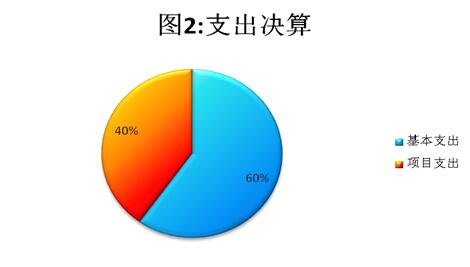
I. Basic functions and main work In 2016, the total expenditure of the Provincial Writers Association this year was 28.2218 million yuan, of which: the basic expenditure was 16.8919 million yuan, accounting for 59.85%; The project expenditure is 11,329,900 yuan, accounting for 40.45%. In 2016, the total expenditure of this year decreased by 2.444 million yuan compared with that of 2015, down by 7.38%. The main reason for the change was that the one-time project activities were reduced in 2016, and the expenditure was also reduced accordingly. Iv. final accounts of financial appropriations Five, the general public budget expenditure accounts (three) the specific situation of the general public budget expenditure accounts 1. Expenditure (item) on education (category) further education and training (paragraph) training: The final account in 2016 was 493,300 yuan, accounting for 92.87% of the budget. The main reason why the final account was less than the budget was to practise economy, strictly control the cost and pay attention to the efficiency in the use of project funds during training, so we saved money while successfully completing this year’s training plan. 1. Going abroad on business (border) funds
(1) Main functions
Sichuan Writers Association is a people’s organization headed by the provincial party committee and entrusted by the propaganda department of the provincial party committee. It is a bridge and link between the provincial party committee and the provincial government and writers and literary workers. It is also an important social force to prosper the socialist literary and artistic undertakings and strengthen the construction of socialist spiritual civilization.
(II) Completion of key tasks in 2016
1. Literary activities are rich and colorful. First, key literary activities have high specifications and great influence, and successfully held major literary activities such as the 2016 Xichang Qionghai "Silk Road" International Poetry Week; Second, there are many forms and wide participation in activities such as literary collection and creation of works, and more than 40 times of various theme collection activities such as "commemorating the 95 th anniversary of the founding of the Party and the 80 th anniversary of the victory of the Long March" and "taking the Long March Road again" were organized; Third, the literary exchange activities have a wide coverage and a wide field of vision. We have held discussions and interactions with writers from Hubei, Zhejiang, Shanxi, Xizang and other provinces, held the 2016 writing camp for young writers across the Taiwan Strait, and organized many writers from our province to go to South Korea, Taiwan Province, the United States, Russian and other countries for literary exchanges.
2. The effectiveness of training has been enhanced. First, hold six classes of business training in a solid manner; The second is to improve the training methods and take the political theory counseling report as the required content; Third, more than 20 people were actively sent to participate in various business trainings, and their business ability was comprehensively improved.
3. Carefully organize and hold the eighth provincial representative meeting. Orderly organized more than 400 representatives to hold 20 consecutive meetings, deliberated and adopted work reports and amendments to the articles of association, elected a new leadership of the Writers’ Association, and formulated work plans for the next five years. The meeting was a complete success and was widely praised by all sectors of society.
4. Literary creation is fruitful. First, the "Deep-rooted" activity gave birth to excellent works, invited grass-roots writers to participate in collecting ideas, revising manuscripts and holding symposiums, organized 13 writers’ teams to go to 20 poverty-stricken counties to carry out activities of "Deep-rooted" collecting ideas, literary lectures, donations and other activities to benefit the people, opened a column of "Deep-rooted" works in the newspaper "Three Journals and One Newspaper", and published more than 1,000 outstanding works of "Deep-rooted" in literary newspapers and periodicals at all levels throughout the year. Second, literary awards are frequently reported. According to incomplete statistics, writers in our province won more than 50 national literary awards throughout the year. Third, the number of important domestic journals publishing and highlighting Sichuan writers’ works has increased significantly. In the whole year, the members of writers’ associations at all levels in the province published a total of 485 literary works, with an annual increase of 11.7%; National key literary journals published 65 literary works (first), with an annual increase of 13.2%; The number of reprinted works in selected periodicals of national key literature increased by 23.5% annually. Fourth, the momentum of online literature creation has not diminished. Two online writers were on the list of online writers in the first half of 2016. The number of film and television transformations of online writers’ works in our province increased, and the comprehensive strength of online literature jumped to the third place in the country.
5. Literary positions and the construction of literary industrialization have been vigorously promoted. The position of literature continued to be consolidated, Sichuan Literature, Star Poetry, Contemporary Literary World and Sichuan Writers completed the publishing task according to quality and quantity, and the revision of Sichuan Writers’ Network was completed. The film and television transformation of literary works was accelerated. Three major theme scripts of Alai Studio were created simultaneously.
6. Literary criticism and literary combing are more pragmatic. Strengthen the research and discussion on the works of local key writers, publish three series of Studies on Contemporary Writers in Sichuan, and organize more than 30 seminars and revision meetings on Sichuan prose, novels and poems. Comprehensively sort out the general situation of the annual literature, complete the compilation of the 2015 Sichuan Literature Annual Report, and publish the "2015 Sichuan Literature Influence Ranking".
7. The goal of "precise poverty alleviation" is clear. Around the goal of "getting rid of poverty in 2017", more than 100 leading cadres and workers visited the help points in depth to express their condolences to poor farmers and form a "pair" with 63 poor households. More than 200,000 yuan of funds and materials were raised to renovate the village weir and pond, repair the office buildings of the village committee, build the drinking water project, build the village cultural room and present a batch of books.
Second, the department profile
Sichuan Writers Association has six secondary budget units, including one administrative unit and five other institutions.
Third, the overall situation of revenue and expenditure accounts
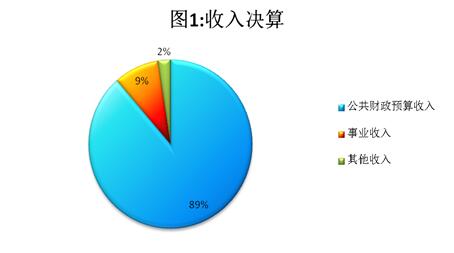
In 2016, the annual income of the Provincial Writers Association totaled 27.611 million yuan, of which: the financial allocation income was 24.4704 million yuan, accounting for 88.62%; Business income was 2,461,400 yuan, accounting for 8.91%; Other income was 679,900 yuan, accounting for 2.46%. In 2016, the total revenue of this year decreased by 1,802,600 yuan compared with that of 2015, down by 6.13%. The main reason for the change was the decrease of one-time project funds in the financial allocation revenue in 2016, and the decrease of business and other income was due to the decrease of business publications and sponsorship income.
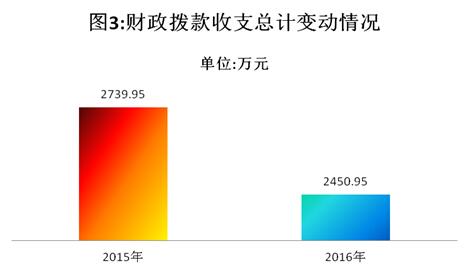
The total final accounts of the provincial writers association’s 2016 financial appropriation income and expenditure were 24.5095 million yuan. Compared with 2015, the total revenue and expenditure of financial allocation decreased by 2.89 million yuan, down by 11.79%.
(a) the overall situation of the general public budget expenditure accounts
In 2016, the provincial writers association allocated 24,509,500 yuan in general public budget, accounting for 86.85% of the total expenditure this year. Compared with 2015, the financial allocation of the general public budget decreased by 2.89 million yuan, down by 11.79%.
(two) the structure of the final accounts of the general public budget.
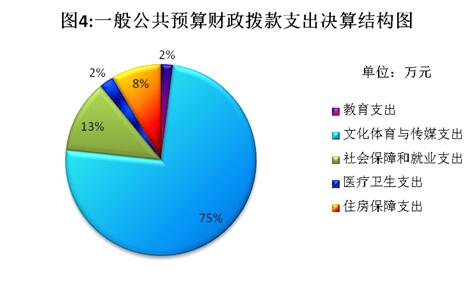
In 2016, the provincial writers’ association allocated 24,509,500 yuan from the general public budget, which was mainly used in the following aspects: education expenditure was 493,300 yuan, accounting for 2.01%; Expenditure on culture, sports and media was 18.2922 million yuan, accounting for 74.63%; Expenditure on social security and employment was 3,055,100 yuan, accounting for 12.46%; Medical and health expenditure was 597,900 yuan, accounting for 2.44%; Expenditure on housing security was 2,071,000 yuan, accounting for 8.45%.
2. Administrative operation of culture, sports and media (category) culture (item): In 2016, the final accounts were 4,648,800 yuan, accounting for 99.20% of the budget. The main reason why the final accounts were less than the budget was that the daily public expenditure was slightly reduced.
3. General administrative affairs (items) of culture, sports and media (category) culture: In 2016, the final accounts were 845,000 yuan, accounting for 89.82% of the budget. The main reason why the final accounts were less than the budget was the reduction of the operation and maintenance fees and official reception fees for official vehicles.
4. Other cultural expenditures (items) for culture, sports and media (category) culture: In 2016, the final accounts were 6,924,400 yuan, accounting for 90.94% of the budget. The main reason why the final accounts were less than the budget was that the literary activities of some projects were reduced and the expenditures were reduced accordingly.
5. Expenditure on culture, sports and media (category) Other culture, sports and media (item) Special expenditure on publicity and cultural development (item): In 2016, the final accounts were 5,334,900 yuan, accounting for 88.26% of the budget. The main reason why the final accounts were less than the budget was that some special activities were not carried out as originally planned in the implementation process.
6. Expenditure on culture, sports and media (category) Other expenditures on culture, sports and media (item) Special expenditures for cultural industry development (item): In 2016, the final accounts were 539,100 yuan, accounting for 21.23% of the budget. The main reason why the final accounts were less than the budget was that the project activities were not carried out as originally planned.
7. Social security and employment (category) Retirement from administrative institutions (item) Retirement from public institutions (item): The final accounts in 2016 were 85.72 yuan, and the budget was 98.68%. The main reason why the final accounts were less than the budget was that the retirement fees were not adjusted accurately after the retirees’ wages were uniformly paid by social security.
8. Retirement of social security and employment (category) administrative institutions (funds) Retirement of administrative units that are not under centralized management (items): The final accounts for 2016 were 60.25 yuan, 100% of the budget at the beginning of the year was completed.
9. Social security and employment (category) Retirement (section) Expenditure of basic old-age insurance for institutions and institutions (item): The final accounts in 2016 were 84.30 yuan, accounting for 100% of the budget at the beginning of the year.
10. Social security and employment (category) Retirement (paragraph) Expenditure on occupational annuity payment of government agencies and institutions (item): The final accounts in 2016 were 30.22 yuan, 100% of the budget at the beginning of the year was completed.
11. Social security and employment (category) pension (item) death pension (item): The final account in 2016 was 23.15 yuan, 100% of the budget at the beginning of the year was completed.
12. Social security and employment (category) Other social security and employment expenditures (item) Other social security and employment expenditures (item): The final accounts in 2016 were 21.87 yuan, accounting for 98.07% of the budget. The main reason why the final accounts were less than the budget was the death of retirees and the corresponding subsidies were not paid.
13. Medical care and family planning (class) medical security (section) Medical care (section) of administrative units: The final account for 2016 was 265,900 yuan, 100% of the budget at the beginning of the year was completed.
14. Medical care and family planning (class) medical security (section) Medical care (section) of public institutions: The final accounts in 2016 were 241,300 yuan, accounting for 93.56% of the budget. The main reason why the final accounts were less than the budget was that the corresponding expenses were reduced due to the reduction of personnel in the middle of the year.
15. Medical care and family planning (category) medical security (item) Medical subsidy for civil servants (item): The final account for 2016 was 90,700 yuan, accounting for 100% of the budget at the beginning of the year.
16. Housing security (category) Housing reform expenditure (item) Housing accumulation fund (item): The final account in 2016 was 655,400 yuan, accounting for 100% of the budget at the beginning of the year.
17. Housing security (category) Housing reform expenditure (item) Housing subsidy (item): In 2016, the final accounts were 1,415,600 yuan, and the budget was 91.05%. The main reason why the final accounts were less than the budget was that individual personnel could not approve the amount, so they did not pay the housing subsidy.
Six, the general public budget financial allocation of basic expenditure accounts
In 2016, the provincial writers’ association allocated 13,987,400 yuan in general public budget, including:
The personnel expenses are 12,099,300 yuan, mainly including: basic salary, allowances and subsidies, bonuses, performance salary, basic old-age insurance contributions of institutions, occupational annuity contributions, other social security contributions, other salary and welfare expenditures, retirement expenses, pensions, living allowances, medical expenses, bonuses, housing accumulation fund, housing subsidies and other subsidies for individuals and families.
The public funds are 1,888,100 yuan, mainly including: office expenses, printing fees, water charges, electricity charges, post and telecommunications fees, travel expenses, maintenance (protection) fees, conference fees, training fees, labor fees, entrusted business fees, trade union funds, welfare fees, other transportation fees, and other goods and services expenditures.
Seven, "three public funds" financial allocation expenditure accounts
(a) the overall situation of the final accounts of the financial allocation of the "three public funds"
In 2016, the final accounts of the "three public" funds allocated by the Provincial Writers Association were 130,200 yuan, accounting for 57.92% of the budget, including: no expenses for going abroad on business; The final accounts of official vehicle purchase and operation and maintenance expenses were 113,100 yuan, accounting for 65% of the budget; The final account of official reception expenses was 17,100 yuan, accounting for 34% of the budget. The main reasons why the final accounts of the "three public" expenditures in 2016 were less than the budget were: the vehicles were in good running condition in 2016 and the maintenance expenditures were reduced; Under the premise of ensuring the normal literary exchange activities, our unit tries to reduce the official reception of literary exchange; The subordinate departments ask for instructions and report by telephone, fax, mail and electronic documents as far as possible, so the official reception expenses are reduced.
In 2016, the final accounts of the "three public" funds decreased by 86,800 yuan compared with 2015, a decrease of 40%, of which: there was no expenditure on going abroad (border) in 2015 and 2016; The final accounts of official vehicle purchase and operation and maintenance expenses decreased by 69,500 yuan, down by 38.06%; The final accounts of official reception expenses decreased by 17,300 yuan, down by 50.59%. The main reason for the increase or decrease is that after the implementation of the bus reform, the actual number of vehicles in our unit has decreased by one, so the operation and maintenance costs of official vehicles have decreased. In 2016, the number of receptions and reception standards were strictly controlled, and the number of reception batches and people decreased significantly compared with 2015, so the expenses for official reception have decreased.
(two) the "three public funds" financial allocation expenditure accounts specific instructions.
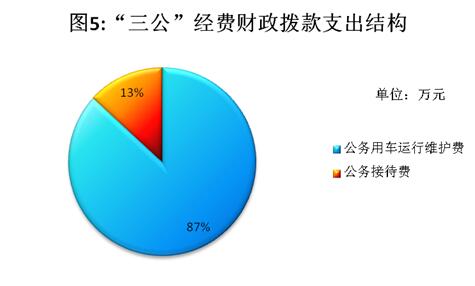
In the final accounts of the financial allocation expenditure of the "three public" funds in 2016, there was no final account expenditure for going abroad (border) expenses; The final accounts of official vehicle purchase and operation and maintenance expenses are 113,100 yuan, accounting for 86.87%; The final account of official reception expenses was 17,100 yuan, accounting for 13.13%. The details are as follows:
In 2016, our unit had no expenses for going abroad on business.
2. Official car purchase and operation and maintenance fees
In 2016, the purchase, operation and maintenance cost of official vehicles was 113,100 yuan. By the end of December 2016, the company had 4 official vehicles, including 3 cars and 1 passenger car. It is mainly used to guarantee the expenses of fuel, maintenance, road and bridge crossing, insurance and other expenses for official vehicles, such as daily public use, literature collection and literature exchange, sending literature to the countryside, accurate poverty alleviation, and "going deep into life and taking root in the people" theme practice activities.
3. Official reception fee
In 2016, the official reception fee was 17,100 yuan. It is mainly used for transportation expenses and meals for official duties and business activities. There were 14 batches of official receptions with 156 people in China, with a total expenditure of 17,100 yuan. The specific contents included: (1) In February 2016, Southwest University of Science and Technology Writers Association reported the work with an amount of 1,170 yuan; (2) In February 2016, Quxian Poverty Alleviation and Immigration Bureau reported the poverty alleviation work in 2015 and the Spring Festival condolences, amounting to 301 yuan; ⑶. In May 2016, a series of public speaking activities for Mao Dun Prize winners of "Literature China Everyone’s Vision", with the amount of 800 yuan; (4) In June, 2016, the Malaysian Writers’ Group held a literary exchange activity, with an amount of 1111 yuan; 5. In June 2016, the Chinese Writers Association went to Sichuan for a special investigation, amounting to 500 yuan; [6]. In June 2016, the Chinese Writers Association organized writers to go to Sichuan to carry out the theme of "Re-taking the Long March Road" (Red Fourth Army), with an amount of 3,254 yuan; (7) In June, 2016, the Western Literature Summit Forum and the preparatory activities for the annual meeting, with an amount of 1,052 yuan; (8) In June 2016, the Chinese Writers Association held a symposium on deepening the reform of the writers association system in Sichuan, with an amount of 3,000 yuan; ⑼. In July 2016, Korean writers’ literary exchange and visit activities amounted to 1922 yuan; ⑽. In July 2016, China Writers Publishing Group filmed "China Famous Writers Image Library" with an amount of 444 yuan; ⑾. In July 2016, Jiangsu Writers Association went to Sichuan Writers Association to study and exchange activities, with an amount of 286 yuan;⑿. In November 2016, Yunnan Writers Association visited Bajin Exhibition Hall in Sichuan, with an amount of 745 yuan; [13]. In December, 2016, Aba County Writers Association reported the training of ethnic minorities, and Xingwen Writers Association contacted the composition contest and creation base, with an amount of 1,634 yuan; [14]. In December 2016, Dazhou Writers Association reported its work, with an amount of 894 yuan. Among them: 2 batches of foreign affairs reception, 18 people, with a total expenditure of 3033 yuan, mainly used to receive literary exchange activities of Malaysian writers’ groups; Korean writers’ literary exchange visits.
Eight, the government fund budget expenditure accounts.
In 2016, the Provincial Writers’ Association had no government fund budget.
IX. Description of other important matters
(a) the operating expenses of the organs
In 2016, the operating expenses of the provincial writers association were 1.049 million yuan, an increase of 452,000 yuan or 78.06% over 2015.
(B) Government procurement expenditure
In 2016, the total government procurement expenditure of the Provincial Writers Association was 407,000 yuan, including 322,000 yuan for government procurement of goods and 84,000 yuan for government procurement of services. Mainly used to ensure the normal operation of vehicles, meetings and daily office needs.
(three) the possession and use of state-owned assets
As of December 31, 2016, there were 4 public vehicles owned by the Provincial Writers Association, all of which were general official vehicles, with no general equipment with a unit price of more than 500,000 yuan and no special equipment with a unit price of more than 1 million yuan.
(IV) Budget performance
According to the requirements of budget performance management, this department carried out performance target management for general public budget expenditure in 2016, and compiled 37 performance targets, involving 13,832,600 yuan of financial funds, with a coverage rate of 100%.
According to the standard of "2016 departmental expenditure performance evaluation index system", the total score of our unit’s comprehensive indicators at all levels is 99 points. The outstanding problems are: the management of internal control system needs to be strengthened; The progress of budget implementation is uneven, individual projects are not implemented, "emphasizing budget and neglecting management", neglecting the management of budget implementation, insufficient preliminary work, unrealistic budget arrangement, and untimely work.
In the future, our unit needs to strengthen the forward-looking budgeting. According to the relevant provisions of the new Budget Law and its implementing regulations, according to the policy provisions and the development plan of this department, combined with the budget implementation in the previous year and the factors of budget revenue and expenditure changes in this year, we need to prepare the budget scientifically and reasonably, so as to avoid the inaccurate division between project expenditure and basic expenditure or the large deviation between budget expenditure and actual implementation. If it is really necessary to adjust the budget during the implementation, it shall be reported for approval according to the prescribed procedures. Efforts should be made to strengthen system construction, improve system and mechanism, improve working methods, improve management performance, and improve the scientific and refined level of departmental budget management. Make departmental expenditure performance more scientific and reasonable, and improve departmental financial management level.
X. Explanation of Nouns
1. Financial appropriation income: refers to the funds allocated by the provincial finance in the current year.
2. Business income: refers to the income obtained by institutions from professional business activities and auxiliary activities. For example, the publication distribution income of the institutions affiliated to the Provincial Writers Association.
3. Other income: refers to income other than the above-mentioned "financial appropriation income", "business income" and "operating income". Mainly refers to interest income, sponsorship income, etc.
4. Making up the balance of payments with public funds: refers to the funds that institutions use the public funds accumulated in previous years (funds drawn by public institutions in accordance with state regulations after making up the balance of payments in the current year) to make up the balance of payments in future years when the financial allocation income, business income, operating income and other income in the current year are insufficient to arrange the expenditures in the current year.
5. Carry-over and balance at the beginning of the year: refers to the funds that have not been completed in the previous year and are carried forward to continue to be used in this year according to relevant regulations.
6. Education (category) further education and training (paragraph) Training expenditure (item): refers to the corresponding training expenses of the training courses organized by the unit.
7. Culture, sports and media (category) culture (item) administrative operation (item): refers to the salary of the staff of the institution and the basic expenses required for the normal operation and performance of duties.
8. General administrative affairs (items) of culture, sports and media (category) culture: refers to general project expenditures such as property management fees, class II and above conference fees, official vehicle operation and maintenance fees, and official reception fees.
9. Culture, sports and media (category) culture (item) Other cultural expenditures (item): refers to the special funds for literary creation of provincial writers’ associations, personnel expenses of subordinate institutions, daily public expenditures, etc.
10. Expenditure on culture, sports and media (category) Other culture, sports and media (paragraph) Special expenditure on propaganda and cultural development (item): it mainly refers to the special expenditure on propaganda and cultural development used by the Provincial Writers Association according to regulations.
11. Culture, sports and media (category) Other culture, sports and media expenditures (paragraph) Special expenditures for cultural industry development (item): mainly refers to the special expenditures for cultural industry development used by provincial writers’ associations according to regulations.
12. Social security and employment (category) Retirement from administrative institutions (paragraph) Retirement from institutions (item): Retirement fee for retirees from institutions affiliated to major provincial writers’ associations.
13. Social security and employment (category) Retirement from administrative institutions (paragraph) Retirement from administrative units that are not under centralized management (item): refers to the retirement expenses of retirees from provincial writers’ associations.
14. Social security and employment (category) Retirement of administrative institutions (paragraph) Expenditure of basic old-age insurance for institutions (item): refers to the expenditure of old-age insurance premiums actually paid by institutions when they implement the old-age insurance system.
15. Social security and employment (category) Retirement of administrative institutions (paragraph) Occupational annuity payment expenditure of government institutions (item): refers to the occupational annuity expenditure actually paid by the institutions when they implement the old-age insurance system.
16. Social security and employment (category) pension (item) Death pension (item): refers to the one-time and regular pension and funeral subsidy for the family members of the deceased according to regulations.
17. Social security and employment (category) Other social security and employment expenditures (paragraph) Other social security and employment expenditures (item): refers to the difficult subsidies for retirees and living allowances for survivors of institutions and institutions of this unit.
18. Medical care and family planning (class) medical security (paragraph) Medical care of administrative units (item): refers to the funds for the payment of basic medical insurance of administrative units arranged by the financial department.
19. Medical care and family planning (category) medical security (paragraph) Medical care of public institutions (item): refers to the basic medical insurance payment funds of public institutions arranged centrally by the financial department.
20. Medical care and family planning (category) medical security (paragraph) Medicaid for civil servants (item): refers to the Medicaid funds for civil servants arranged by the financial department.
21. Housing security (category) Housing reform expenditure (item) Housing accumulation fund (item): refers to the housing accumulation fund paid by administrative institutions for employees according to the basic salary, allowances and subsidies stipulated by Ministry of Human Resources and Social Security and the Ministry of Finance.
22. Housing security (category) Housing reform expenditure (paragraph) Housing purchase subsidy (item): refers to the subsidy paid by administrative institutions to eligible employees (including retirees) for housing purchase according to the housing reform policy.
23. Balance distribution: refers to the employee welfare fund, institution fund and income tax paid by institutions according to regulations, as well as the balance funds of capital construction projects that should be returned by the construction unit according to regulations.
24. End-of-year carry-over and balance: refers to the funds arranged in the budget of this year or previous years, which cannot be implemented according to the original plan due to changes in objective conditions, and need to be postponed to future years to continue to use according to relevant regulations.
25. Basic expenditure: refers to personnel expenditure and public expenditure incurred to ensure the normal operation of institutions and complete daily tasks.
26. Project expenditure: refers to the expenditure incurred to complete specific administrative tasks and career development goals in addition to basic expenditure.
27. "Three Public Funds": The "three public funds" included in the management of provincial financial budget and final accounts refer to the expenses for going abroad (territory) on business, the purchase and operation expenses of official vehicles and the official reception expenses arranged by the department with financial allocations. Among them, the expenses for going abroad on business reflect the international travel expenses, inter-city transportation expenses, accommodation expenses, meals, training fees, public miscellaneous expenses and other expenses of the unit going abroad on business; The purchase and operation expenses of official vehicles reflect the purchase expenses of official vehicles (including vehicle purchase tax) and expenses such as rental fees, fuel fees, maintenance fees, crossing fees, insurance fees and safety incentive fees; The official reception fee reflects all kinds of official reception (including foreign guests’ reception) expenses of the unit according to the regulations.
28. Operating expenses of organs: funds used for purchasing goods and services to ensure the operation of administrative units (including institutions managed according to the Civil Service Law), including office and printing expenses, post and telecommunications expenses, travel expenses, conference expenses, trade union funds, welfare expenses, daily maintenance expenses, office space utilities, other transportation expenses and other expenses.
Department Final Statement of Sichuan Writers Association in 2016