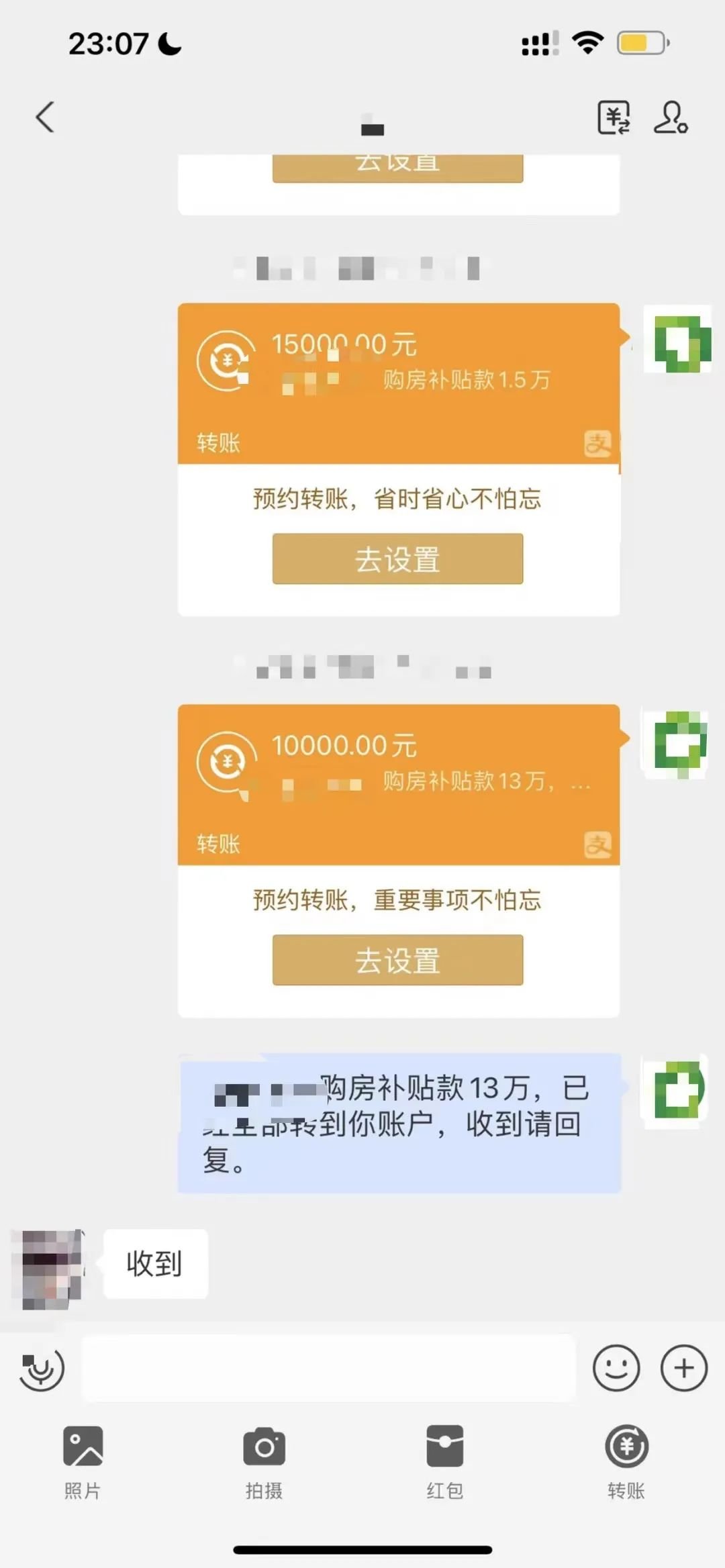
The chairman of Guangxi Yicheng Investment Company took bribes of 4.93 million yuan and donated 500,000 yuan to his hometown.

On August 20th, Feng Rong Zhen was sentenced to 12 years’ imprisonment by Fangchenggang Intermediate People’s Court for gambling. @ Guangxi News Network

Fangchenggang, Guangxi Zhuang Autonomous Region, with its back to the southwest and facing Southeast Asia, has experienced rapid economic development and rapid urban construction in recent years with its special geographical advantages along the coast. With the large-scale development of urban construction, corruption has also been quietly bred. Feng Rong Zhen, former chairman and general manager of Fangchenggang Urban Construction Investment Co., Ltd. (hereinafter referred to as Urban Investment Company), embarked on the road of corruption in the process of urban road construction. Feng Rong Zhen’s bribery case, which was investigated and prosecuted by Fangchenggang City Procuratorate, was recently pronounced by the court in the first instance. Feng Rong Zhen was sentenced to 12 years’ imprisonment for accepting bribes of 4.93 million yuan and confiscated 500,000 yuan of personal property.

The road has been transformed into a "road to collect money"

Beibu Gulf Avenue (formerly Xinggang Avenue) in Fangchenggang City is the main road of the city. It comes out of the toll station in Fangchenggang City and directly enters Beibu Gulf Avenue. In order to meet the needs of urban development, in 2010, Fangchenggang Municipal Government decided to completely transform the original Xinggang Avenue to improve the overall taste of the city.

Fangchenggang City Investment Company is a wholly state-owned enterprise invested and established by the municipal government. Its business scope mainly includes: construction investment and management of urban infrastructure projects, comprehensive development of real estate, wholesale and retail of building and decoration materials, nursery stock management and greening project undertaking, etc. It is also the owner of the above-mentioned Xinggang Avenue reconstruction project. Feng Rong Zhen, the chairman and general manager of the company, holds the important decision-making power in the construction, project payment, completion acceptance, project settlement and other aspects of the project, and is of course the object of public relations of many bosses of the project construction party.

In two blocks of road reconstruction project from Yuluoling to Daoshuiao on Xinggang Avenue, a construction engineering company is the contractor, and Ma is the manager of the contractor. Feng Rong Zhen and Ma know each other because of their business ties. In order to get Rong Zhen’s attention, Ma often sends some gifts to bring them closer together.

One night in May 2011, Ma called Feng Rong Zhen and said that he would send some tea, and agreed to meet him at Taoyuan Street in the port area. Rong Zhen drove to Taoyuan Street and stopped. When Ma saw that Rong Zhen’s car arrived, he came to Rong Zhen’s car with a schoolbag and said, "Mr. Feng, this is the tea I gave you." Say that finish and left. Holding this heavy schoolbag, Feng Rong Zhen knew it well. When he opened it, he found that there was RMB cash in 100 yuan denomination, and each bundle was bound with plastic tape, making a total of 1 million yuan in cash.

Why did Ma send 1 million yuan in cash? There is not much communication between them. Afterwards, Feng Rong Zhen said: Maybe because I am the chairman and general manager of the city investment company, I will send money to me in order to get my care in the construction, project payment, completion acceptance and project settlement of the project. However, Ma has never verbally asked me for any care and help, and I have never deliberately taken care of or made things difficult for Ma or the construction party in my work. In Feng Rong Zhen’s view, even accepting money, as long as it is not deliberately taken care of at work, is not a bribe.

As a matter of fact, Feng Rong Zhen took care of the construction party in the process of organizing two blocks of projects, and received a total of 1.47 million yuan from Ma, the person in charge of the construction party, for six times.

In addition, Feng Rong Zhen also took care of the construction party in other bid projects, and received 560,000 yuan and 200,000 yuan from two other construction party leaders, Yang and Liu, five times.

The reconstruction project of Xinggang Avenue has become a "way to collect money" for Rong Zhen. After the completion of the project, there are serious quality problems, especially the section from Yuluoling to Daoshui ‘ao. Not long after the renovation, the pavement is pitted and uneven, which seriously affects the travel of citizens and the overall image of the city. The masses are quite complaining about this.

Bonded Logistics Center in Fangchenggang City

Building a "road network" is good for "fishing" money

In the process of urban construction in Fangchenggang City, "road network engineering" is a word with high frequency. The owners of major road network engineering such as "three horizontal and two vertical" road network engineering in the administrative center area and the road network engineering in the municipal bonded logistics center are all Fangchenggang City Investment Company. As the head of the company, Feng Rong Zhen will naturally receive many "sugar-coated shells".

One afternoon before the Spring Festival in 2010, Liu, the owner of the road network project, called to meet Rong Zhen. After the meeting, Liu took out two bags of things from the car and put them in the trunk of Rong Zhen’s car. He said, "Mr. Feng, this is 2 million yuan in cash, of which 800,000 yuan was returned to you by a friend of yours, and the other 1.2 million yuan is my own gift." Liu left after he finished speaking.

Rong Zhen didn’t say much and didn’t check the money, so he took it back to Fangchenggang and lent it to his brother to run his personal business. Feng Rong Zhen knows very well that the money came entirely for his own rights. Liu is the manager of the construction party of Fangchenggang’s "three horizontals and two verticals" road network project and Fangchenggang Bonded Logistics Center road network project. Liu wants to be taken care of in terms of project construction, project payment, completion acceptance and project settlement before sending this 1.2 million yuan.

After verification, in addition to the above-mentioned road network project, Feng Rong Zhen took care of the construction party in the process of organizing the construction of a bid section of North-South Avenue, the earthwork project of Fangchenggang Vocational Education Center, the Bailu Park project, and the road reconstruction project of Yuluoling-Daoshuiao section of Xinggang Avenue, and received a total of 2.5 million yuan from Liu, the person in charge of the construction party, three times.

Feng Rong Zhen not only lavished money on big projects, but also spared some small projects. Feng Rong Zhen gave convenience to the project contractor in the process of purchasing and installing weak current system engineering equipment for Fangchenggang City Investment Company’s comprehensive building project, and accepted 100,000 yuan; In the process of building a bid section of Dongwan Avenue in Fangchenggang City, he gave convenience to the project contractor Yang and accepted 100,000 yuan in cash.

500,000 yuan of stolen money was donated to my hometown.

In 2014, the procuratorate of Fangchenggang launched a massive special campaign to crack down on duty crimes in state-owned enterprises. During this campaign, nine people, including Feng Rong Zhen, chairman and general manager of Fangchenggang City Investment Company, and Zhang Hengyu, deputy general manager, were investigated for criminal responsibility.

Feng Rong Zhen was born in an ordinary family in Gongcheng County, Guilin. He was determined to get ahead from an early age, and then he was admitted to the university through hard work and worked as a postgraduate. Because of his outstanding work performance, Feng Rong Zhen had a smooth career path. At the age of 31, he was appointed as the director of Fangchenggang Fangcheng District Construction Bureau. Before he was 40, he became the chairman and general manager of Fangchenggang Urban Construction Investment Co., Ltd., a member of the party group of the Municipal Development and Reform Commission, and the deputy director and deputy director of the municipal major project construction office. Because of the struggle as a child, Feng Rong Zhen has a deep affection for his hometown, and he never forgets what he can do for his hometown. In fact, Rong Zhen also took action, but in a shameful way.

In the process of investigating Feng Rong Zhen’s case, when tracing the whereabouts of the stolen money, a sum of stolen money attracted everyone’s attention: from 2010 to the end of 2013, Feng Rong Zhen invested about 500,000 yuan in building bridges, roads and Little Square in his hometown of Gongcheng County, and the money was paid by his brother Feng.

The 4.93 million yuan illegally accepted by Feng Rong Zhen was mainly used for buying houses, investing in mining partnerships and personal consumption, in addition to investing in public welfare undertakings. Feng Rongzhen spent 1.4 million yuan to buy a property in Nanning at the end of 2009; In 2012, in my hometown of Gongcheng County, I invested 500,000 yuan to mine in partnership with my relatives.

In the investigation stage, the case-handling organ recovered 489,000 yuan from Feng Rong Zhen’s bank account and stock account, and recovered 100,000 yuan from others, and his relatives withdrew 300,000 yuan from the court during the trial stage, and a total of 889,000 yuan was withdrawn before and after Feng Rong Zhen.

On February 2nd this year, Feng Rong Zhen’s suspected bribery case was heard in the Fangchenggang Intermediate People’s Court. Facing the accusation of the procuratorate, Feng Rong Zhen confessed his criminal facts. Because he voluntarily surrendered himself and truthfully confessed his criminal behavior, he pleaded guilty with a good attitude and withdrew part of the money, the court finally gave him a lighter punishment and made the above judgment according to law.

When the gavel fell, Feng Rong Zhen’s expression was dim, and his hard work and high spirits were all gone with a verdict.

The central bank canceled the "reserve subsidy" and the free meal for credit card repayment shrank.

  The feast of free credit card repayment is gradually shrinking. After the full payment of credit card repayment by WeChat, Alipay will also cancel the policy of free credit card repayment. Yesterday, Weibo, the official Alipay, issued an announcement on "Adjustment of Alipay Credit Card Repayment Service Rules". According to the announcement, starting from March 26, 2019, when individual users use the "credit card repayment" function of Alipay client, Alipay will charge 0.1% service fee for the part exceeding the free quota of 2,000 yuan.

  Alipay will charge more than 2,000 yuan for credit card repayment.

  Alipay said that this adjustment is due to the rising comprehensive operating cost of credit card repayment service, and struggling to support it is not conducive to sustainable development, but charging means that higher service standards are needed and users will be rewarded with more and better services.

  After the new regulations come into effect, how to charge? If the user pays back less than 2000 yuan, it is still free. Only the excess will be charged with a service charge of 0.1%. Taking 3,000 yuan as an example, if the free quota of 2,000 yuan is deducted, the service fee that users need to pay is 1,000× 0.1% = 1 yuan.

  Alipay’s rules for adjusting credit card repayment are not the first in the industry, and WeChat has taken the lead in ending the benefits of free credit repayment.

  Since December 2017, WeChat has officially started to charge users for credit card repayment business, charging 0.1% (minimum 0.1 yuan) for the part that the accumulated repayment amount exceeds 5,000 yuan per natural month, and the part that does not exceed 5,000 yuan is still free. In August 2018, the amount of 5,000 yuan free of charge was officially cancelled.

  From August 1st last year, except for Platinum and Gold members of WeChat Licaitong and users who have been transferred to 500 yuan or above for the fixed investment plan, other users will be charged a handling fee of 0.1% of the repayment amount through WeChat, and no free quota will be set.

  The charging ratio of Alipay is the same as that of WeChat, which is 0.1%. However, Alipay has set a free quota of 2,000 yuan for each user, and only charges 0.1% for the excess. Therefore, Alipay will save 2 yuan service fees over 2,000 yuan, no matter how much it pays back.

  The bank charges the third party a passage fee.

  When WeChat cancelled the charges at that time, it also explained that there would be a payment channel fee behind each repayment. In order to enable users to enjoy some free product experiences, Tencent Tenpay has been subsidizing the fees.

  Industry insiders told reporters that Alipay and WeChat started charging in order to balance costs and sustainable development. Because banks have to charge channel fees to third-party institutions. Even if they charge one thousandth of the handling fee now, they still have to subsidize about five thousandths of the handling fee.

  These costs have always been there. Why can’t we bear them now? Some insiders believe that the reform of "centralized deposit and management of payment institutions’ reserves" ended in January this year is likely to be one of the important influencing factors.

  The "reserve subsidy" is gone

  The so-called "reserve fund" refers to the monetary funds actually received by the payment institution to handle the payment business entrusted by customers. This fund has expanded with the expansion of the number of customers and payment business, and has generated huge capital gains in the precipitation period. In the past, the central bank stipulated that the interest on customers’ reserves belonged to third-party payment companies. Therefore, the interest income from customers’ reserves has been a major source of income for many payment institutions. However, some small and medium-sized payment institutions can’t resist the temptation, and boldly misappropriate and occupy customers’ reserve funds, causing many risk events.

  So the central bank changed its policy. According to the current policy, all third-party payment institutions, including Alipay and Tenpay, should cancel the RMB customer reserve account before January 14th this year. The reserve funds of payment institutions will be taken over by the central bank, and interest will not be paid temporarily. In the past, the payment institution could use this part of interest to subsidize the handling fee cost, but now it is gone.

  Tencent’s interim report in 2018 shows that due to the requirement of centralized deposit ratio of reserve funds, the overnight cash balance that payment service providers can obtain interest income has decreased, which continues to adversely affect Tencent’s payment service income and gross profit margin to a greater extent.

  Another adverse effect brought by the new rules of reserve fund is to reduce the bargaining power of cooperation with banks. Some insiders said that before the payment institution chose the reserve deposit bank, the bargaining power was very strong. In order to strive for deposits from payment institutions, banks will give a large margin of profit in channel fees. Now that the reserve funds are uniformly collected, payment institutions can no longer contribute deposits to banks, and banks have no reason to make profits. The channel rate is likely to rise, and the cost pressure of payment institutions will inevitably increase.

  Free advice

  1. There are still tricks for free repayment of WeChat Alipay.

  If the user is used to Alipay or WeChat repayment, and the repayment amount is more than 2,000 yuan, is there any way? Alipay suggests that you can redeem more free credits through Alipay membership points, or ask family members who still have free credits to help complete the repayment.

  According to the regulations of WeChat, there are three types of customers who can continue to enjoy full credit card repayment free of charge, namely, Tencent Licaitong Platinum, Gold members and users who have been transferred to 500 yuan or above by the "Love Investment Plan".

  The membership level is divided according to the financial value. The financial value of platinum and gold members is 500,000 and 100,000 respectively, which can be improved by immediately increasing total assets and doing tasks. In contrast, it is more cost-effective to transfer to 500 yuan for fixed investment every month, and you can also enjoy the benefits of free credit card repayment.

  2. UnionPay bank can pay back the credit card for free.

  Of course, you can continue to enjoy the lunch with free credit card repayment in UnionPay and banks.

  For credit card users, the most worry-free way is to bind the debit card accounts of peers and set up automatic repayment. Even if automatic repayment is not selected, all channels of repayment by the issuing bank are free.

  Some cardholders don’t have debit cards from credit card issuers, and they use other banks’ online banking or mobile banking to make cross-bank repayments. Many banks don’t charge fees. For example, the two major apps of China Merchants Bank, including China Merchants Bank APP and Pocket Life APP, also support free credit card repayment, and also support inter-bank repayment.

  It is understood that credit card repayment and transfer through China Unionpay Quick Pass, the official APP of China UnionPay, are also free. In addition, 66 banks, including Agricultural Bank of China, Bank of China, China Construction Bank, Postal Savings, China Everbright, CITIC, Pudong Development Bank, Minsheng, Huaxia, Ping An, Guangfa, Xingye, Bank of Beijing and Bank of Shanghai, have launched credit card bill inquiry services in China Unionpay Quick Pass. "China Unionpay Quick Pass" also has many functions, such as credit card benefit inquiry, card application service, mobile phone flash payment opening and so on, where users can enjoy convenient, fast, labor-saving and worry-free credit card service.

  3. Du Xiaoman and Jingdong Finance can repay for free.

  At present, among the three platforms of BAT, only Xiaoman Finance still provides credit card free repayment service. Users can download Xiaoman Financial APP, and you can see the credit card repayment function on the homepage. You can also download Xiaoman Financial’s credit service APP "Money Spend", and you can easily perform credit card repayment operation in the "Discovery" column. At present, Du Xiaoman Finance supports the credit card repayment of 28 banks, covering prime bank, and it usually takes 30 minutes to get the account.

  Jingdong financial APP can also repay credit cards for free. At present, JD Finance supports users to repay credit cards from 29 banks including Industry, Agriculture, China, Construction, Communications, China Merchants Bank and CITIC, which usually arrive within 30 minutes.

  Text/reporter Cheng Wei

  Photo courtesy/vision china

The 4th Member Congress of Guangdong Guangdong, Hong Kong and Macao Cooperation Promotion Association was held. Li Xi, Ma Xingrui and Zhu Xiaodan met with representatives from all walks of life.

On December 14th, the 4th member congress of Guangdong Guangdong-Hong Kong-Macao Cooperation Promotion Association was held in Guangzhou. Before the meeting, Li Xi, secretary of the provincial party committee, Ma Xingrui, governor, and Zhu Xiaodan, director of the Overseas Chinese Committee of Chinese People’s Political Consultative Conference, met with representatives from all walks of life in Guangdong, Hong Kong and Macao.

On behalf of the provincial party committee and government, Li Xi expressed his gratitude to the representatives from all walks of life who have long cared for and supported the development of Guangdong and promoted the cooperation between Guangdong, Hong Kong and Macao. He pointed out that the construction of Guangdong-Hong Kong-Macao Greater Bay Area is a national strategy personally planned, deployed and promoted by the Supreme Leader General Secretary, which provides a great historical opportunity for the cooperation and development of the three places. From October 22nd to 25th, the General Secretary visited Guangdong and delivered an important speech. He personally attended the opening ceremony of the Hong Kong-Zhuhai-Macao Bridge and announced the official opening of the bridge, demanding that Guangdong shoulder the important responsibility of Guangdong-Hong Kong-Macao Greater Bay Area’s construction and make good use of the great opportunities and articles of Greater Bay Area’s construction. We will keep in mind the earnest entrustment of the General Secretary, make full use of the province’s efforts to promote the construction of Guangdong-Hong Kong-Macao Greater Bay Area, and push the reform and opening up to a higher starting point, a higher level and a higher goal. It is hoped that the Guangdong-Hong Kong-Macao Cooperation Promotion Association will thoroughly implement the principle of "one country, two systems", continue to play the role of an important platform for non-governmental exchanges and cooperation between Guangdong, Hong Kong and Macao, actively contribute wisdom and strength around the construction of Greater Bay Area, and make new and greater contributions to deepening the cooperation between Guangdong, Hong Kong and Macao, maintaining the prosperity and stability of Hong Kong and Macao, and promoting their better integration into the overall situation of national development.

Vice Governor Ouyang Weimin delivered a speech at the meeting. He said that Guangdong has conscientiously studied and implemented the spirit of the important speech made by General Secretary Supreme Leader during his visit to Guangdong, and made solid efforts in accelerating the construction of an international science and technology innovation center, improving supporting construction and policy arrangements for major projects, steadily promoting cooperation in the field of people’s livelihood, and strengthening cooperation in ecological environment protection and governance, so as to promote the implementation of Greater Bay Area’s construction. I hope that the Guangdong-Hong Kong-Macao Cooperation Promotion Association will focus on Guangdong-Hong Kong-Macao Greater Bay Area’s development, make suggestions and suggestions, and promote all walks of life in Guangdong, Hong Kong and Macao to jointly build Greater Bay Area and write a new chapter in cooperation and development.

The meeting elected a new leading body of the Guangdong-Hong Kong-Macao Cooperation Promotion Association. Provincial leader Lin Xiong, Chief Secretary for Administration Zhang Jianzong of the Hong Kong Special Administrative Region Government and Financial Secretary Liang Weite of the Macao Special Administrative Region Government attended the meeting.

Test drive | Dongfeng Yipai e π 008 A family SUV with a stable chassis and abundant power

/Users/luckyj/Library/Containers/com.kingsoft.wpsoffice.mac/Data/tmp/picturecompress_20240530134611/output_1.jpgoutput_1
Dongfeng Yipai e π 008. Hualong.com, photo by Zhang Jing

In today’s automotive market, SUVs are increasingly favored by consumers due to their excellent passability and versatility, and household 6-seat SUVs have become the "sweet pastry" of the market. As a household 6-seat SUV, the Dongfeng Yipai eπ 008 not only inherits the fine traditions of SUVs, but also shows its unique charm in terms of comfort, home enjoyment, intelligence, entertainment and space. Recently, the editor came to the Dongfeng Automobile Testing Ground in Xiangyang City to experience this model in depth, and felt its strength in the field test drive and urban road test drive.

IMG_5878
Dongfeng Yipai e π 008. Hualong.com, photo by Zhang Jing

Home comfort starts with vision

The appearance of Dongfeng Yipai Eπ 008 follows the typical closed front grille of new energy vehicles, with front and rear through headlights, and can also be equipped with intelligent star grille to achieve more intelligent interaction functions. The golden lines outlined by the whole car body make the whole car look more elegant.

/Users/luckyj/Library/Containers/com.kingsoft.wpsoffice.mac/Data/tmp/picturecompress_20240530140856/output_1.jpgoutput_1
Dongfeng Yipai e π 008 interior design. Hualong.com, photo by Zhang Jing

In terms of interior, Dongfeng Yipai eπ 008 uses high-quality materials and exquisite craftsmanship, 9.2-inch streaming media rearview mirror, 64-color ambient light + smart fragrance + seat ventilation/heating and other functions are not absent, providing a spacious and comfortable ride for family 6-seat SUV travel. Considering the needs of long-distance travel, it is also equipped with a dual-purpose mobile refrigerator, 5/50 ° C can keep fresh and warm, and can be electrically slid in 1-3 rows. It supports voice, touch, remote and other control methods, making travel more worry-free.

IMG_5887
Dongfeng Yipai e π 008 dual-purpose mobile refrigerator. Hualong.com, Zhang Jing, photo

The perfect combination of chassis handling and extended range quietness

In the field test drive Kincana, the performance of the eπ 008 really amazed the editor. A 6-seat large SUV still maintained a speed of 70km/h when testing corners. It was originally expected to be a little bulky, but in fact it still turned smoothly in the face of Kincana’s test. It can easily handle various complex road conditions and driving movements, whether it is sharp turns or emergency braking, it can maintain a stable attitude and excellent handling performance.

IMG_5850
Dongfeng Yipai e π 008 Jinkana project test. Hualong Network, photo by Zhang Jing

The model we tested is an extended range version, with a feed fuel consumption of 5.55L/100km and a comprehensive battery life of up to 1300km. This is mainly because it is equipped with a Mach 1.5T hybrid dedicated engine with a thermal efficiency of 45.18%. In addition, it is equipped with 21-inch Continental’s latest generation of EC7 ultra-quiet tires and double-layer laminated soundproof glass, allowing the engine intervention noise in the car to increase by less than 1dB, achieving true non-inductive intervention.

IMG_5890
Dongfeng Yipai e π 008 second row right zero gravity seat. Hualong Network, photo by Zhang Jing

Comfort and the power to fit the city

In the urban road test drive, the Eπ 008 also showed excellent driving performance. The suspension system of the vehicle has been carefully adjusted to filter out most of the road bumps and provide passengers with a comfortable ride experience. At the same time, the vehicle’s power system also shows the characteristics of being suitable for city driving, accelerating smoothly and responding quickly, whether it is daily commuting or weekend trips, it can be easily handled.

IMG_5915
Dongfeng Yipai e π 008 rear entertainment screen. Hualong.com, photo by Zhang Jing

Create a comprehensive entertainment experience

The eπ 008 is equipped with 6 entertainment screens and realizes multi-screen interaction. The front and rear rows support one-click fly screen, and the central control screen and the entertainment screen share audio and video entertainment, making it easy to interact with the fly screen. The rear control screen supports one-click to open the entertainment screen, seat ventilation and heating, and rear rest mode. Passengers can control music playback, navigation settings, etc. through voice commands to enjoy a more convenient and intelligent driving experience. At the same time, the vehicle also supports mobile phone interconnection function, enjoying the convenience brought by the Internet anytime, anywhere.

IMG_5895
Dongfeng Yipai e π 008 supports the third row of seats to be reclined. Hualong.com, Zhang Jing, photo

Meeting the diverse needs of family travel

As a family 6-seat SUV, the eπ 008 also performs well in terms of spatial layout. As the first "536" model of Dongfeng Yipai (that is, 5002mm length + 3025mm wheelbase) and a 6-seat family SUV, the real three rows have a large six-seat layout, and the best rate of 67.4% in the same class. We have measured that under the normal ride of the second row, the third row can easily seat 2 passengers with a height of 1.7m.

IMG_5902
Dongfeng Yipai e π 008. Hualong.com, photo by Zhang Jing

Car review

Dongfeng Yipai eπ 008 is an extraordinary strength as a 6-seat SUV for home use. It not only performs well in comfort, home enjoyment, intelligence, entertainment and space, but also shows excellent driving performance and comfort in venue test drives and city road test drives. It is understood that this car is expected to be launched in mid-June, and the price is expected to start at 150,000 yuan. If you are looking for an SUV model suitable for family travel, then the eπ 008 is undoubtedly a worthy choice.

Notice of Beijing Municipal Commission of Housing and Urban-Rural Development and Beijing Municipal Market Supervision Administration on Promoting the New Edition of Beijing Pre-Property Service Contr

District Housing and Urban-Rural (City) Construction Committee, Housing Authority, District Market Supervision Bureau, Beijing Economic and Technological Development Zone Commercial Finance Bureau, Yanshan Market Supervision Branch, and all relevant units:

  In order to build a property management system under the framework of community governance led by party building, standardize the legitimate rights and interests of relevant subjects of property management, and ensure the legal, safe and rational use of property, according to the provisions of People’s Republic of China (PRC) Civil Code, Regulations on Property Management, Regulations on Beijing Property Management and other relevant laws and regulations, The Municipal Housing and Urban-Rural Development Committee and the Municipal Market Supervision Bureau jointly revised the Beijing Early Property Service Contract (BF—2010—2712) and the Beijing Property Service Contract (BF—2010—2713), and formed the Beijing Early Property Service Contract (BF—2021—2712) and the Beijing Property Service Contract. The relevant issues in the implementation of the model text are hereby notified as follows:

  One,The model text mainly clarifies the rights and obligations between the development and construction unit or the owners’ assembly and the property service provider, emphasizes the responsibilities of the parties to the contract, and clearly stipulates the responsibilities of both parties for breach of contract, termination of contract modification, dispute handling and so on.

  Second,The housing and urban-rural (city) construction committees and housing management bureaus in all districts should do a good job in publicity and training, guide the development and construction units or owners’ congress to sign service contracts with property service providers using model texts, and do a good job in publicity according to relevant regulations. The market supervision and management departments of all districts shall promptly investigate and deal with the illegal acts of format clauses in the use of contracts.

  Third,The model text shall be officially implemented as of the date of issuance. All units should pay attention to collect the problems found in the implementation of the model text, and promptly report to the Municipal Housing and Urban-Rural Development Committee andMunicipal market supervision and management bureauFeedback.

  Fourth,Model texts can be found in "Window of the Capital" (www.beijing.gov.cn), "Website of Beijing Housing and Urban-Rural Development Committee" (zjw.beijing.gov.cn) and "Beijing"Market supervision administrationWebsite "(scjgj.beijing.gov.cn) for download.

Beijing Municipal Commission of Housing and Urban-Rural Development    

Beijing Municipal Market Supervision Administration    

June 14th, 2022  

Jiangsu will focus on building 10 core exhibition parks of the Grand Canal National Cultural Park.

  More distinctive and smoky streets, more vivid and interesting water conservancy remains, and more cool theme museums … … In the future, the Jiangsu section of the Grand Canal dedicated to creating a "beautiful central axis" will be more beautiful and interesting.

  Recently, the Plan for the Construction and Protection of the Grand Canal National Cultural Park was issued. According to the plan, Jiangsu Province will focus on building 10 core exhibition parks of the Grand Canal National Cultural Park. Including: Longwang Temple Palace Core Exhibition Park, Banzha Site Core Exhibition Park, Qingkou Hub Core Exhibition Park, Yangzhou Ancient City Core Exhibition Park, Yaowan Core Exhibition Park, Xijindu — Xinhe Street Core Exhibition Park, Sanwan Core Exhibition Park, Qingguo Lane Core Exhibition Park, Suzhou Ancient City Core Exhibition Park and Wuxi Qingming Bridge Core Exhibition Park.

  What are the highlights of these projects? How’s it going? Xiaobian interviewed several core exhibition parks and took everyone to "walk around" in advance.

  Yangzhou China Grand Canal Museum

  Xijindu and Qingming Bridge … … These streets will be more fun to visit.

  Along the Jiangsu section of the Grand Canal, there are many ancient streets of Gu Xiang. After years of elutriation, they still retain their ancient charm and reflect the local customs. A number of streets with a long history will be restored and protected, which will glow with new vitality and style, and will be more delicious and fun to visit in the future. Located in Xijindu Historic District of Zhenjiang, there are 12 cultural protection units with rich cultural resources, including ferry culture, commercial culture and architectural culture. According to the plan, Xijindu Club will further improve the tourist routes and cultural relics protection, and develop colorful night tours. The future Xijindu is destined to be more prosperous and colorful.

xijin ferry

  xijin ferry

  Can you not remember Jiangnan, and people will do their best to pillow the river. Wuxi, which is known as the "out-of-print land of the canal, a water alley in the south of the Yangtze River", is rich in canal remains. A Qingming Bridge in the Wanli period of the Ming Dynasty attracted tourists to take photos and "punch in". The core exhibition garden of Qingming Bridge covers an area of 2.03 square kilometers, where Bodu Port and the ancient canal meet, and there are rows of canals. At present, the renovation project of Qingming Bridge’s historical and cultural block is progressing in an orderly manner, including building restoration and river bank regulation. In the future, it will be more comfortable to visit Qingming Bridge.

  Qingming bridge

  Qingming bridge

  Qingkou Hub and Banzha Site … … These water conservancy relics show you the ancient water transport culture.

  Throughout the ages, the Grand Canal has witnessed the rise and fall of water transport culture. As time goes by, those water conservancy sites still stand, telling the long past. Qingkou Hub Heritage Area is mainly located in Matou Town, Huaiyin District, Huai ‘an City, where the Yellow River, Huaihe River and Canal met during the Ming and Qing Dynasties. During the reign of Qing Kang Gan, a water control project was formed here, which ensured the smooth transportation of water. At present, the construction of related cultural, tourism supporting and public services facilities, including tourist distribution centers and cultural facilities, is progressing in an orderly manner, and the future Qingkou hub will be more comfortable.

A corner of the landscape of Qingkou hub heritage area

A corner of the landscape of Qingkou hub heritage area

  The Banzha site in Huai ‘an is a Ming Dynasty sluice site, which has been protected under the soil layer before. Its main body consists of three parts: Banzha gate site, river site and Ming and Qing dynasty house site. At present, Banzha Ruins Park is under construction, and the main basement of the exhibition hall and the restoration of river supporting piles have started construction, striving to complete the opening of the park in July 2022. At that time, the audience can see the true content of the ancient Banzha site through the clear canal water.

Banzha Ruins Park renderings

Banzha Ruins Park renderings

Banzha Ruins Park renderings

  Grand Canal Intangible Cultural Park, China Hydraulic Science and Technology Museum & HELIP; … More cool cultural venues are waiting for you.

  Along the Jiangsu section of the Grand Canal, there is not only antique, but also unexpected coolness and tide. A number of brand-new cultural and sports venues with the theme of the Grand Canal will appear before our eyes. The China Hydraulic Science and Technology Museum, which has attracted much attention, is the first science and technology museum with the theme of "hydraulic engineering" in China. It widely absorbs the cultural connotations of China’s hydraulic engineering and traditional painting, and focuses on the hydraulic engineering culture and canal culture with Huai ‘an characteristics. With the concept of "a thousand boats leave the sluice and the canal sails", the project shows the hydraulic culture in multiple dimensions by means of immersive experience, sound and photoelectric display. At present, China Hydraulic Science and Technology Museum has preliminarily determined the overall scheme of conceptual design, the architectural design scheme has been approved, and the pile test has been completed.

Renderings of China Hydraulic Science and Technology Museum

Renderings of China Hydraulic Science and Technology Museum

  Three Bay Core Exhibition Park in Yangzhou — — The Grand Canal Intangible Cultural Park project, with a planned land area of about 90 mu and a total construction area of 22,000 square meters, mainly includes: intangible cultural performances, intangible master studios, intangible cultural experiences, cultural and creative products retail and commercial projects. The park also incorporates a variety of Tang Wenhua elements, and visitors can take a "crossing" tour of the Tang Dynasty. At present, the first phase of the Grand Canal Intangible Cultural Park has been basically completed.

Rendering of the Grand Canal Intangible Cultural Park

Rendering of the Grand Canal Intangible Cultural Park

  In Jiangsu, the canal has become a part of a better life. Walking along the Jiangsu section of the 790-kilometer canal, the urban and rural elegance and the scenery of the canal complement each other, and its inherent cultural power has become a bright color in people’s spiritual map. A "beautiful central axis" with clear water, green shore, beautiful scenery and Wenchang is rising. 

How to adjust the online banking transaction limit of banks?

Detailed explanation of the adjustment method of online banking transaction limit of banks

In today’s digital financial era, online banking has become one of the important channels for people to handle financial business. However, for the sake of safety and risk control, banks usually set a certain limit for online banking transactions. It is necessary for users to know how to adjust this limit.

Different banks may have different ways to adjust online banking transaction limits, but in general, they can be divided into the following common ways:

1. Online banking self-service adjustment:

Most banks provide the self-service function of online banking. Users can log in to their online banking accounts and find the function of adjusting transaction limit in related settings or security management options. Usually, banks will require users to authenticate themselves, such as entering SMS verification code, dynamic password, etc., to ensure that the account itself is operating.

2. Handling at the bank counter:

Go to the bank’s business outlets and ask the counter staff to adjust the online banking transaction limit. You need to bring your valid ID card and bank card, and the staff will assist you with the relevant procedures.

3. Telephone banking adjustment:

Some banks support adjusting the transaction limit by calling customer service. After dialing the phone, follow the voice prompts, and you may need to enter bank card number, password and other information for identity verification.

The following is a comparison of online banking transaction limit adjustment methods of some common banks:

Bank name Self-help adjustment mode Counter handling requirements Telephone banking adjustment process Bank of China Log in to online banking and enter "Personal Settings"-"Transaction Limit Settings" Carry ID card and bank card. Call customer service and follow the voice prompts. Industrial and Commercial Bank of China (ICBC) "Security Center"-"Payment Limit Management" be the same as the above Call customer service, verify your identity and adjust. China Construction Bank "Security Center"-"Transaction Limit Settings" Carry relevant documents Call customer service and follow the instructions.

It should be noted that when adjusting the online banking transaction limit, the bank will determine the final adjustment range according to your account usage, risk assessment and other factors. At the same time, increasing the trading limit may increase certain risks, so users are advised to make reasonable adjustments according to their actual needs and risk tolerance.

In addition, different types of transactions, such as transfer, payment and shopping payment, may have different limit settings. When adjusting the limit, you should be clear about what kind of trading limit you need to adjust.

In a word, understanding and mastering the adjustment method of online banking transaction limit can better meet personal financial needs and ensure the safe and convenient use of funds.

(Editor in charge: difference extension)

[Disclaimer] This article only represents the author’s own views and has nothing to do with Hexun. Hexun.com is neutral about the statements and opinions in this article, and does not provide any express or implied guarantee for the accuracy, reliability or completeness of the contents. Readers are requested for reference only, and please take full responsibility. Email: news_center@staff.hexun.com.

Export control in China

Xinhua News Agency, Beijing, December 29th-the State Council Press Office released a white paper on Export Control in China on December 29th. The full text is as follows:

Export control in China
(December 2021)
People’s Republic of China (PRC)
the State Council Information Office

catalogue

foreword

I. China’s Basic Position on Export Control

(A) adhere to the overall concept of national security

(2) Conscientiously fulfilling international obligations and commitments.

(3) Actively promoting international cooperation and coordination.

(4) Resolutely oppose the abuse of export control measures

II. Constantly improve the legal system and management system of export control.

(1) Establish and improve the legal system of export control.

(B) Building a coordinated and efficient export control management system

III. Continue to modernize the export control system.

(A) optimize the license management

(B) enhance law enforcement capabilities

(3) Promoting compliance construction.

(4) Fulfilling international obligations

Four, actively carry out international exchanges and cooperation in export control.

(a) to carry out bilateral exchanges and cooperation.

(2) Strengthen multilateral dialogue and consultation.

Concluding remarks

foreword

Export control refers to prohibiting or restricting the export of dual-use items, military products, nuclear products and other goods, technologies and services related to safeguarding national security and interests and fulfilling international obligations such as non-proliferation. It is an internationally accepted practice.

Today, the world is experiencing a great change that has never happened in a century. Instability and uncertainty have risen significantly, the international security system and order have been impacted, and world peace is facing multiple challenges and threats. Fair, reasonable and non-discriminatory export control plays an increasingly prominent role in effectively coping with international and regional security risks and challenges under the new situation and safeguarding world peace and development. Countries generally attach great importance to and actively promote export control, and strengthen and standardize export control by establishing and implementing legal systems.

As a permanent member of the United Nations Security Council and the largest country in the world in goods trade and manufacturing, China has been constantly improving its export control governance in line with the principles of safeguarding national security and safeguarding world peace and regional security. In the new era, under the guidance of the supreme leader Socialism with Chinese characteristics Thought in the new era, China adheres to the overall national security concept and more actively integrates into the process of economic globalization. China focuses on building a new open economic system with a higher level and a peaceful China with a higher level, realizing the benign interaction between high-quality development and high-level security, promoting the modernization of the export control system, and achieving new development and achievements in export control governance. China thinks about its responsibility from a global perspective, earnestly fulfills its international obligations, strengthens international exchanges and cooperation, actively participates in international coordination of export control with practical actions, promotes relevant international processes, and joins hands with other countries to build a community of human destiny, thus injecting positive energy into world peace and development.

In order to comprehensively introduce the basic position and policy proposition of China’s export control and enhance the international community’s understanding of China’s export control, this white paper is hereby issued.

I. China’s Basic Position on Export Control

As a responsible big country, China firmly upholds the international system with the United Nations at the core and the international order based on international law, earnestly upholds the authority of international treaties and mechanisms in line with true multilateralism, and actively promotes the development of international export control in the right direction of justice, rationality and non-discrimination.

(A) adhere to the overall concept of national security

In the era of economic globalization, the security of all countries is interrelated and affects each other. China has always adhered to the overall national security concept, coordinated development and security, coordinated opening and security, coordinated traditional security and non-traditional security, coordinated its own security and common security, coordinated the maintenance and shaping of national security, and strived to build an export control system commensurate with China’s international status and compatible with national security and interests. China advocates that all countries should innovate their security concepts and establish a common, comprehensive, cooperative and sustainable global security concept. In particular, big countries should fulfill their obligations as big countries, show their responsibilities as big countries, promote international common security in the field of export control, and jointly build a universally safe community of human destiny.

(2) Conscientiously fulfilling international obligations and commitments.

Maintaining international peace and fulfilling international obligations such as non-proliferation are China’s solemn commitments. China has actively fulfilled its international obligations, extensively learned from international practices, and made great efforts to strengthen and improve its export control system. China resolutely opposes the proliferation of all forms of weapons of mass destruction and their means of delivery, and has formed an export control system under the guidance of the Export Control Law, covering dual-use items, military products, nuclear products and other goods, technologies and services related to safeguarding national security and interests and fulfilling international obligations such as non-proliferation.

(3) Actively promoting international cooperation and coordination.

In today’s world, countries are increasingly becoming a community of destiny. The more we face global challenges, the more we need to cooperate to deal with them. China advocates that differences and disputes should be properly resolved through international coordination and cooperation and multilateral mechanisms, so that all countries can become partners of mutual trust and equal cooperation. At present, the reform of the global governance system is at a turning point in history. China advocates that the international coordination of export control should effectively increase the representation of emerging market countries and developing countries, better realize the equality of rights, opportunities and rules in international cooperation, reflect the wishes and interests of most countries in a more balanced way, and jointly create an international environment of peace, stability, equality, mutual trust and win-win cooperation.

(4) Resolutely oppose the abuse of export control measures

No country or region should abuse export control measures, unreasonably impose discriminatory restrictive measures, implement double standards on non-proliferation, or even push multilateral mechanisms related to export control towards discrimination and exclusivity. The Treaty on the Non-Proliferation of Nuclear Weapons, the Convention on the Prohibition of the Development, Production and Stockpiling of Bacteriological (Biological) and Toxin Weapons and on Their Destruction (hereinafter referred to as the Biological Weapons Convention) and the Convention on the Prohibition of the Development, Production, Stockpiling and Use of Chemical Weapons and on Their Destruction (hereinafter referred to as the Chemical Weapons Convention), as well as a series of resolutions of the General Assembly and the United Nations Security Council, all stipulate that all countries can fully enjoy peaceful uses without discrimination. China maintains that export control should abide by the principles of fairness, reasonableness and non-discrimination, and should not harm the legitimate rights and interests of other countries in the peaceful use of export-controlled items, and should not set obstacles to the peaceful use of scientific and technological progress to promote development, normal international scientific and technological exchanges and economic and trade cooperation, and the safe and smooth operation of the global industrial chain supply chain. China called on all countries to effectively control the risks and threats related to export control and create a safe environment conducive to economic and social development, while actively promoting the inclusive sharing of scientific and technological development and constantly enhancing the well-being of all mankind.

II. Constantly improve the legal system and management system of export control.

China adheres to the basic strategy of governing the country according to law in an all-round way, not only based on China’s national conditions, but also drawing lessons from foreign beneficial experience, constantly improving the legal system of export control, perfecting the management system of export control, and providing the rule of law and institutional guarantee for export control.

(1) Establish and improve the legal system of export control.

Since the reform and opening up, the internal and external environment of China’s economic development has undergone profound changes, the socialist market economic system has been continuously improved, and the level of legalization of export control has been continuously improved. Since the 1990s, China has successively promulgated six administrative regulations, including Regulations on the Management of Controlled Chemicals, Regulations on Nuclear Export Control, Regulations on the Export of Military Products, Regulations on the Export Control of Dual-use Nuclear Goods and Related Technologies, Regulations on the Export Control of Missiles and Related Items and Technologies, and Regulations on the Export Control of Dual-use Biological Goods and Related Equipment and Technologies. The Ministry of Commerce, the Ministry of Industry and Information Technology, the General Administration of Customs, the State Administration of Science, Technology and Industry for National Defense, the State Atomic Energy Agency, the Equipment Development Department of the Central Military Commission and other relevant departments have issued dozens of departmental regulations and related normative documents to refine the provisions on export control matters, including specific provisions on specific items, specific provisions on license management and law enforcement supervision, and relevant documents for implementing relevant UN Security Council resolutions.

In October 2020, China promulgated the Export Control Law, which clearly defined the export control system, control measures and international cooperation, and established the basic institutional framework and rules for export control policies, control lists, temporary controls, control lists, supervision and management. On the basis of summing up the practical experience of China’s export control, the Export Control Law is a law to guide China’s export control work according to the changes of the situation and drawing lessons from international common practices. It makes comprehensive arrangements for China’s export control system and ensures the full coverage of controlled items, applicable subjects and control links. Since the promulgation of the Export Control Law, in order to ensure the effective implementation of various systems, the state export control administrative department has actively carried out the work of "changing the relevant supporting regulations and departmental rules" to ensure the efficient connection between various fields of the export control legal system. In addition to the Export Control Law, laws such as the Foreign Trade Law, the National Security Law, the Data Security Law, the Nuclear Security Law, the Customs Law, the Administrative Licensing Law, the Administrative Punishment Law and the Criminal Law also provide a strong legal basis for the implementation of export control measures and other related work. At present, China has basically formed an export control legal system which is connected with laws, administrative regulations and departmental rules, with distinct levels and coordinated structure, laying a solid legal foundation for building a modern export control system with China characteristics.

(B) Building a coordinated and efficient export control management system

Export control involves many departments in the State Council and the Central Military Commission (CMC). The state has established and improved the working mechanism of export control and defined the division of labor among various departments, which has provided a solid institutional guarantee for export control.

Management system for export control of dual-use items. The export of nuclear dual-use items shall be managed by the Ministry of Commerce in conjunction with the National Atomic Energy Agency. The export of biological dual-use items shall be managed by the Ministry of Commerce in conjunction with the Ministry of Agriculture and Rural Affairs, the State Health and Wellness Commission and other departments as required. The export of chemical dual-use items shall be managed by the Ministry of Commerce. The export of missile dual-use items shall be managed by the Ministry of Commerce in conjunction with the State Bureau of Science, Technology and Industry for National Defense and the Equipment Development Department of the Central Military Commission as required. The export of commercial passwords shall be managed by the Ministry of Commerce in conjunction with the State Cryptography Administration. The Cryptography Law stipulates that the export control list of commercial passwords shall be formulated and published by the Ministry of Commerce in conjunction with the State Cryptography Administration and the General Administration of Customs. To monitor the export of chemicals, the Ministry of Industry and Information Technology and the Ministry of Commerce shall manage the qualification of export operators, and the Ministry of Industry and Information Technology shall be responsible for the specific export review.

Military export control management system. Military exports are managed by the State Bureau of Science, Technology and Industry for National Defense and the Equipment Development Department of the Central Military Commission according to the division of labor. The main management contents include examining and approving military export franchise qualifications, military export projects, military export contracts, issuing military export licenses, formulating relevant business management measures, supervising and managing military export activities, and punishing illegal acts in military export control.

Nuclear export control management system. Nuclear export shall be managed by the State Atomic Energy Agency and the Ministry of Commerce in conjunction with other departments. The nuclear export is exclusively operated by the unit designated by the State Council, and the three principles of nuclear export guarantee for peaceful purposes only, acceptance of IAEA safeguards, and no transfer to a third country without the permission of the China government are resolutely implemented. The administrative department implements a strict examination system for nuclear exports and takes severe punishment measures for illegal acts.

The General Administration of Customs cooperates closely with relevant administrative departments to supervise the export of controlled items according to law, participate in the investigation and handling of relevant illegal export cases, and carry out risk prevention and control, supervision and law enforcement and other related work.

III. Continue to modernize the export control system.

China strictly enforces various laws and regulations on export control, translates its solemn promises into practical actions, and gradually realizes full coverage, full chain and all-round effective supervision based on the system and supported by technology, and builds a modern export control system with scientific design, orderly operation and strong implementation.

(A) optimize the license management

China’s export control widely adopts internationally accepted systems such as license management, end-user and end-use certificate, and general license. China has established an inter-departmental licensing consultation system and a two-level management model, continuously improved the licensing process, continuously enriched the types of licensing management, continuously improved the level of licensing management, effectively promoted the compliance trade of export-controlled items, and optimized the business environment under high-level opening up.

Establish a licensing consultation system to ensure rigorous and accurate review. In the examination of export license for dual-use items, an export control license consultation system involving the Ministry of Commerce, the Ministry of Foreign Affairs, the Ministry of Industry and Information Technology, the State Bureau of Science, Technology and Industry for National Defense, the National Atomic Energy Agency and the Equipment Development Department of the Central Military Commission was established. Each department has its own duties, division of labor and close cooperation, and examines export applications from the aspects of national security and interests, international obligations, end users and end uses, so as to ensure that relevant exports comply with laws and relevant policies and regulations.

Implement a two-level management model to facilitate licensing applications. China has a vast territory, and enterprises applying for export licenses come from all over the country. China gives overall consideration to the relationship between control and promotion, safeguards and promotes compliant trade, implements a two-level management model in licensing management, and entrusts the relevant departments of the provincial people’s government to provide public services on export control to export operators and assist them in forwarding export applications. The approval result of license examination is transmitted to the export operators and China Customs in the form of online data. In order to improve the level of trade facilitation, since July 2021, the Ministry of Commerce has implemented paperless management of export licenses for dual-use items, realizing the electronic process of business application, business review, license issuance and customs clearance of goods, and shortening the time for obtaining licenses by 5 to 7 days.

Improve licensing management measures and improve the level of precise management. Focus on improving the end-user and end-use certification system and promote multi-level management. Under normal circumstances, export operators are required to provide end-use certificates issued by end users; For export applications with potential risks, it is required to provide end-user and end-use certification documents certified by the government agencies of the countries and regions where the end-users are located and the embassies and consulates of China in relevant countries, or require the government agencies of the countries and regions where the end-users are located to issue end-user and end-use certification documents. China implements general licensing measures to enrich the types of license management. Export operators who have established an internal compliance system for export control and are in good operation can be granted a general license, allowing them to export to multiple countries and regions or multiple end users for multiple times within the validity period. The multi-measures licensing management measures have improved the pertinence and effectiveness of licensing management.

Establish an expert support team to support scientific and efficient management. China attaches great importance to the construction of experts, and clearly establishes and improves the export control expert consultation mechanism in the form of legal provisions. Relevant departments organize experts in the fields of dual-use items, military products and nuclear, and establish a support team of export control experts to assist in making scientific and accurate judgments. Over the years, the team of experts has provided strong support for inventory formulation, license management, supervision and law enforcement, and business consulting. With the increasing demand for specialization in export control, China will continue to increase the input of experts, build a professional team with all fields and fine business, and provide more professional and efficient support for export control in the new era.

(B) enhance law enforcement capabilities

China has continuously improved its export control law enforcement mechanism, expanded its law enforcement methods, enhanced its law enforcement capabilities, gradually improved its authoritative and efficient export control law enforcement system, effectively cracked down on illegal export control activities, and ensured the complete, accurate and strict implementation of export control laws and regulations.

Improve the organization and build a coordinated and powerful law enforcement mechanism. Strengthen the construction of specialized export control institutions of the Ministry of Commerce. In 2014, the Ministry of Commerce set up a full-time export control law enforcement team to be responsible for the construction of export control law enforcement system and case investigation. The Ministry of Commerce, the Ministry of Public Security, the Ministry of Industry and Information Technology, the General Administration of Customs and other departments have strengthened horizontal cooperation in law enforcement, and have cooperated vertically with relevant departments of provincial people’s governments in law enforcement. The horizontal and vertical law enforcement cooperation system of various departments and localities has formed a strict law enforcement grid, which provides a strong organizational mechanism guarantee for China’s export control law enforcement, and better solves the problems of China’s export control law enforcement, such as wide territory, wide field and difficult investigation.

Broaden the means and measures to enhance the deterrence of law enforcement supervision. Constantly improve the ability of export control law enforcement, in addition to authorizing law enforcement departments to conduct on-the-spot inspections, inquiries and investigations, access to information and other basic law enforcement means, it also gives law enforcement departments a variety of means such as sealing up and detaining items involved and inquiring bank accounts. For illegal export operators, law enforcement departments can include their illegal situations in the credit records according to law, effectively enhancing the deterrence of law enforcement. China’s export control law enforcement covers all aspects of export. It not only strictly supervises the export links, but also controls the participation of intermediary services in illegal export, and prohibits relevant institutions and individuals from providing intermediary services such as agency, freight forwarding, customs declaration, third-party e-commerce trading platform and finance for illegal export control activities. China pays attention to the implementation of non-mandatory law enforcement means such as supervision talks and administrative guidance, and implements measures such as prevention, guidance and supervision to ensure the effectiveness of law enforcement.

Promote the use of law enforcement equipment and information technology, and effectively strengthen support capabilities. China increased investment in export control law enforcement equipment and facilities, and China Customs was equipped with specialized equipment for testing radioactive, biological and chemical items, which significantly improved the efficiency of identifying, inspecting and disposing export control items and effectively helped law enforcement personnel to detect illegal exports. China actively improves the application of law enforcement information, and strengthens the exchange and cooperation of information about illegal export activities among law enforcement and management agencies. China attaches great importance to the statistical analysis of information data of illegal export control cases, realizes the comprehensive application function of basic information such as enterprises involved and cases, and improves the information support. Export control law enforcement agencies regularly conduct comprehensive policies and regulations, item identification and law enforcement skills training for law enforcement officials to enhance law enforcement capabilities.

(3) Promoting compliance construction.

China attaches great importance to the construction of export control compliance, adheres to the principle of "government guidance, enterprise-oriented, multi-party linkage", lays a solid legal foundation, improves the policy framework, conducts publicity and training, and promotes the construction of export control compliance to achieve positive results.

Strengthen the guarantee of the rule of law. Pay attention to consolidating the rule of law foundation of compliance construction. The Export Control Law clearly states that China government departments will issue export control guidelines for relevant industries in a timely manner to guide export operators to establish and improve the internal compliance system of export control to standardize their operations. Make clear the incentive measures, and give convenience measures such as general license to export operators who have established an internal compliance system for export control and are in good operation. In the form of law, China provides legal protection for the government to effectively guide the export control compliance construction, and provides legal basis for enterprises to establish and improve the internal compliance system.

Strengthen policy guidelines. In 2007, the Ministry of Commerce issued the first guidance on the establishment of internal export control mechanism for enterprises engaged in dual-use items and technologies. In 2021, the Ministry of Commerce revised and issued the Guiding Opinions of the Ministry of Commerce on Establishing an Internal Compliance Mechanism for Export Control of Dual-use Items, which expanded the compliance elements to nine, including formulating a policy statement, establishing an organization, conducting a comprehensive risk assessment, establishing a review procedure, formulating emergency measures, conducting education and training, improving compliance auditing, keeping data files and compiling a management manual. The Internal Compliance Guide for Export Control of Dual-Use Items was added to provide more detailed guidance and scenario reference. In the nuclear field, China has issued documents such as guidelines for the construction of nuclear import and export compliance management mechanism.

Strengthen public services. Attach great importance to the publicity and training of export control compliance, continuously increase publicity efforts, and improve the compliance level of the whole society. Governments at all levels go deep into enterprise research and discussion, carry out training in key areas, consolidate the awareness of export control compliance, and cultivate an export control compliance culture. In recent years, more than 20 training and discussion exchanges in various forms have been held annually, with about 30,000 participants. In 2021, the Ministry of Commerce launched the construction of an export control information service platform, and strengthened its guidance and services. Actively guide business associations, intermediaries, expert think tanks and other social resources to carry out export control compliance research, provide consulting services, and jointly participate in export control compliance construction.

(4) Fulfilling international obligations

China has always advocated the complete prohibition and thorough destruction of weapons of mass destruction such as nuclear weapons, biological weapons and chemical weapons, resolutely opposed the proliferation of such weapons and their means of delivery, and did not support, encourage or help any country to develop weapons of mass destruction and their means of delivery. China is committed to regulating the trade in conventional weapons, cracking down on illegal arms trafficking and alleviating the humanitarian problems caused by the abuse of conventional weapons. China firmly upholds the authority and validity of relevant international treaties, strictly fulfills its international obligations and safeguards international and regional peace and stability.

In the nuclear field, China joined the International Atomic Energy Agency in 1984, and signed the Agreement between People’s Republic of China (PRC) and the International Atomic Energy Agency on the Application of Safeguards in China in 1988, and voluntarily placed its civil nuclear facilities under IAEA safeguards. In 1992, China acceded to the Treaty on the Non-Proliferation of Nuclear Weapons. China actively participated in the negotiations on the Comprehensive Nuclear-Test-Ban Treaty in the Geneva Conference on Disarmament, and made an important contribution to the conclusion of the Treaty, which was first signed in 1996. In October 1997, China joined the Zangger Committee. In 1998, China signed an additional protocol on strengthening the safeguards of the International Atomic Energy Agency, and formally completed the domestic legal procedures for the entry into force of the additional protocol in early 2002, becoming the first nuclear-weapon state to complete the above procedures. In June 2004, China joined the Nuclear Suppliers Group, actively participated in the related affairs of the Group and fulfilled its rights and obligations.

In the biological field, China joined the Biological Weapons Convention in 1984 and has always strictly fulfilled its obligations under the Convention. China has always submitted the declaration materials on the implementation of confidence-building measures on time, deeply participated in the convention review process, actively put forward multilateral initiatives in the fields of regulating biological scientific research activities, global allocation of biotechnology and resources, actively provided public products to the international community in the fields of strengthening the safety of biological laboratories, continuously strengthened the export control of dual-use biological products and related equipment and technologies, and revised the control list in time. China advocates promoting the positive results of the review process of the Convention, especially the negotiation and formulation of a legally binding verification protocol, so as to comprehensively enhance the effectiveness of the Convention.

In the chemical field, China has made positive contributions to the conclusion of the Chemical Weapons Convention. In January 1993, China signed the Convention. In April 1997, China submitted its instrument of ratification and became an original party to the Convention. China firmly supports the aims and objectives of the Convention and urges all parties to strictly fulfill their obligations and implement the provisions of the Convention in a balanced and effective manner. Since the entry into force of the Convention, China has promulgated domestic implementation legislation, set up specialized implementation agencies, submitted various annual announcements on time and completely, and strictly accepted relevant inspections by the OPCW. In 2020, China completed the domestic legislative procedures for adding Schedule 1 chemicals to the 24th Conference of States Parties to the Chemical Weapons Convention within the time limit stipulated in the Convention.

In the field of missiles, China supports the efforts made by the international community to prevent the proliferation of missiles and related items and technologies, and has a positive and open attitude towards international suggestions on strengthening the missile non-proliferation mechanism. Drawing on the export control practices of many countries, China promulgated and implemented the Regulations on Export Control of Missiles and Related Items and Technologies, which provided a legal basis for the export of items and technologies in China’s missile field. China has also actively participated in relevant international exchanges and cooperation and made joint efforts to prevent ballistic missile proliferation.

In the field of military products, China actively participated in the negotiation of the Arms Trade Treaty and made important contributions to its conclusion. In September 2019, China announced the initiation of domestic legal procedures related to its accession to the Arms Trade Treaty. In July 2020, China formally joined the Arms Trade Treaty. As a State party to the Treaty, China firmly supports the aims and objectives of the Treaty, fully fulfills its obligations under the Treaty, and is willing to work with other States parties to standardize the conventional arms trade, promote the universality and effectiveness of the Treaty, and improve the global governance of the arms trade.

Four, actively carry out international exchanges and cooperation in export control.

China has always attached importance to and actively carried out international exchanges and cooperation in export control, promoted mutual trust, dispelling doubts, learning from each other, promoted international coordination of export control, promoted compliance trade of export control items, and made China contributions to enhancing the fairness and openness of international export control.

(a) to carry out bilateral exchanges and cooperation.

On the basis of mutual respect, equality and mutual benefit, China actively conducts bilateral exchanges and cooperation on export control, enhances mutual trust through dialogue and consultation, embodies China’s open and cooperative attitude, and promotes mutual benefit and win-win bilateral cooperation.

Actively promote the compliance trade of export controlled items. China has established intergovernmental mechanisms with many countries and regions, and conducted intergovernmental consultations, seminars, dialogues with enterprises and other activities to exchange experiences and practices. Maintain dialogue with relevant national export control authorities and strengthen exchanges and cooperation in the field of export control. China signed bilateral agreements with Russian and other countries, and issued End User and End Use Notes to promote mutual trust and cooperation.

In-depth bilateral export control and non-proliferation exchanges and cooperation. China and the United States have held several seminars on the identification of export controlled items to enhance technical exchanges in law enforcement. In the nuclear field, China has maintained consultations and exchanges with the United States, Russia, Britain, France, Germany and European Union institutions, and jointly cracked down on illegal activities through information exchange and law enforcement cooperation according to law. In the field of MCCs, China conducts bilateral exchanges and cooperation with other States parties under the framework of the Chemical Weapons Convention, and goes to Germany, Spain, South Korea, Japan and other countries to carry out end-user and end-use verification. China has established consultation mechanisms on strategic security, arms control and non-proliferation with more than 10 countries at the deputy ministerial level and the bureau level, and shared experiences and practices in the field of non-proliferation, which has played an important role in enhancing mutual understanding and cooperation.

In addition to intergovernmental cooperation, China actively supports non-governmental exchanges and cooperation in export control. The Institute of International Trade and Economic Cooperation of the Ministry of Commerce, China Arms Control and Disarmament Association, China Institute of Contemporary International Relations, China Nuclear Energy Industry Association and other institutions actively carry out non-governmental exchanges, academic research and non-governmental international exchanges with research institutions of relevant countries, and deepen understanding and enhance friendship by jointly holding seminars, forums and field visits.

(2) Strengthen multilateral dialogue and consultation.

China attaches importance to maintaining communication and consultation on global issues and unexpected events through the United Nations and multilateral mechanisms in the field of export control, so as to promote world peace and regional security.

China maintains that the United Nations, as the most universal international organization, should play a central role, balance the relationship between non-proliferation and peaceful use, and safeguard the legitimate rights of developing countries in peaceful use of scientific and technological progress. In December 2021, at the initiative of China, the 76th UN General Assembly adopted the resolution "Promoting international cooperation in the peaceful use of science and technology in the field of international security", stressing the importance of peaceful use of science and technology and related international cooperation to economic and social development, and urging countries to remove unreasonable restrictions on the peaceful use of science and technology for developing countries while fulfilling their international obligations of non-proliferation. The adoption of this resolution marks the beginning of an open, inclusive and fair dialogue process under the framework of the General Assembly, which is of great significance to safeguarding the legitimate rights and interests of all countries in the peaceful use of science and technology, promoting the universal sharing of scientific and technological progress achievements, and responding to the security challenges brought about by scientific and technological development. It is also helpful to promote the more comprehensive and balanced implementation of international treaties such as the Treaty on the Non-Proliferation of Nuclear Weapons, the Chemical Weapons Convention and the Biological Weapons Convention, and to strengthen cooperation with other member States of existing non-proliferation and export control mechanisms. China will continue to work with all parties to advance the dialogue process under the framework of the General Assembly.

In April 2004, the United Nations Security Council unanimously adopted resolution 1540, demanding that all countries strengthen domestic management and export control of weapons of mass destruction and related materials and technologies, and prevent and combat non-state entities from acquiring the above items. This resolution is the first special non-proliferation resolution of the Security Council, which is conducive to promoting and strengthening international cooperation on the basis of international law. China actively supports and participates in the non-proliferation work under the UN framework such as the Security Council 1540 Committee, and actively promotes the comprehensive review process of Security Council resolution 1540. In order to promote the implementation of the resolution in Asia, China and the 1540 Committee of the Security Council held three "Training Courses for National Contact Points of Non-proliferation in the Asia-Pacific Region" in Qingdao, Xi ‘an and Xiamen, China in 2015, 2017 and 2019 respectively.

In 2004, China joined the Nuclear Suppliers Group. China strictly fulfills its obligations as a member, actively participates in "Group" policy consultation, list making and information exchange, and strengthens export control cooperation with other members. China has made corresponding amendments to the Regulations on Nuclear Export Control and the Regulations on Export Control of Dual-use Nuclear Goods and Related Technologies in accordance with the "Group" guidelines, making the acceptance of comprehensive safeguards by importing countries a condition for nuclear export, and keeping pace with the "Group" control list, and regularly revising the export control list.

In 2004, China formally applied to join the Missile Technology Control Regime (MTCR) and maintained communication with it. Five rounds of dialogue sessions were held to exchange and consult on the export control regime, control list, law enforcement and China’s accession in the missile field. China drew lessons from the "system" guidelines and technical annexes when formulating the regulations and lists of missile export control.

China maintained communication and exchanges with Wassenaar Arrangement, and the two sides held five rounds of dialogue sessions to exchange in-depth views on export control principles, lists and "best practices" of conventional weapons and related dual-use items and technologies.

China maintained contact and exchanges with the Australia Group, and the two sides held six rounds of consultations to exchange views on the non-proliferation situation in the biological and chemical fields, the implementation of the Chemical Weapons Convention and the Biological Weapons Convention, and the operation of the Australia Group.

China is willing to work with the international community to promote the fairness and openness of multilateral mechanisms related to export control, increase the representativeness and diversity of its members, adhere to the road of unity and cooperation, resist discriminatory practices, work together to deal with various global problems and jointly create a better future for mankind.

Concluding remarks

At present, the international structure has undergone profound changes, and international export control faces many challenges. It is a long way to go to build a world of lasting peace, universal security, common prosperity, openness, tolerance, cleanliness and beauty. Strengthening international cooperation and seeking common security and development require long-term unremitting joint efforts of all countries.

China will adhere to the overall national security concept, constantly promote the export control system and capacity building, strengthen management, strictly enforce the law, promote compliance construction, and effectively respond to the risks and challenges faced under the new situation. China will assume the responsibility of a big country, fulfill its international obligations and commitments, conduct export control exchanges and cooperation, and work with other countries to promote the healthy development of international export control governance and make positive contributions to building a community of human destiny.


Brief introduction of Guangdong real estate market in the first quarter of 2022

  In the first quarter, Guangdong invested 0.31 trillion yuan in real estate development, down 2.7% year-on-year. Among them, investment in commercial housing decreased by 1.2%.

  Regionally, the investment in real estate development in the core area of the Pearl River Delta decreased by 1.9%, the coastal economic zone decreased by 3.1%, and the northern ecological development zone decreased by 11.1%.

  annotations

  1. Interpretation of main indicators

  Investment completed by real estate development enterprises this year: refers to all the investment completed during the reporting period for housing construction projects, land development projects, public welfare buildings and land purchase fees. This indicator is cumulative data.

  2. Statistical scope

  All real estate development and operation legal entities.

  3. Investigation methods

  Conduct a comprehensive survey on a monthly basis (except January).

  4. Division of economic regions

  The core areas of the Pearl River Delta include 9 prefecture-level cities including Guangzhou, Shenzhen, Zhuhai, Foshan, Huizhou, Dongguan, Zhongshan, Jiangmen and Zhaoqing. The coastal economic belt (east wing and west wing) includes seven prefecture-level cities: Shantou, Shanwei, Chaozhou, Jieyang, Yangjiang, Zhanjiang and Maoming. The northern ecological development zone includes five prefecture-level cities: Shaoguan, Heyuan, Meizhou, Qingyuan and Yunfu.

  5. Calculation of growth rate

  In this paper, the year-on-year growth rate of real estate development investment is nominal growth rate.

Artificial intelligence superimposes quantum technology and goes to subvert the future.

Text/Chen Gen

At present, artificial intelligence and quantum computing have long been hot research topics in their respective fields.

With the continuous development of artificial intelligence technology, artificial intelligence technology, as a strategic technology leading this round of scientific and technological revolution and this round of industrial transformation, has become a new engine to promote economic and social development.

In social life, artificial intelligence has been widely used in smart home, smart medical care, smart agriculture, smart manufacturing, smart finance, smart driving and other fields, and its industrialization has achieved remarkable results. In addition, machine learning has gradually revealed its advantages in many complex scientific issues, including cancer detection, extreme weather prediction, and exploration of new exoplanets.

Quantum technology is also a sharp weapon to promote the progress of digital society. Among many scientific achievements in the 20th century, quantum theory is undoubtedly one of the greatest discoveries, which provides a framework for the establishment of various unified theories of modern physics.

Compared with some improved technologies in the current scientific community, quantum technology has a subversive role. What it subverts is the electronic computing that currently occupies the mainstream position, that is, the traditional and mainstream computers still use electrons as the basic carrier. It can be said that quantum technology itself is one of the core contents of digital technology and the core force to promote the digital economy era.

When artificial intelligence meets quantum technology, what kind of future will it show when subversion is superimposed and subverted?

But quantum computing meets artificial intelligence

Quantum AI, as its name implies, is the combination of quantum technology and artificial intelligence, and it is also the application of quantum technology in the field of artificial intelligence. Among them, quantum technology refers to quantum computing technology.

Compared with the 70-year history of artificial intelligence, quantum computing is relatively younger. Although quantum mechanics, as the protagonist of the whole 20th century, directly contributed to the development of information technology such as semiconductor transistors and lasers, the concept of quantum computing was not really born until 1980s.

In 1981, Feynman, a famous physicist, observed many difficulties encountered by ordinary computers based on Turing model in simulating quantum mechanical systems, and then put forward the idea of analog subsystem of classical computers. Since then, quantum mechanics has entered the process of rapid transformation into real social technology, and human beings are marching faster and faster on the road of quantum computing application development.

Generally speaking, quantum computing is a new computing mode that follows the laws of quantum mechanics to regulate quantum information units for computing, which is completely different from the existing computing mode. Classical calculation uses binary digital electronic method to operate, and binary is always in a certain state of 0 or 1.

Quantum computing, by virtue of the superposition characteristics of quantum mechanics, can realize the superposition of computational states, that is, it includes not only 0 and 1, but also the superposition state in which 0 and 1 coexist. In addition, coupled with the characteristics of quantum entanglement, quantum computer will theoretically have faster processing speed and stronger processing ability on some specific problems compared with the classical computer that uses the strongest algorithm at present.

In October 2019, Google announced the use of 54 qubit processors Sycamore in the journal Nature, realizing quantum superiority. Specifically, Sycamore can complete the specified operation in 200 seconds, while the same amount of calculation on the world’s largest supercomputer Summit will take 10,000 years to complete.

In 2020, China team announced the advent of the "Nine Chapters" of quantum computers, challenging Google’s "quantum hegemony" to achieve global leadership in computing power. As a quantum computer with 76 photons and 100 modes, Chapter Nine is 100 trillion times faster than the fastest supercomputer "Fuyue" at present. For the first time in history, the performance of a quantum computer built by photons surpassed that of the fastest classical supercomputer.

When quantum computing meets artificial intelligence, the computing power of quantum computing will bear the brunt of the development and breakthrough of artificial intelligence. In fact, a major feature of artificial intelligence’s demand for computing power is the parallel computing of massive heterogeneous data, which is difficult for traditional CPU chips. Therefore, this has become the reason why chips such as GPU, FPGA and ASIC are so popular in the field of artificial intelligence.

As mentioned above, quantum computing has parallel computing ability and information carrying capacity that classical computing technology can’t match. In the foreseeable future, although the quantum computer will not completely replace the classical computer, it will rely on its unique advantages in parallel computing, quantum behavior simulation, etc., and play a role in specific scenarios with extremely high computing power requirements.

At the same time, the super computing power of quantum computing comes from quantum parallelism, so it is very suitable for parallel computing needed by artificial intelligence. On the contrary, when quantum computers are gradually pushed into public view, more intelligent machine learning algorithms are also needed to "adapt". It can be seen that the meeting of quantum computing and artificial intelligence will inevitably promote the further development of quantum computing and artificial intelligence.

When subversion overlaps subversion

If machine learning relies on the high parallelism of quantum computing to further optimize traditional machine learning is the most important application of quantum computing in the field of artificial intelligence. Then, the derivative application of quantum computing in artificial intelligence will further realize the current application breakthrough of artificial intelligence.

For example, in artificial intelligence, game theory is widely used, especially in distributed artificial intelligence and multi-agent systems. When quantum expansion and game theory are combined to form quantum game theory, it will provide a new tool for solving problems in the development of artificial intelligence. Quantum game theory models the game phenomenon through the cognitive decision-making process, and studies and describes the game phenomenon and its countermeasures with the help of relevant methods of quantum mechanics theory.

In 2016, Google’s company DeepMind’s Alpha Dog was born based on quantum game theory. Alpha Dog beat Li Shishi, the world’s top Go player, in the first year of its release, and beat Ke Jie, the world’s number one, the next year, bringing artificial intelligence to a new climax.

For another example, in the semantic analysis of natural language, whether using artificial intelligence technology or quantum technology, the mathematical structures of the two are similar in some places. In other words, quantum algorithm is extremely suitable for analog subsystem. Ambiguity can be expressed by superposition, which means that the processing speed can be greatly improved by quantum computing in natural language processing.

In addition, in the field of artificial intelligence, pattern recognition is a particularly important field. For example, identify objects. However, researchers of artificial intelligence often only consider identifying and distinguishing classic objects.

In recent years, with the continuous development of quantum computing and the increasing concern of society, researchers have solved the problem of quantum gate and also studied the resolution of quantum measurement. It is found that through an optimal protocol design, rapid identification can be achieved with the least number of queries, and the resolution of quantum operations is thus well reflected.

Of course, in turn, artificial intelligence can also help solve complex quantum problems. For example, synthesizing drugs and dealing with different chemical reactions are difficult to simulate by solving quantum equations, but some problems can be solved by artificial intelligence. Another example is to solve the ground state energy problem of quantum multi-body Hamiltonian, and artificial intelligence can also be used.

Whether applying quantum technology to artificial intelligence to promote the further development of artificial intelligence technology or applying artificial intelligence to solve complex quantum problems, as Moore’s Law is approaching the physical limit, quantum technology as a subversive technology needs to be developed urgently.

Quantum technology takes quantum as the basic unit of calculation, which revolutionizes the computing architecture with electrons as the basic unit. Firstly, it can improve the security of information communication, and secondly, it can improve the computing power, so that it can be widely used in more industries. It can be said that quantum technology is an important force in the digital technology system, and it is also the core force in the digital economy era with the same name as big data, artificial intelligence and blockchain.

Whether Google’s "Platanus acerifolia" or China’s "Nine Chapters", the horn of quantum superiority has sounded. From the perspective of national policy, the Quanum Manijesto of the European Union and the White Paper on the Development of Quantum Computing of the United States both emphasize the application of quantum information in artificial intelligence.

At the same time, with the increasing R&D efforts and investment of major scientific research teams, research institutions and technology giants, the research in the field of quantum artificial intelligence has begun to explode. This can not only promote the development of artificial intelligence, improve the learning efficiency and accuracy of machine learning, but also promote the prosperity of the quantum world.

The future world is a world driven by quantum computing and artificial intelligence. The world outlined by quantum artificial intelligence will be exciting enough, but it will also make the world full of new challenges.