Who killed thousands of restaurants?
"I have eaten an old shop for decades, and I will close it when I say it."
"The food and beverage outlets in the whole street changed from batch to batch. When the tea shop fell down, it changed snacks. The snack bar was not opened for two months and was replaced by a fast food restaurant. "
"I used to face the problem of earning more or less, but now I have to face the choice of survival and disappearance. Keep driving, just like a bottomless pit. "
When the whole catering market ushered in a weak recovery, the public’s eyes focused on the head brands of each track, paying attention to every move of chain catering enterprises and opening and closing stores, few people would notice that a large number of small catering shops were struggling to survive.
"There were many big stores in the first two years, and more small stores fell this year." Many catering people who go deep into the market sighed with emotion.
Enterprise survey data shows that there are currently over 18 million catering-related enterprises in China, of which individual industrial and commercial households account for more than 95%.
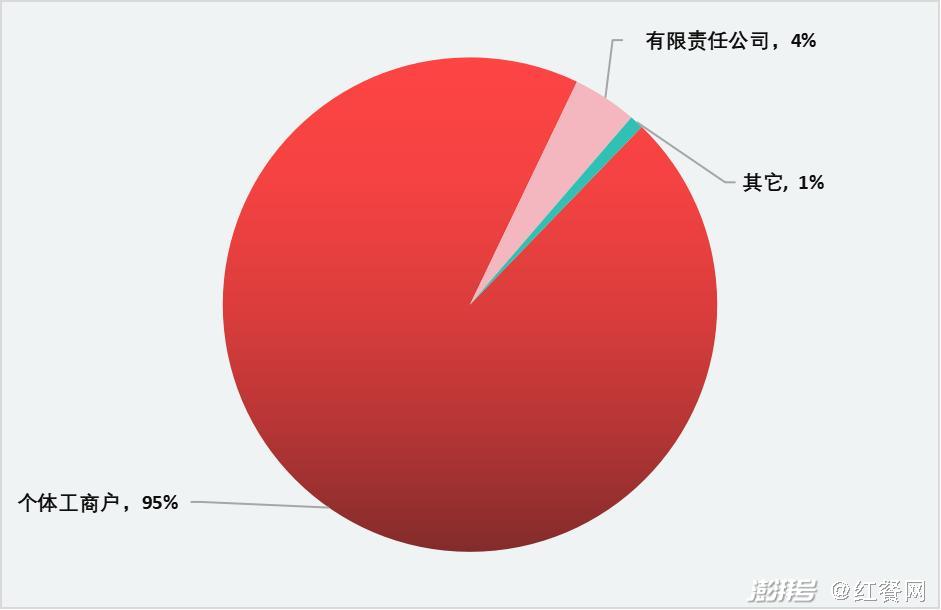
△ Red Meal Network Drawing
Countless food and beverage shops, all over the streets, grow naturally, forming the capillaries of China’s food and beverage economy. They make the fireworks in the city endless, but they rarely become business legends. Especially in an uncertain environment, more restaurants often disappear silently.
Who killed these restaurants?
The soaring cost and backward business model have accelerated the exit of street shops.
"At first, the rent of the store was 400,000 years, and the fried bun sold for 60 cents. Later, the rent rose to 600,000 years, and the corresponding fried bun could only increase in price, rising to 1 yuan. Later, the rent soared directly to 1.2 million years. I can’t eat it, I can only move away! "
In the center of Hangzhou, a fried-dumpling shop had to move out of the bustling commercial area and move to the vegetable market to survive because it could not bear the pressure of rising rents.
Time pushed forward again. In July, the owner of a restaurant collapsed in the middle of the night, smashing all the tables, chairs, pots and pans in the store and throwing them into the middle of the road. "I quit! I want to close the door! "
The reason why the store owner lost control in the middle of the night is because the business in the store has been very poor, and the operating income is difficult to pay even the rent.
Previously, Ahua, who once opened a noodle restaurant in Guangzhou, also bluntly said when communicating with Hongcan.com, "It’s really hard to do. If you have a single order, you can’t do it. The cost of inviting people is too high and it’s not worthwhile. You have been losing money all the time, and finally stop loss in time and choose to close the store!"
The experience of these small shop owners is actually a true portrayal of thousands of small catering owners in Qian Qian at the bottom.
The cost of ingredients, rent, manpower, etc. is rising year by year. In the era of high cost, many small shops are suffering, and they will close down when they endure.
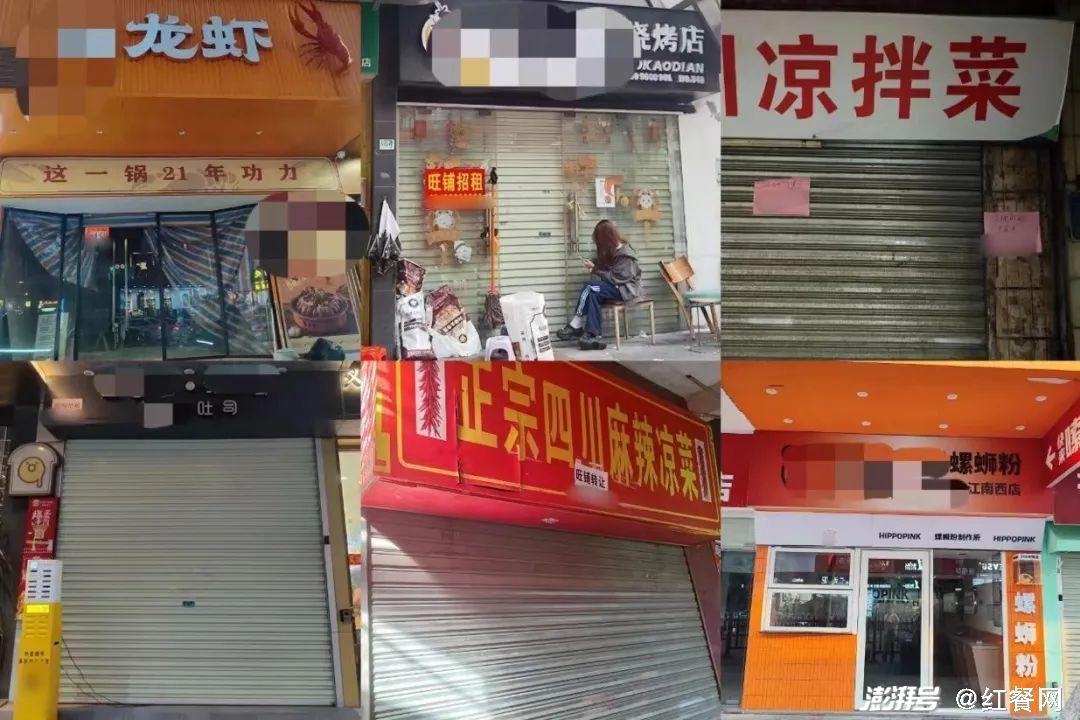
△ The picture has nothing to do with it. Image source: Red Meal Network
Once, street shops were representatives of longevity. No matter how the situation changed, they always seemed to stand, and many brand restaurants could not do it.
The reasons are nothing more than these: street shops are basically husband and wife shops without chefs; The shop front is not big, and the rent is relatively low; Mainly engaged in all kinds of snacks, fast food, affordable, wide audience …
To sum up, these small shop owners save labor by working for themselves, and at the same time, they can keep the cost of rent low, thus gaining a certain profit margin.
Nowadays, the catering consumption environment and consumer groups have undergone earth-shaking changes, but many small shops still remain in the original extensive state, adhere to the past business ideas, do not understand brands, do not upgrade stores, do not understand online operations, and even hygiene and experience have not improved.
All kinds of practices that run counter to the general trend of the market, coupled with rising rents, ingredients, manpower and other high costs, have accelerated the exit of small shops.
Can’t escape, can’t fight, can’t afford to spend, and the store has become cannon fodder under the crushing of chain brands.
"I have tasted the sweetness of a cup of milk tea in 9.9 yuan, and now consumers don’t even want to spend a cup in 15 yuan. Can you survive this stage?" Xiaoyu was full of helplessness when talking about his own tea shop.
Xiaoyu’s shop has been in business for more than 4 years, with a good location, close to the commercial pedestrian street and a commercial and residential area nearby. "At the beginning, there was only my shop nearby, and the business was not bad. Even during the mask period, there were regular customers, and I felt that there was still hope."
What Xiaoyu didn’t expect was that the mask period was over, but business became more and more difficult.
"There are several tea shops nearby, including self-created brands and well-known chain brands. Today, this one will play 9.9 yuan/Cup, and tomorrow another one will directly play 16 yuan /2 Cup. Why do customers choose you? The price is not cheap, and the products are not unique. Other brands don’t say that they are absolutely good, but they will not be worse than you. People are more frequent than you. "
Xiaoyu admits that compared with several chain brands nearby, his own store seems to have no advantage.
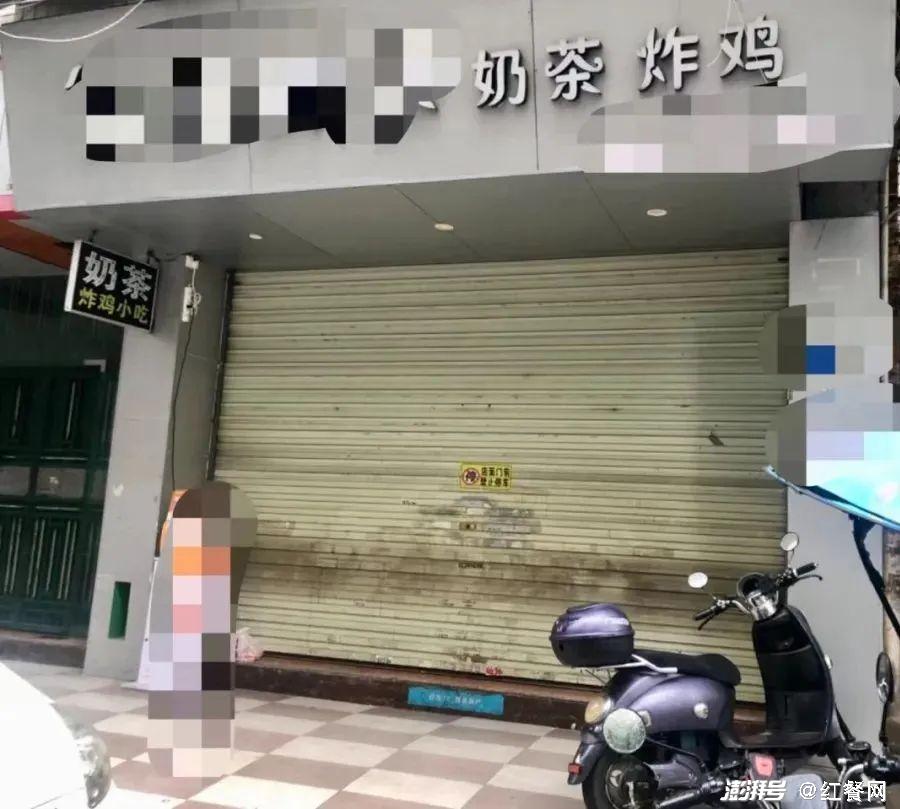
△ Image source: Red Meal Network photo
When asked why he didn’t consider joining a chain brand and reinventing the store, Xiaoyu said bluntly: "I can’t afford to join. If a chain brand is so easy to join, then everyone will enjoy tea, ancient tea, tea and honey snow, right?"
Today, although Xiaoyu’s stores are still in operation, they offset all the costs and expenses every month, with little income. "People still have to be tied up every day. I don’t think it makes sense. Plus, it has entered the winter, and now it is the off-season of tea. I just hope that I can quickly change hands."
Not long ago, Lao Wang, who opened a breakfast shop in Beijing, also chose to close his own shop. "Master Xi has porridge that 3 yuan drinks infinitely, and Nanchengxiang’s handmade deep-fried dough sticks or braised eggs are sold in 2.8 yuan. I have a cake of 5 yuan and a bean curd brain 4 yuan. How can I compare with others?"
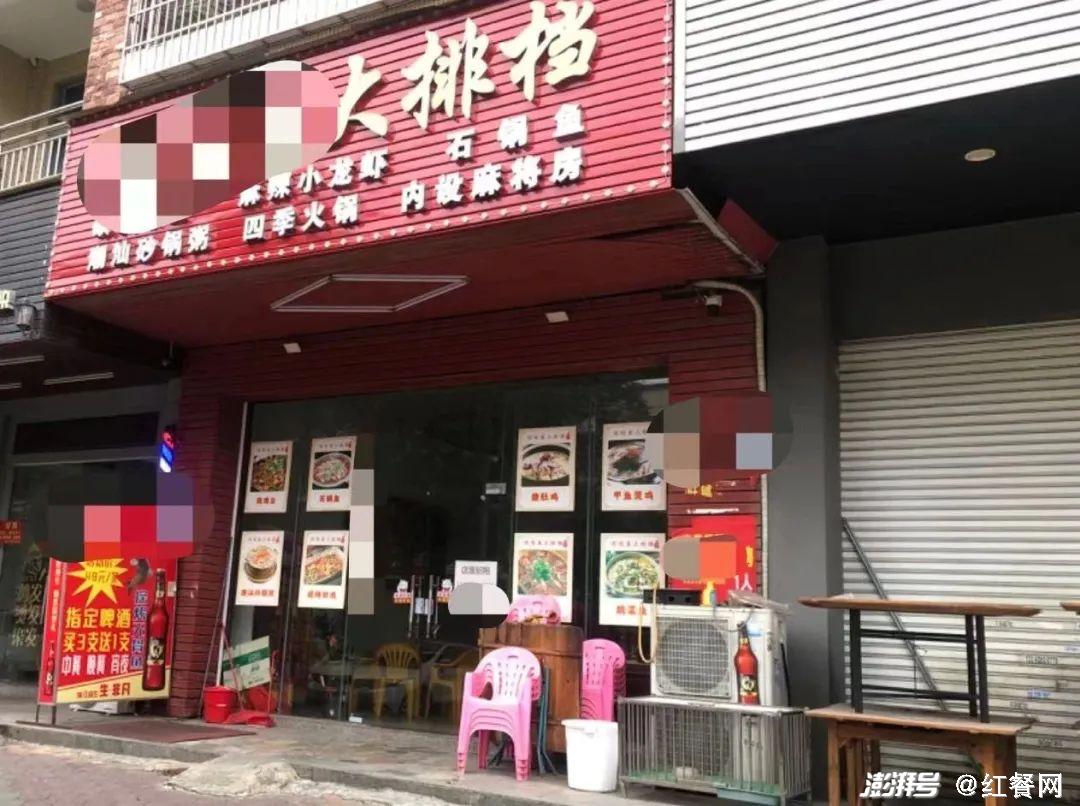
△ Restaurants waiting for subletting, taken by Red Meal Network.
From the story of Xiaoyu and Lao Wang, it is not difficult to see that individual shops are sensitive and helpless to price competition.
Since the beginning of this year, in order to get customers to survive, large and small stores in the catering market have opened "roll" prices, and low-price competition is prevalent. At the same time, a number of chain brands with large volume are also constantly lowering their posture and lowering their prices.
A restaurant brand owner complained to Hongcan. com: "Although the promotion was made, the sales volume went up, and the revenue data brought by it was also very gratifying, but the profit was actually very poor. Everyone doesn’t want to do this, but what can we do? The attitude now is to squat first and wait until it is over. "
In this wave of low prices, the days of single stores and small stores are generally more difficult. Chain brands have more bargaining power in the upstream through the advantage of store size, and there is still room for profit after price reduction. However, countless catering shops are small businesses with meager profits, and price reduction often means losses.
As Lao Wang said: "Under the price of the chain giants and the scale of crushing, small shops can’t beat it, and they can’t hide it, and they can’t afford it."
The success rate of Xiaobai’s business is getting lower and lower.
"Last December, I took out my house to guarantee, borrowed some money, and opened a sugar shop. As a result, it has been tepid since it opened on April 30 this year. From the original four shop assistants, it was reduced to only me. It is really too difficult to support it in the store! Suffering from not having much experience and financial support, the store is on the verge of bankruptcy. The only thing that can be done now is to quickly transfer the store out. "
In November, Zhou Duoyu shared it on social platforms. When Red Dining.com contacted him and asked about the current development status of the sugar shop, Zhou Duoyu admitted that it had been transferred. "It is better to be able to return to the original point than to lose money all the time."
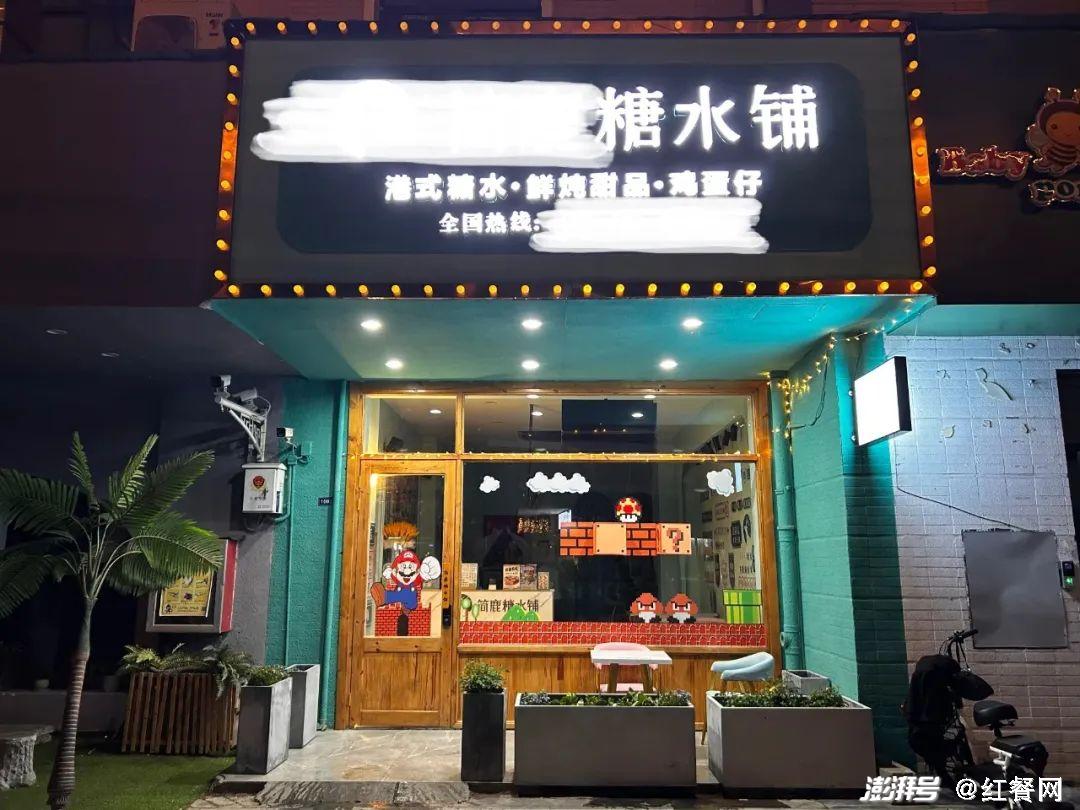
△ Store map shared by respondents on social platforms, and Red Meal Network is authorized to use.
Analyzing the failed entrepreneurial experience, Zhou Duoyu attributed the main reason to the lack of experience and financial support.
For example, at the time of site selection, in order to save some money, I randomly selected a location and opened the store in the innermost position near the snack street. The area of the store is quite large, but after opening it, it was discovered that it was useless to have a big store, and more people were needed. "People who go shopping generally can’t visit here."
For example, in the early stage of investment, the capital reserve was not planned reasonably. "In the early stage, when it was not clear whether the product sold well or not, every raw material would be purchased, which led to an increase in cost. At present, there are still a lot of materials purchased on the shelves at the time of opening, all of which are money that has been smashed in. "
Similar to Zhou Duoyu, Li Xiao is also a small white entrepreneur. He joined a brand and opened a lemon tea shop. In the early stage, he invested 100,000 yuan in store decoration and equipment, and spent another 50,000 yuan on joining fees and deposits. There are also promotion, labor and rent for daily operations. In the end, this small shop only lasted for six months before and after.
"I used to work in the Internet industry, and I thought I knew all about online drainage, private domain marketing, etc. Applying this style of play to a tea shop is not a small test. I neglected that the essence of catering is the service industry, and the business of being a human being is completely different from facing a bunch of cold numbers and procedures. " Li Xiao said.
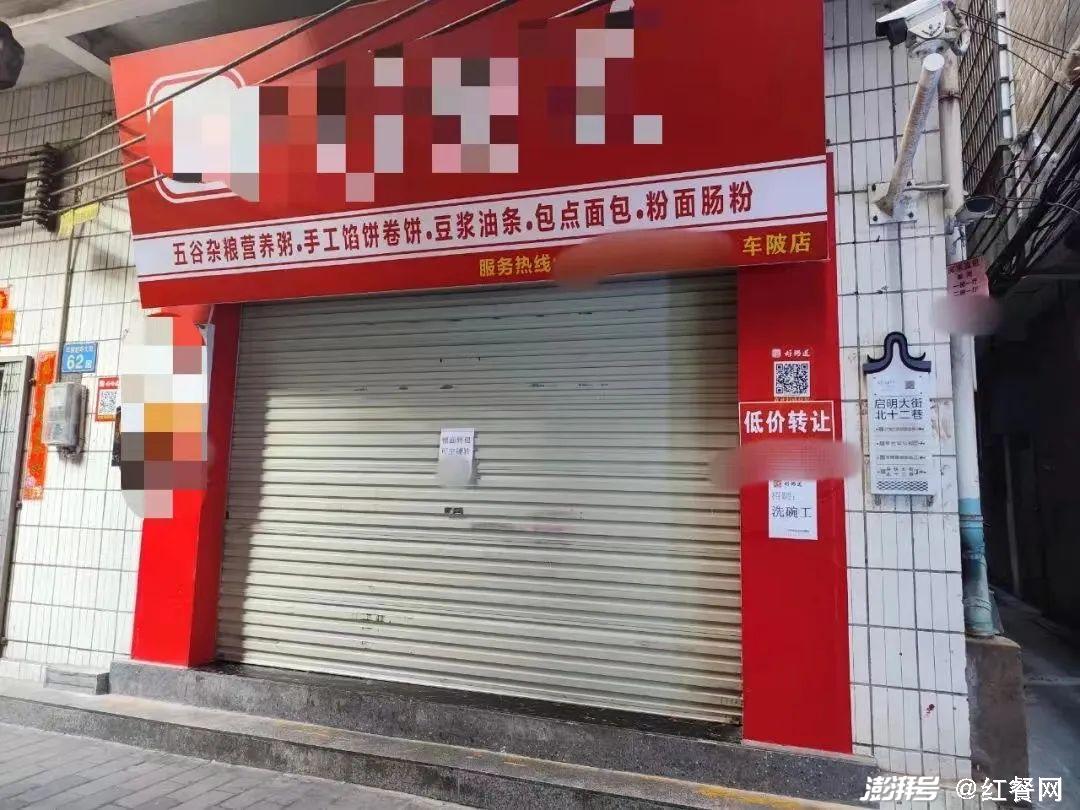
△ Stores closed on the street, taken by Red Meal Network
Although these frustrated restaurants have different "appearances", they have many similar problems and dilemmas. For example, entrepreneurs are mostly white and lack a deep understanding of the catering business.
Small white dry catering, most of the time, follows the trend. For example, when new tea is on fire, a tea shop will be opened. With the rise of new Chinese baking, baking shops will be opened; It is said that sugar water shops make money, so they join a sugar water shop. Seeing only the shops with prosperous business in the market, I feel that it is easy to make money and fall into the fantasy of novices.
As everyone knows, the catering market has already entered the era of stock competition from incremental development, and the supply of each subdivision track exceeds demand. It is easy for novices to break through. Nowadays, the chances of success in grassroots entrepreneurship are getting lower and lower. Xiaobai’s restaurant is mostly a narrow escape.
With the acceleration of urbanization, a large number of small shops have been demolished, rectified and cleared out of the market.
"There are more shopping malls, and the streets are clean and tidy, but the shops on the streets are like carved in a mold. Those delicious foods that have been remembered can no longer be found. In the past, everyone said’ what you miss, what you eat’, but now there is still a taste of nostalgia. " After four years of college in Xi ‘an, I couldn’t help feeling when I passed through Xi ‘an recently.
In reality, with the acceleration of urbanization, many old streets and villages in the city have been demolished and rebuilt all over the country. As soon as it was demolished and built, many small shops disappeared silently.
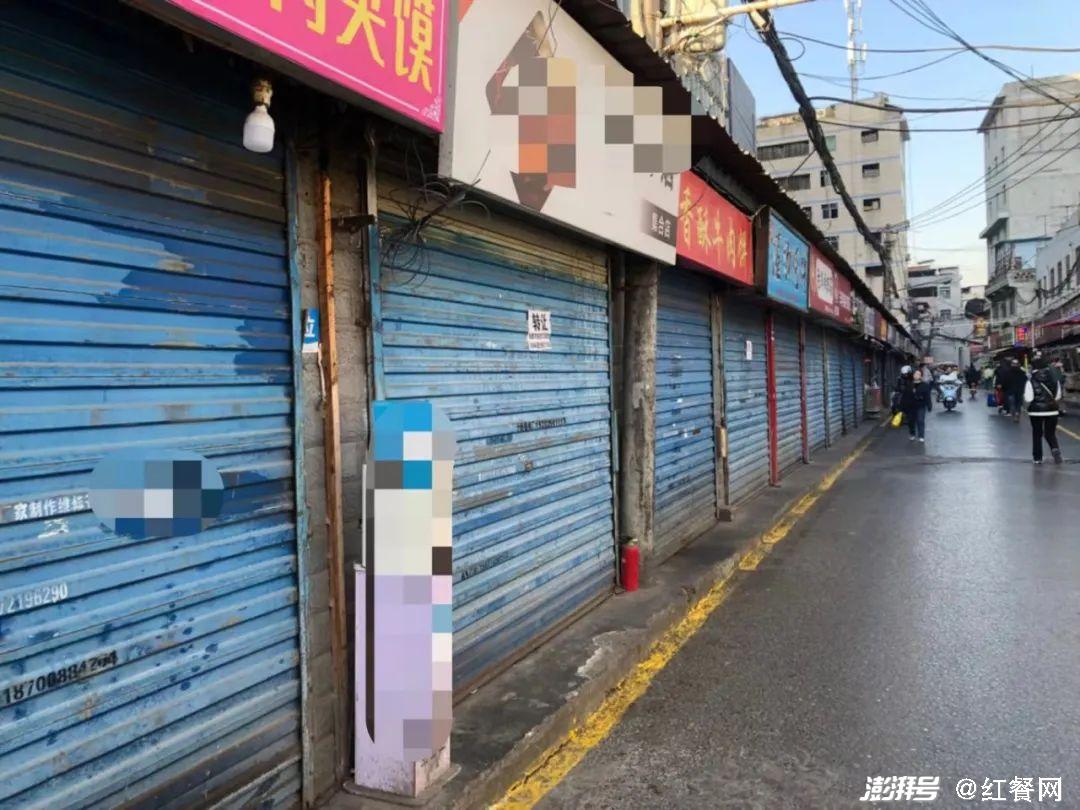
△ The whole row of closed stores in the village in the city, taken by Red Meal Network
"The streets that have passed by countless times are full of bars, cafes and restaurants. The excitement is full of fireworks, but I don’t know when, suddenly there are more demolition enclosures, and overnight, the whole road is empty." Some netizens said with emotion.
Take Shanghai as an example, there are not a few cases in which old shops and small shops disappear due to the street reconstruction of Yuyuan Road, Fuxing Road, Yongkang Road, Dagu Road and Guyang Road.
In 2016, a street in Yongkang Road Bar disappeared; In March of this year, a group of alleys at the entrance of Yongkang Road in Shanghai were demolished. Many shopkeepers on Yongkang Road reported that their business was almost halved, and many shopkeepers chose to leave.
Because of urban planning, there are usually several places for street shops that are forced to move: choose commercial squares to continue to open stores, rent high-priced formal facades nearby to continue to open stores (such as food streets), move to more remote places to open stores, or just close stores and leave.
Entering shopping malls and renting high-priced formal facades all mean a sharp increase in operating costs, which is almost unbearable for most street shops. Even if they have the ability to bear the cost and survive, they are all faced with enormous operating pressure and their living conditions are worrying.
In Huangpu village, Guangzhou, the owner of a teppanyaki shop told Hongcan. com that he had been setting up a stall in Huangpu ancient port before, and his business was ok, but later the street was demolished and rectified, and all the small vendors were cleared out. "If you want to operate later, you need to rent a unified stall on the roadside."
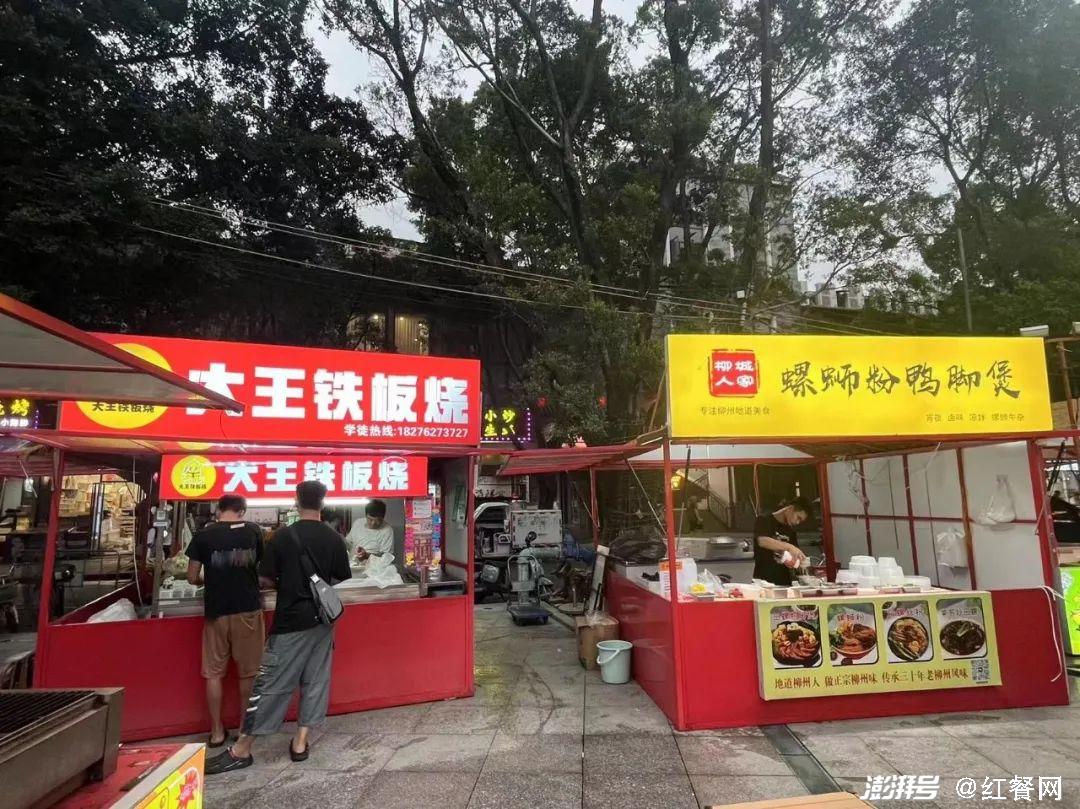
△ Respondents for the picture
The boss revealed that the rent for a stall of about 9 square meters was originally 4,800 yuan a month. "There is no passenger flow this year, and business is not good. There are fewer and fewer people renting stalls, and the landlord has reduced the rent to 3,000 yuan. But even so, you can’t make any money. The money earned is not enough to support the family. Now I am working on one side, and I will come back to run the stall business in the evening and weekend to earn a little money. "
05 conclusion
In China, there are countless small restaurants, which are all over the streets and grow naturally.
The operators of these small shops are hard-working. They get up early and get greedy for the dark, and use their hard work day after day to get a stable income and subsidize their families. At the same time, they are also warm, giving busy migrant workers in the city an idea of leaving early and returning late.
They are doing a small business, and the products in the store are just like the price of Coca-Cola, which has hardly changed. Years, decades, even decades have passed. Coca-Cola is still there, Green Arrow is still there, and Qiaolezi is still there, but those familiar beef noodles, noodle shops, pancake stalls, fast food restaurants … have disappeared.
But when a group falls, a new group will rise.
Many small restaurants can’t become business legends, but they can promote the development of the whole catering industry. Small shops in big countries, we always believe that small restaurants will still have vitality different from chain restaurants in the future.