US aircraft carrier goes to the Middle East, and Iran’s "carrier killer" attracts attention.
Reference News Network reported on May 13 The Associated Press reported on May 7 that US Acting Defense Minister Shanahan confirmed to reporters at the Pentagon on the 7 th that he had approved the accelerated dispatch of the "Lincoln" aircraft carrier battle group to the Middle East. US Presidential National Security Assistant Bolton said that sending an aircraft carrier battle group to the Middle East is an "unequivocal" signal to Iran. And how many cards can Iran, which is regarded as an "imaginary enemy" by the former, play when facing the US aircraft carrier?
For a long time, Iran has been promoting its "anti-aircraft carrier" combat power. In all kinds of official propaganda videos, there are not only speedboats "wolves" besieging aircraft carriers, but also rocket launchers shooting at aircraft carriers, and even "single-handedly fighting aircraft carriers" highlighting "will conquers technology".However, the anti-aircraft carrier equipment that Iran relies most on and the United States attaches most importance to is the "Iranian version of the aircraft carrier killer" — — Persian Gulf and Hormuz anti-ship ballistic missiles.
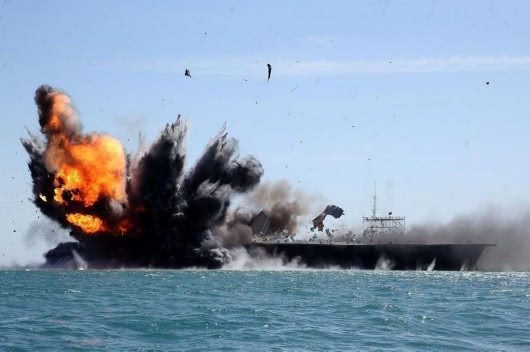
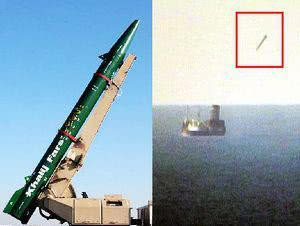
According to the British "Jane’s Defense Weekly" report, the "Persian Gulf" missile is said to be improved from the "Conqueror -110" missile. It is Iran’s first anti-ship ballistic missile and was first exposed in 2011. In the test picture released by Iran, the missile hit a stationary target ship. The "Hormuz" anti-ship ballistic missile is considered to be an improved version of the "Persian Gulf" missile (with active radar guidance head), which made its debut in 2014.
According to Lebanon’s "Arab Motherland" newspaper, in the military exercise in early 2015, Iran successfully hit a 60-meter-long maritime moving target with the Persian Gulf missile. According to the Iranian Tasneem News Agency, in early 2017, the Iranian Revolutionary Guards test-fired the "Hormuz" missile and successfully hit a floating target 150 kilometers away. Iran’s official media commented that Iran hit a maritime target much smaller than the aircraft carrier with a completely self-made ballistic missile, so it can be concluded that the "aircraft carrier myth" has ended.
However, the United States has always had doubts about the actual combat power of the Iranian version of the "aircraft carrier killer." A report released by the Center for Strategic and International Studies in August 2014 questioned the statement that "Iran can effectively use the anti-ship ballistic missile system". The think tank believes that Iran lacks the sensors and communication infrastructure needed to ensure targeting. Even ballistic missiles with terminal guidance capabilities need the support of intelligence, surveillance and reconnaissance systems. If an attack is launched "rudely" on the area suspected of American ship activity, Iran may not have enough missiles available. In addition, according to the speed characteristics of Iran’s anti-ship ballistic missile, it is also difficult for it to break through the Aegis missile defense system.
However, considering the geographical location of the Strait of Hormuz and Iran’s progress in reconnaissance and surveillance capabilities in recent years, Iran’s anti-ship ballistic missiles are still the most troublesome presence in the Middle East for American aircraft carriers. Especially in recent years, the construction and application of Iran’s UAV fleet not only enriches its anti-intervention arsenal, but also partially makes up for its shortcomings in reconnaissance and surveillance. For example, in March this year, the Iranian Revolutionary Guards released video clips of 50 attack drones attacking island targets for about 1,000 kilometers. In April, the Iranian Revolutionary Guards also released a set of high-definition videos, recording the process of Iranian drones "observing" the formation of American aircraft carriers at close range. These "aircraft carrier killers" at least ensure that Iran maintains "the power to fight back" when facing the US aircraft carrier.