Xiamen medical reform promotes "three divisions co-management" and dares to gnaw at the hard bones of graded diagnosis and treatment
CCTV News:Recently, the supreme leadergeneral secretaryAt the National Conference on Health and Wellness, it was once again emphasized that "without the health of the whole people, there would be no overall well-off society", and comprehensive arrangements were made for the construction of "healthy China", which highlighted the ruling nature of the Communist Party of China (CPC) "adhering to the people’s dominant position".
Xiamen, as the first batch of pilot cities for public hospital reform in China, followed closely.partyThe central government has explored an innovative service model of "three divisions co-management" with specialists in large hospitals, basic general practitioners (family doctors) and health administrators, strengthened policy support and mechanism innovation, actively guided high-quality medical resources to sink to the grassroots, and initially established a fair, accessible, systematic and continuous basic medical and health service system integrating prevention, treatment, rehabilitation and health promotion, and characterized by "flexible guidance", which is in line with the direction of medical reform, welcomed by the masses and satisfied with patients. "Three divisions co-management" has explored a new model for national health management.
Guide the sinking of medical resources and let specialists in large hospitals "undercommunity"
On August 30th, Yang Shuyu, director of the Xiamen Municipal Health and Family Planning Commission, introduced at the media communication meeting on the progress of medical reform in Xiamen, and combined the specialists in large hospitals with the general practitioners and health managers at the grass-roots level by creating a team service model of "three divisions sharing management"; The promotion of doctors’ professional titles in tertiary hospitals is linked to the lower community, and at the same time, special subsidies are given to the lower community for specialists to train, teach and solve complex and difficult problems at the grass-roots level. Bringing patients back to the grassroots level and bringing up the level of general practitioners are the "two belts" advocated by Xiamen medical reform to guide the sinking of medical resources.
The First Affiliated Hospital of Xiamen University has a set of detailed community salary distribution system for specialists (experts): the instructor gives 1000 yuan a monthly subsidy for each doctor he teaches; Experts go to the grassroots clinic to subsidize 700 yuan/half a day; Every half day more than 10 visits, according to each visit (outpatient) to give 10 yuan service subsidies. According to this system, take the bonus distribution of cardiology and endocrine diabetes as an example: from April 2014 to March 2015, the bonus of cardiology increased by 54%, with a per capita increase of 48%, and the bonus of endocrine diabetes increased by 40%, with a per capita increase of 40%. The real increase in the income of specialists in large hospitals makes the pace of "going on" more active and powerful.
Establishing the incentive mechanism of grassroots assessment to make grassroots medical professionals "willing to manage"
In order to effectively mobilize the enthusiasm of primary health care institutions, Xiamen has further improved the financial subsidy mechanism, assessment mechanism and performance incentive mechanism for primary health care institutions, and included delayed service, "three-division co-management" graded diagnosis and treatment and family doctor signing in the assessment and evaluation indicators, so as to fully mobilize the enthusiasm of primary health care personnel through rewarding incremental performance. Focus on the assessment of indicators such as delayed service, "three divisions co-management" graded diagnosis and treatment, and family doctor signing, and give incremental rewards, which fully mobilized the enthusiasm of the grassroots. In 2015, the per capita income of community health service centers in the city increased by 27,600 yuan (in 2014, the per capita income of the city was 17,700 yuan), with an average increase of 55.93%.
Qiu Xiang, the health manager of Gulangyu Community Health Center, told the reporter that although the workload has increased since the implementation of the "three divisions co-management", the performance appraisal system has made her more satisfied both mentally and materially. In the Spring Festival of 2016, she won the first place in the performance appraisal. At that time, the performance salary was much higher than the usual salary as a clinical nurse, which made her more motivated and passionate to work.
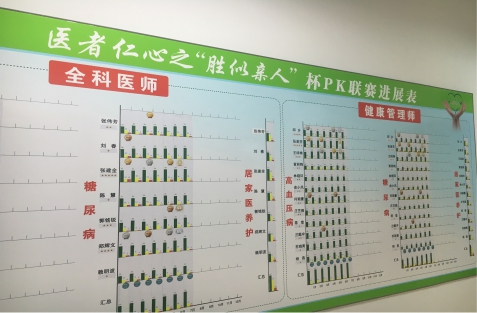
Performance Appraisal Form of Gulangyu Community Health Center(Cctv reporter 戴萌萌 摄 )
The basic system of primary diagnosis combining "prevention" and "treatment" has been basically established.
Supreme leadergeneral secretaryAt the recent national health and wellness conference, it was emphasized that we should unswervingly implement the policy of putting prevention first, adhere to the combination of prevention and control, joint prevention and control, and mass prevention and control, and strive to provide people with health and wellness services throughout their life cycle. We should pay attention to the prevention and control of major diseases, optimize prevention and control strategies, and minimize the number of people suffering from diseases.
Xiamen’s "three divisions co-management" links the hospital with the community and the CDC, and combines the prevention and control of chronic diseases such as diabetes and hypertension with deepening medical reform, effectively building an integrated service mechanism and model, effectively improving the primary diagnosis and treatment technology and service capabilities, and consolidating the effectiveness of chronic disease prevention and control.
Zhu Cailiang, a 76-year-old man who lives in Gulangyu, is a patient with hypertension and a beneficiary of "three divisions co-management". Zhu cailiangTell reportersIn the past, they had to take a boat out of the island to a big hospital for serious illness and minor illness.go tomake a diagnosis and give treatmentSince the establishment of the "three divisions co-management", the health manager of the island community hospital will come to serve them, and the basic items such as blood pressure measurement and blood sugar measurement can be completed at home, and his blood pressure has been effectively controlled. Even if the condition fluctuates, you can make a preliminary diagnosis through the general practitioner of the community hospital. If it is not alleviated, you will further contact the specialist of the First Affiliated Hospital for consultation, which makesOld peopleSee a doctor.depend onsupportAnd the children in other places are less concerned.
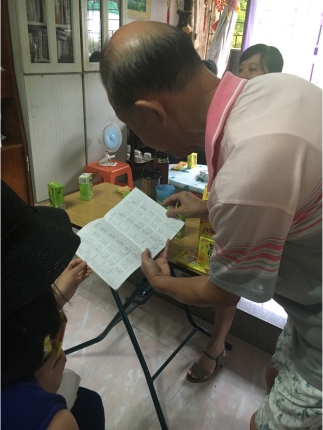
bright redCai Liang introduced the blood pressure control to the reporter.(Cctv reporter 戴萌萌 摄 )
自从实施“三师共管”以来,厦门基层诊疗服务量提升43.67%,2016年上半年同比增长54.60%。根据对2.5万例患者就诊跟踪统计分析,糖尿病人在基层的就诊率从40.7%上升到78.1%,高血压病人从72.6%提高到95.7%。“三师共管”带动了心脑血管疾病、慢性阻塞性肺病、代谢综合征、慢性胃肠病、骨质疏松、骨关节病、痛风及肿瘤康复等多种慢性病、常见病、多发病在基层实现诊疗和健康管理,慢性病基层首诊制度基本建立。
厦门还将认真学习贯彻习总书记在全国卫生与健康大会上的重要讲话和大会精神,按照《健康中国2030规划纲要》和深化医改的总体部署和要求,始终不渝地把“以基层为重点,以改革创新为动力,预防为主,中西医并重,将健康融入所有政策,人民共建共享”这38字方针贯彻到卫生计生事业改革发展的全过程、各方面,确保健康政策融入全局、健康服务贯穿全程、健康福祉惠及全民,形成卫生与健康治理新格局,不断增强人民群众对改革的获得感,为全面建立一体化、安全、高效、优质的基本医疗卫生服务体系而不懈努力!(记者 戴萌萌)